
Japan defence review covers drones, AI and Pacific operations


China’s wider Pacific reach and lessons from Ukraine shape Japan’s 2026 security assessment, which also addresses equipment exports and dual-use innovation.
- Japan's 2026 defense white paper identifies drones and artificial intelligence as central to "new ways of warfare" that require urgent attention.
- The review expresses serious concern over China's widening military operations in the Pacific, labeling them as Japan's "greatest strategic challenge."
- The document highlights the need for battlefield endurance to prepare for prolonged conflict and calls for closer security partnerships with allies.
- The paper advocates for a stronger domestic defense technology base, including for military-civilian dual-use goods, and revised export rules to enhance cooperation.
Technology, wartime endurance and closer security partnerships underpin Japan’s response to emerging forms of conflict in its 2026 defence white paper, which also raises concern over China’s widening operations in the Pacific.
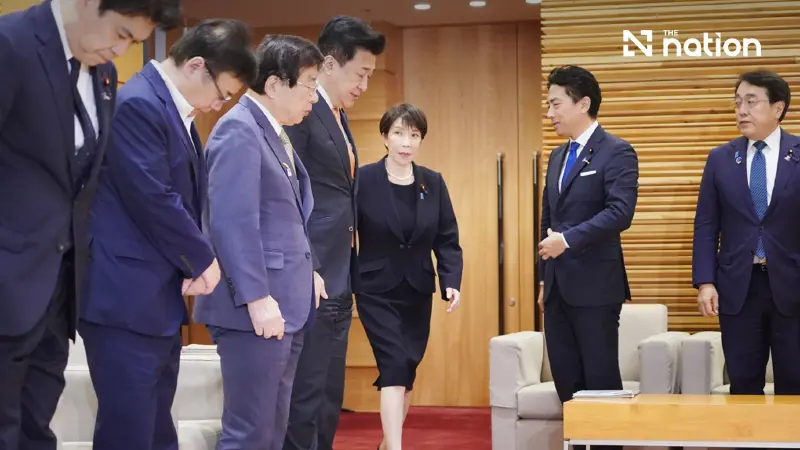
Defence Minister Shinjiro Koizumi submitted the annual assessment to the Cabinet on Tuesday (August 4), when it was adopted.
Within its domestic agenda, the document identifies scientific and technological progress and the promotion of innovation as a “key element” of stronger defence capability.
It advocates establishing a defence technology base capable of advancing military-civilian dual-use goods.
International cooperation is tied to equipment policy.
Revisions made in April 2026 to the principles governing defence exports and their implementation guidelines ended the restriction that confined eligible equipment to rescue, transport, vigilance, surveillance and minesweeping.
The paper expects the changes to help countries support one another through common equipment and shared production and technological bases, with transfers used to strengthen cooperation among allied and like-minded countries.
Battlefield endurance is another priority.
According to the review, Ukraine’s fight against Russian aggression has demonstrated how large-scale attacks can combine inexpensive unmanned systems with conventional missiles.
Japan therefore considers preparations for prolonged conflict crucial, including adequate stockpiles and the capacity to keep operations running.
Drones and artificial intelligence are also central to what the document calls “new ways of warfare” requiring urgent attention.
China dominates the regional assessment.
Retaining wording used in recent years, the government calls Chinese military activity “a serious concern” for Japan and the international community and “the greatest strategic challenge” facing the country.
Its proposed response combines “comprehensive national power” with closer coordination alongside allies and like-minded partners.
Two episodes are used to illustrate that assessment.
The first is the simultaneous deployment of two Chinese aircraft carriers in the Pacific, recorded for the first time in June 2025 and viewed as an attempt to improve operations at greater distances across maritime and air domains.
The other occurred in December 2025, when Chinese military aircraft used radar to lock on to Japan Air Self-Defense Force fighter jets, an act described as “dangerous” and “extremely regrettable”.
Concern extends to the growing military relationship between China and Russia.
The paper says recent joint operations involving the two countries’ bombers and submarines “are obviously intended as demonstration activities against Japan and pose a grave concern for Japan’s security”.
The review separately warns that North Korea’s accelerating military cooperation with Russia may strengthen its military capabilities over the medium to long term.

[Copyright The Jiji Press, Ltd.]
