
Western Europe's record heat drives wildfires and economic losses
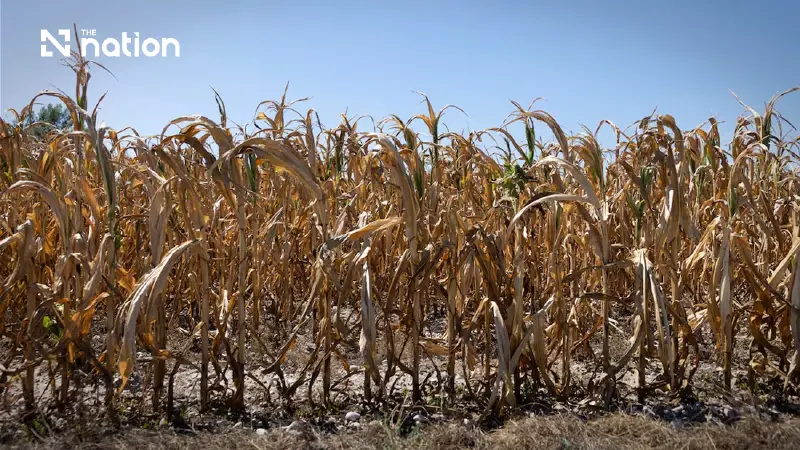


Western Europe recorded its warmest June–July period in 2026, while severe heat is already affecting health, agriculture, water reserves and energy costs in Thailand.
- Western Europe experienced its warmest June-July period on record, with numerous countries like Spain, France, and the Netherlands setting new all-time high temperature records.
- The extreme heat and dry conditions fueled widespread wildfires across several nations, including France, Spain, and Greece, leading to the evacuation of over 300,000 people.
- The heatwave caused significant economic losses, with the UK alone losing an estimated $1.55 billion in output due to reduced working hours, alongside threats to crop yields and power supplies from low river levels.
- The event is also linked to a severe human cost, with an estimated 10,000 excess deaths reported during the June heatwave alone.
Western Europe recorded its warmest June–July period on record in 2026, according to the European Union’s Copernicus Climate Change Service.
The climate crisis, shifts in the jet stream, El Niño and unusually warm seas have combined to trap hot, dry air over much of Europe for the fourth time since May, with no sign that the current heatwaves are easing.
Reuters, citing early data, reported an estimated 10,000 excess deaths during June’s heatwave.
By early August, the Danube had fallen to a record low, threatening Hungary’s power supply, while Italy had placed most major cities on its highest heat alert and the UK faced possible crop losses and pressure on food supplies.
Copernicus data showed that extensive areas of Europe were considerably warmer in June than the 1991–2020 average.
“Heatwaves like this are what we expect to see in a changing climate,” said John Kennedy, head of climate information at the World Meteorological Organisation (WMO).
“Europe is the fastest-warming continent on Earth, heating at twice the global average,” said Tedros Adhanom Ghebreyesus, Director-General of the World Health Organisation (WHO).


Temperature records included 40.5°C in Barcelona on July 8, the highest reading in more than a century at the WMO’s Fabra Observatory, and 40°C in Vienna, a new city record for June.
The Netherlands issued its first Red Alert for extreme heat in eight provinces after recording 39.4°C.
Palluau in western France reached 43.8°C, while overnight temperatures in the country also broke records at 22°C. Basel in Switzerland registered a new June high of 39°C.
Belgium recorded the largest temperature anomaly among 10 European countries, with its average high of 32.1°C on August 4 more than 11°C above the 1961–1990 norm.
The UK, while far from the hottest of the 10 countries, recorded a 4.4°C anomaly on the same date.
The Netherlands was 9.8°C above its historical norm, while Portugal was the only country below its historical reference, by 0.4°C.
The economic effects are also mounting.
The International Labour Organisation estimates that more than 2.4 billion workers worldwide are exposed to excessive heat, with about 22.85 million occupational injuries attributable to it each year.

By 2030, heat stress could cut global working hours by 2.2%, equivalent to 80 million full-time jobs and US$2.4 trillion in losses.
In the UK, the week-long heatwave in late June was estimated to have cost 24 million working hours and US$1.55 billion in economic output, with particularly large reductions in working hours reported in construction and agriculture.
The prolonged heat has left Europe tinder-dry, fuelling wildfires in France, Spain, Portugal, Greece, the UK, Italy, Germany and the Netherlands.
More than 300,000 people have been evacuated across France and Spain.
The BBC reported that 2,500 firefighters in Gironde tackled a blaze that began on July 22, burnt more than 420 square kilometres in under four days and came within nine miles of Bordeaux.
Fires outside Madrid have burnt about 1,570 square kilometres since July 1, according to the European Forest Fire Information System.
More than 180 houses were also destroyed in Le Porge, France.
The heatwave has not ended, and further wildfires remain a threat.
French President Emmanuel Macron convened an emergency cabinet meeting, while a Gironde official told the BBC that France lacked enough firefighters to tackle blazes on this scale.
Some of Europe’s most intense fires have also generated pyrocumulonimbus clouds, or “fire clouds”, which can make them harder to control.
“Every summer reminds us that wildfire is no longer an exceptional event but an increasingly predictable consequence of a warming climate,” said Paola Deda of the United Nations forest division for Europe.
She emphasised the need for preventive measures such as sustainable forest management and building in more resilient landscapes, approaches discussed in the World Economic Forum and PwC white paper From Wildfire Risk to Resilience: The Investment Case for Action.
Prevention remains chronically underfunded compared with response, requiring business, finance, government and civil society to act together.
The World Economic Forum’s Global Wildfire Leadership Network, housed within the Forest Future Alliance, brings leaders together to catalyse collective investment in wildfire resilience, align public and private efforts and connect local initiatives with a global agenda.
Its Workforce Resilience to Extreme Heat workstream also helps businesses address the risks that rising temperatures pose to workforce health, safety and productivity.
Thailand is confronting similarly intense heat.
The Thai Meteorological Department (TMD) previously issued an official weather warning stating that the country’s summer began on February 22.
It forecast average maximum temperatures of 36–37°C across upper Thailand, with Mae Hong Son, Lampang and Tak potentially reaching 42–43°C.
The heat poses a risk of heatstroke when daytime heat-index readings reach dangerous levels.
It is also affecting agriculture, water reserves at several dams and the burden of energy costs on households and businesses.
The “searing heat” crisis is no longer remote but an urgent global issue requiring all sectors to work together to adapt and build resilience to lasting changes in the climate.
Source: The World Economic Forum
