
Japan’s celebrated ‘queen of polka dots’ Yayoi Kusama dies at 97
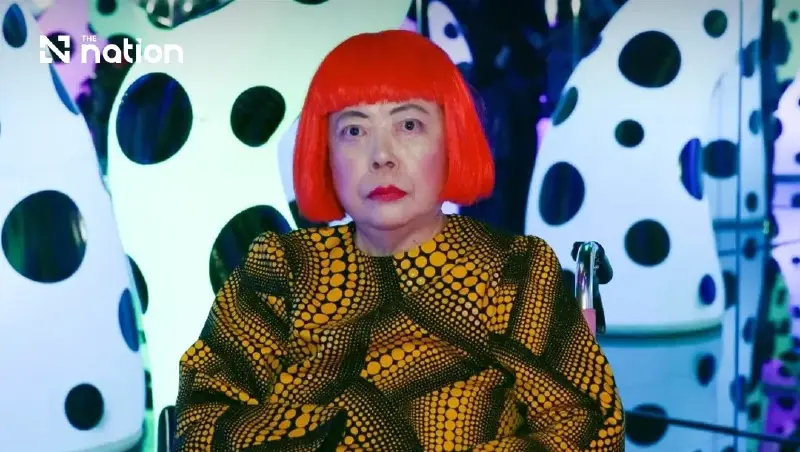


The pioneering Japanese artist died in a Tokyo hospital after a life spent transforming hallucinations, trauma and ideas of infinity into globally recognised art.
- Japanese avant-garde artist Yayoi Kusama, celebrated as the ‘queen of polka dots’, has died in a Tokyo hospital at the age of 97.
- Her iconic art, including the 'Infinity Mirror Rooms', was a therapeutic tool used to cope with a traumatic childhood and lifelong mental health struggles.
- Kusama's work was rooted in the philosophy of 'self-obliteration', using polka dots to explore the erasure of the ego and the individual's place in the universe.
- After facing hardship in the New York art scene, she returned to Japan in 1973 and voluntarily lived in a psychiatric hospital, continuing to create art that achieved global fame.
The contemporary art world has lost one of its most beloved and important figures forever.
The Yayoi Kusama Museum in Tokyo announced that Yayoi Kusama, known around the world as the ‘queen of polka dots’, died at a Tokyo hospital on Friday (August 14, 2026), aged 97.
With her death, the life of one of Japan’s greatest female avant-garde artists has drawn to a close, leaving a profound cultural legacy that has inspired millions of people around the world.
Behind her vivid colours and seemingly exuberant dots lay immense pain.

Kusama was born on March 22, 1929, in Matsumoto, Nagano Prefecture, into a strict family marked by violence.
Her childhood was filled with trauma rooted in toxic masculinity.
Her father was unfaithful, while her mother often beat her and forced her to spy on his affairs.
These experiences left deep scars and gave her a fear of sex.
At just 10 years old, she began experiencing hallucinations, seeing beams of light, auras and patterns of red flowers on a tablecloth that spread across the ceiling and walls until they appeared to engulf her.
To confront her fears and mental illness, she turned to art as a ‘therapeutic tool’, repeatedly drawing the dot patterns she saw to regain her awareness and keep herself alive.


Driven by a longing for freedom and a desire to break beyond Japan’s social constraints, Kusama travelled to the United States in 1957 and entered New York City’s art world the following year, with support from fellow female artist Georgia O’Keeffe.
However, the path facing an Asian woman artist in the United States at the time was fraught with obstacles.
Kusama was exploited, while world-famous male artists stole ideas from her work and brazenly used them to build their own reputations.
These experiences left her terrified and depressed, leading her to attempt suicide.
She eventually returned to Japan in 1973 and chose of her own accord to live in a psychiatric hospital, while continuing to create art tirelessly in a studio opposite the hospital.
Kusama’s work stood out for combining polka dots with the philosophy of ‘self-obliteration’.
She saw each person as only one small dot in the universe.
Filling a canvas with dots erased the boundary between the ego and nature.
Her internationally acclaimed works that changed art history include:
- Infinity Nets (1960): A painted field of round dots formed by overlapping loops, resembling a vast, endless net and making a powerful impact on abstract art.
- Infinity Mirror Rooms (begun in 1965): Immersive mirror-room installations, some incorporating multicoloured lights, that produce reflections appearing to stretch without end and make viewers feel as though they are disappearing into a simulated cosmos.
- Pumpkin: A yellow pumpkin covered in black dots, reflecting warm and secure childhood memories and becoming a globally recognised symbol of the artist’s alter ego.
Kusama’s influence extended well beyond the art world.
She also made a major impact on fashion and pop culture, particularly through a global project with Louis Vuitton that reinterpreted her dots across clothing and bags.
Her work continued to set records.
The Yayoi Kusama exhibition at the National Gallery of Victoria in Melbourne, held in 2024–2025, became the most visited ticketed exhibition in the gallery’s history, drawing more than 570,000 visitors.
Her work was also exhibited at Museum Ludwig in Cologne from March 14 to August 2.
Although the body of the ‘queen of polka dots’ has left this world, the spirit of her art will continue moving into infinity.
Kusama’s art teaches us that, amid wounds and the darkness of the mind, people can still create beauty to heal themselves and pass strength on to others.
She proved that even a single tiny dot, when woven together through determination and spirit, can change the entire world forever.

