
US plans 60-day Russia sanctions review after Trump waiver
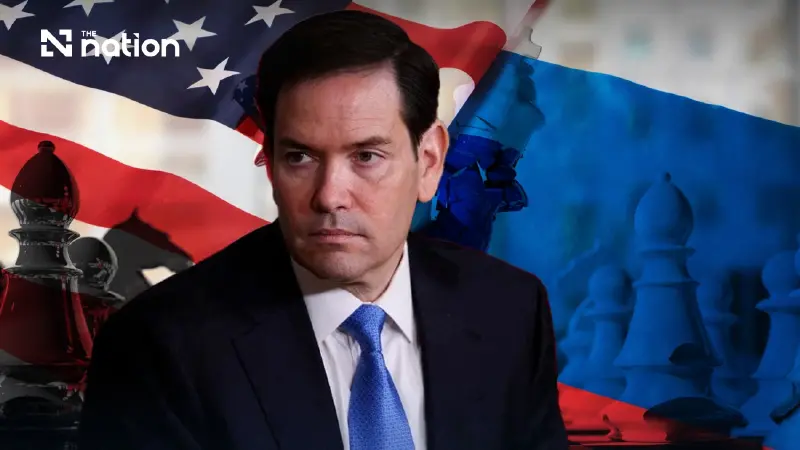


US lawmakers condemn Trump’s Russia sanctions waiver as Ukraine warns further relief could embolden Putin amid efforts to arrange three-way talks.
- The U.S. is launching a 60-day review of Russia-related sanctions after President Trump issued a waiver, citing the need to assess their impact on the U.S. and global economies.
- The administration's justification for the review includes rising energy prices and ongoing conflict in the Middle East.
- The waiver does not automatically expire after 60 days and will remain in place until further action is taken.
- The decision has drawn strong criticism from both Republican and Democratic lawmakers, as well as a warning from Ukrainian President Zelenskyy that it could embolden Russia.
US Secretary of State Marco Rubio defended President Donald Trump’s waiver of Russia-related sanctions and tariffs on Saturday (October 17, 2026), outlining a 60-day review of their potential impact on the global and US economies.
Rubio said rising energy prices and conflict in the Middle East made it necessary for the administration to assess the consequences and determine the most appropriate combination of measures.
Trump’s waiver does not specify an automatic expiry after 60 days. The executive order leaves the measures on hold until the president or designated officials decide further action is appropriate.
Russia’s full-scale invasion of Ukraine reached its 1,698th day on Sunday (October 18).
US lawmakers condemn Trump’s Russia waiver
Trump’s decision to waive the measures only days before they were due to take effect drew strong criticism from Republican and Democratic members of Congress.
Republican Senator Rick Scott said Russia was the aggressor and argued that the United States should do everything possible to increase economic pressure on Moscow.
Republican Senator Thom Tillis called the waiver “beyond irresponsible” on social media and accused the administration of capitulating to a Russian dictator.
Zelenskyy warns of further Russia sanctions relief
Ukrainian President Volodymyr Zelenskyy warned that the Trump administration could lift further sanctions on Russia, describing an agreement to import Russian diesel as only the first step. Zelenskyy argued that the relief would embolden Russian President Vladimir Putin and leave him feeling supported.
Zelenskyy also said Ukraine’s chief negotiator, Rustem Umerov, had met US presidential representative Jared Kushner as preparations continued for possible three-way talks involving Ukraine, the United States and Russia in the near future.
Rubio denies White House ordered satellite restrictions
Rubio also denied reports that the White House had ordered restrictions on satellite connections used by Ukrainian drones flying above 100 miles per hour. Rubio insisted that no White House official had issued such an instruction.
The Associated Press identified the affected satellite service as Starshield. Rubio, however, referred to Starlink in his denial and said Ukraine did not currently have access to Starshield.
Moscow reports 195 drone interceptions
Russian air defences intercepted and destroyed nearly 200 Ukrainian drones heading towards Moscow on October 17, according to Russian authorities. Moscow Mayor Sergei Sobyanin put the number at 195.
Flight operations at Moscow’s Domodedovo and Vnukovo airports were temporarily suspended amid the drone attacks, Russia’s civil aviation authority said.
Romania’s Defence Ministry said its forces had shot down two drones over the Black Sea on October 17. The ministry identified them as Geran-family attack drones, a type used by Russia, but did not state who had launched them.
Romania’s interceptions followed reported drone attacks on commercial ships off the coasts of Romania and Bulgaria in recent days.
