
Japan may use government bonds to fund two-year food tax cut to 1%
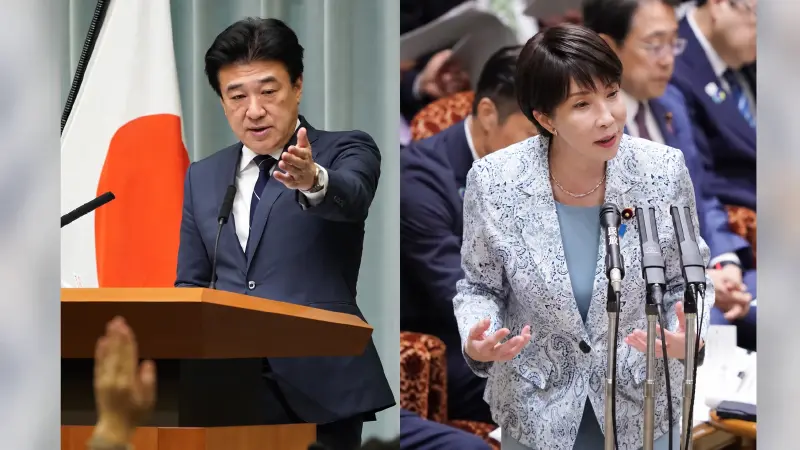


A food tax reduction and income-linked benefits in Japan are expected to require about 10 trillion yen over two years, with funding still unresolved.
- Japan's government is considering issuing government bonds to finance a proposed two-year cut in the food consumption tax, according to Prime Minister Sanae Takaichi.
- The plan involves reducing the tax on food from its current 8% down to 1% for a two-year period beginning next April.
- The total funding required for the tax cut and an associated income-benefit program is estimated to be around 10 trillion yen.
- The potential use of bonds is a shift from the Prime Minister's previous statements that the tax cut would be funded without relying on new debt.
Government borrowing could finance Japan’s proposed two-year food tax cut to 1%, Prime Minister Sanae Takaichi indicated on Monday (October 19).
“We are not ruling out bond issuance,” she told the Committee on Budget in the House of Councillors, the upper chamber of the National Diet, Japan’s parliament.
Chief Cabinet Secretary Minoru Kihara placed Takaichi’s reference to bonds within the wider budget process, saying it “was made in the context of the overall budget formulation”.
“There is no change in the government’s policy,” Kihara told a press conference.
Takaichi has repeatedly maintained that the money for the food tax reduction would be secured without relying on deficit-covering bonds.
Japan’s plans to ease the impact of rising prices combine an income-linked benefit programme with a reduction in food consumption tax from 8% to 1%.
The lower food tax rate would apply for two years from next April.
Funding for both measures is estimated at about 10 trillion yen over the two-year period, although the government has yet to identify a specific source.
Takaichi outlined a wider budget review alongside controls on annual bond issuance, explaining that the government would “advance a review of both expenditure and revenue within the framework of budget formulation reform, while also closely monitoring tax revenue trends”.
“We will appropriately control the annual amount of government bond issuance while scrutinizing the fiscal scale made possible even as the debt-to-gross domestic product ratio is steadily reduced.”
“We will thoroughly reassess our policy priorities,” Takaichi said in rejecting the view that lower government spending to fund the food tax cut could offset the measure’s effects.
“This is not intended to wipe out the positive effects of the tax cut or increased spending.”
Takaichi rejected claims linking her to a weaker yen or higher interest rates and outlined the government’s intention to “enhance the credibility of the yen by building a strong economy”.
“Although there has been talk of a Takaichi-induced weak yen or high interest rates, I explicitly reject such claims.”
Japan’s parliament is due to begin full debate on legislation for the food tax reduction and income-linked benefits on Tuesday, opening at a plenary sitting of the House of Representatives, the lower chamber.

[Copyright The Jiji Press, Ltd.]
