
Is Myitsone a landmark for reform in Burma?


The third article in a series exploring change in the country focuses on a stunning U-turn by Naypyidaw
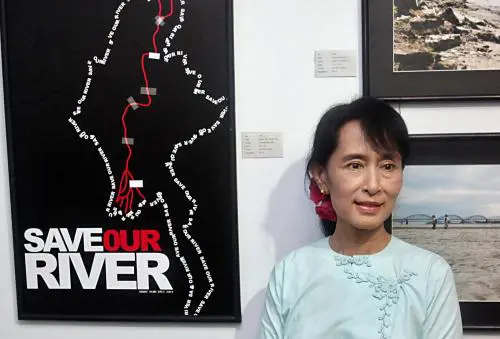
The unprecedented decision by Burma’s six-month-old government to halt the construction of a China-sponsored dam is very significant for reform in the country, though it’s premature to call it a victory for the reformists in the new regime. In a surprise announcement to parliament last week, President Thein Sein said a decision had been made to halt the Chinese-backed Myitsone hydropower project in the Irrawaddy River, Kachin state, due to concerns voiced by the Burmese public over its environmental and social impact.
“As our government is elected by the people, it has to respect the people’s will. We have a responsibility to address public concerns in all seriousness. So the construction of Myitsone Dam will be suspended in the time of our government [until at least 2015],” Thein Sein said in a speech reported by the government-run New Light of Myanmar newspaper. Thein Sein explained the reasons for the decision thus: the dam would threaten the natural beauty of Myitsone as a landmark not only for Kachin State but for the whole country; it would lead to possible loss of livelihoods in inundated villages upstream; it might destroy rubber and teak plantations under private ownership; it would threaten lives and property downstream if destroyed by torrential rains, earthquake, or runoff from snow-capped northern mountains under climate change; and it might have a devastating effect on the Irrawaddy River.
Thein Sein’s announcement had a twin impact on the domestic and international stages. First, it reassured Burma watchers, including Western countries, who want to see the so-called elected government listen to popular opinion. Second, it marked a decision to challenge giant neighbour China, which has crucial influence over Burma.
The European Union praised the decision, saying it was encouraging to see the leadership starting to put into practice its commitment to be a “government of the people”. Environmental conservationists such as Burma River Network welcomed the decision and called upon China Power Investment Corp to pull out of all other Irrawaddy dam projects.
Beijing strongly disagreed with the move and called on leaders in Naypyidaw to protect the Chinese investment of $3.6 billion (Bt112 billion) in the mega-project.
The hydropower project is significant for China, as 90 per cent of the dam’s 6,000-megawatt capacity was to be exported to China’s Yunnan province.
Thein Sein may have factored in China’s reaction, but decided to go ahead anyway to show that his government is ready to keep its distance from Beijing.
Internally, Thein Sein has been locked in a struggle over the dam since the government came to power in March. The real battle began when the project’s 900-page-plus Environment Impact Assessment was leaked via local media recently (notably the Eleven Media Group) and a shocked public read of the tremendous negative impact on the Myitsone region.
It was reported that the project had the full support of both Vice President Tin Aung Myint Oo and Minister of Electric Power-1 Zaw Min. Just weeks ago, Zaw Min came out to denounce critics of the dam including Nobel Laureate Aung San Suu Kyi, accusing them of having “Irrawaddy Fever”. He declared that nothing would stop completion of the project.
Then, following a technical workshop on the Myitsone dam construction in Naypyidaw, another minister, Soe Thein – head of the foreign investment committee – took an opposing stand and said that the project should be reviewed.
Analysts, however, said it remained unclear whether those who opposed the project could be classified as reformists in the Thein Sein camp. When the idea for the dam was first floated, Burma’s top generals, including then-paramount leader Than Shwe, may have had no clear vision of the national security and environmental issues it entailed. They may have had different opinions and concerns, but refrained from expressing them due to fear of dismissal.
When the issue emerged into the public sphere, and well-known Burmese scholars including the president’s chief economic adviser U Myint took courage to voice their disagreement with the project, senior officials in the new Cabinet began publicly expressing their opposing views.
“In this aspect, the generals’ concern merely coincides with public concern. Portraying this as a success for the reformist group over the hardliners in President Thein Sein’s Cabinet could be misleading,” warned an independent Burmese researcher, who declined to be named.
Next week: political reform in Burma.
