
Government will have to rethink overall strategy


Play
After the floods, populist policies must be put on the backburner; restoring confidence and reviving the economy are now the priorities
The government will have to re-prioritise its economic policy after the floodwaters recede. The massive flooding, the worst in Thailand for fifty years, has caused a drastic change in the overall circumstances.
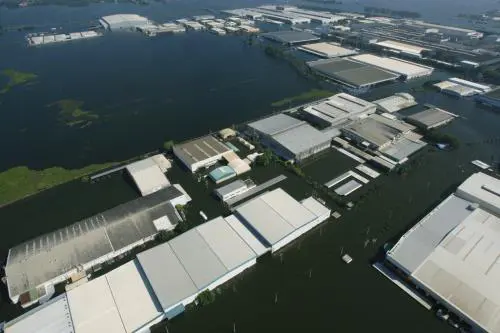
The urgent priority now is to restore the confidence of overseas investors in Thailand, as the deluge has damaged plants and factories in five key industrial estates in the central region north of Bangkok. While Thailand’s geographical location is its advantage in attracting foreign investors, some are now questioning whether the Thai authorities have adequate infrastructure or facilities to help them prepare for natural disasters by, for instance, providing advance warnings.
The Yingluck government originally planned to use its populist policies – such as a rise in the minimum wage, tax benefits for the buyers of first cars and first houses – to boost economic growth.
After the floods have cleared, economic growth should not be the government’s priority. The big challenge will instead be post-crisis management.
The Bank of Thailand has predicted that the floods will reduce Thailand’s economic growth by one percentage point from its original forecast of 4.2 per cent for this year. According to preliminary estimates, the forced closure of six industrial estates will cost the manufacturing sector at least Bt100 billion.
The government has a challenging mission indeed to rehabilitate industry and revive investors’ confidence. The shutdown of many businesses and the suspension of industrial and commercial supply chains may cause massive job losses, especially among contracted workers. This is not to mention farmers, whose lands have been inundated and crops destroyed. The government has estimated that the flooding will affect some 620,000 workers.
The government has recently received the authority to increase the budget deficit to Bt400 billion. But this increased deficit should not now be spent on populist schemes for political gain. Rehabilitation is the order of the day. It is now imperative that the administration revises some of its populist schemes. For instance, the rise in the minimum wage may not be practical as the biggest problem facing many workers is potential job loss as a result of suspended operations at some damaged factories.
Those populist policies that should be up for immediate revision also include the plan to raise the starting salaries of university graduates to Bt15,000 and the rice subsidy programme for farmers.
In the meantime, the government will also have to be prepared for external factors that remain highly unpredictable. The debt crisis in Europe and the ongoing financial and economic woes in the US are significant issues that could have repercussions for Thailand. The floods here will also affect the Japanese industrial sector because the closure of local plants has disrupted supplies of materials for other assembly lines.
If the administration still insists on going ahead with its populist platform without considering these latest incidents, which have greatly affected the economy, it faces the risk of losing some of its loyal constituencies because they will be directly affected by such economic mismanagement.
The Thai economy needs to be revived and restored according to the right prescription, to ensure that it emerges healthier and stronger. The economic platform that the government campaigned on before the election might have worked to score political points for the Pheu Thai Party, but it may not be the right option during the current crisis.
