
Jakarta leads Asean into new challenges


Play
Hats off to Indonesia's Asean chair for two major reasons.
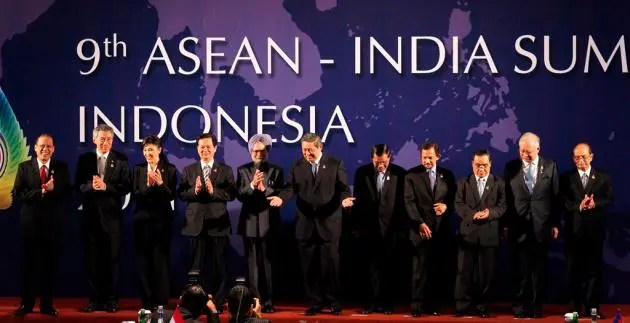
First of all, Jakarta has opened up Asean to face global challenges and attracted active participation from dialogue partners as never before seen in the past four decades. Secondly, the outgoing chair has also pushed hard the grouping to strengthen and implement their shared perceptions and joint actions on pivotal issues related to political-security, economic and socio-cultural as outlined under the newly announced Bali Concord III.
It was Jakarta’s persistency to expand the existing leader-led strategic forum, East Asia Summit (EAS), to include the US and Russia that eventually produced a new synergy of consultations among the 18-member countries, coming from the Asia-Pacific, beyond the East Asian region. With such a wide geographical spread—from North America to Kamchetka Peninsula to the Asian continent and Down Under as well as myriad of strategic interests involved, the EAS will never be the same again. The non-Asean members are no longer passive as they have come with their own strong agendas. For instance, after a long tussle, the Asean leaders gave up the notion of Asean “centrality” and settled for a more general term of Asean as “the driving force” in exchange of “equal” for “close” partnership.
The US, which has been described as a hyperactive dialogue partner and first-time EAS participant, has wisely seized the moment to send strong message of its friends and foes that the world’s superpower is now missile focused on Asia. In the past week, President Barrack Obama and State Secretary Hilary Clinton reiterated that the US will be a resident power in Asia. Indeed, the US enthusiasm to engage Asean including the once-shunned Burma, surprised much of the grouping’s members which used to a wait-and-see Washington-based policy-makers. Just a few months ago, Asean was not certain whether to grant Burma the 2014 Asean chairmanship as requested. But Washington’s positive views over the reforms there have prompted Asean to dispatch Foreign Minister Marty Natalegawa to visit Burma at the end of October, after repeated delays. After his visit, the Burma’s chair was a done deal.
Obama’s decision to dispatch Clinton to Burma has in effect removed the last barrier to fully cooperate with Asean without any discrimination as before. With equal access to every Asean member and as a group, the US level playing fields is now on par, if not bigger, than China or Japan within the grouping’s scheme of things. Obama’s star-power presence at the EAS was further boost because Russian President Dmitry Medvedev did not show up. He was represented by Foreign Minister Sergei Lavrov. Since the EAS establishment in 2005, Russia has been very eager to join the forum. Former President Vladimir Putin even attended the first EAS as guest of the Malaysian host. It was a bit let-down as Moscow could further use this forum to advance it strategic interest in developing Siberia and the Far East. In fact, the future of Asean Connectivity is now integrated with the EAS agenda, which can easily link up with Russia’s development plan.
As an insurance policy for the grouping’s deepening engagement with major powers, the EAS members will follow the 12-principle contained in the “Declaration of the East Asia Summit on the principles of mutually beneficial relations”, approved at the weekend summit. Asean hopes that the non-binding code of conduct—followed the success of Treaty of Amity and Cooperation—will maintain regional peace and stability and help steer future EAS meetings that would touch on sensitive strategic issues including maritime security. Besides the principle of non-interference and renunciation the use of forces, the principles include international law of the sea, UN Charter, TAC and other recognized international laws. If the comfort level among the EAS members increases over the years, these principles could form the basis of rules and binding codes of conduct in emerging regional security architectures. Asean is proud that its 35-year old regional codes of conduct have now been endorsed by nearly 30 countries.
Jakarta’s political experience in conflict resolutions and reconciliation over East Timor and Aceh enables the chair to dwell more on efforts to build dispute settlement mechanism within Asean. Indonesia was first to cite the responsibility to protect principle to convince Burma to allow representatives Asean and international organizations working with local authorities to assist the humanitarian and relief operations in the post Cyclone Nargis in May 2008. Jakarta has also strongly supported the establishment of Institute for Peace and Reconciliation as mandated in the blueprint of the political and security pillar.
As part of the efforts to promote political and security cooperation in Asean, Indonesia has served as a facilitator for the ongoing conflict between Thailand and Cambodia. The unusual role of Asean and its chair has been recognized by the UN Security Council and the International Court of Justice. Although the conflicting parties have showed willingness to station the Indonesian observation teams and complied with the council’s and world court’s deliberations, progress on the ground so far proceeded at a snail pace. However, Indonesia is likely to continue on this role after its chair expires at the year end replacing by Cambodia.
One of shared perceptions today that could lead to a common perception and policy in the future could be on the Asean policy on non-proliferation efforts and nuclear disarmament. Burma’s nuclear ambition and the link with North Korea remain problematic, which needs to be clear up as soon as possible, especially in lieu of fast improving US-Burma relations. After 16 years, the 1995 Southeast Asian Nuclear Free Zone or SEANWFZ has now transformed into a regional security deterrent. Furthermore, Asean is getting close to complete negotiations with all the five nuclear powers to allow them for accession to the protocol of the SEANWFZ. Asean has started to discuss on broad approaches on the peaceful use of nuclear energy and safety measures.
In another ten years in 2022 when Indonesia takes up the chair once again, a better evaluation can be made whether the foundations laid at the weekend summit have been fulfilled. With seven years into the Asean Community, Asean members will be judged on their ability to formulate “common voices” on global issues as articulated in the Bali Concord III, even though some of resilient points were derived from Bali Concord II (2003). As the grouping’s largest member with consolidated democracy and its security preponderance, Asean can expect the Bali Concord IV (2022) in the offing that further propels Asean to take up common actions rather than verbal commitments.
