
Winds of the Arab Spring blow into unyielding states


Play
Eleven months of sustained Arab protests seeking political change and participatory government, combined with the sacrifices of lives, shows that the Arab world is in for a long haul on its journey to the second hurriyah - freedom.
The first taste of freedom, with the end of the colonial era, was illusory.
Peaceful Syrian opposition to the regime of Bashar al-Assad, resulting in 3,500 deaths and thousands imprisoned, is entering a critical phase. King Abdullah of Jordan has called on Bashar to step down. The Arab League has called for the ending of state-perpetuated violence there. But Bashar is not ready to go at any cost. As major powers watch in silence, the next few months will show the end result in Syria; the killing and oppression of citizens cannot go on forever.
The further strengthening of state security apparatus in Saudi Arabia, with the nomination of the hardline and religiously conservative Prince Nayef bin Abdul Aziz as the crown prince and his brothers placed in all important security positions says that the Saud family will not tolerate any internal opposition to the regime. Any sign of opposition will be crushed. Crown Prince Nayef is known for heavy-handedness against political opposition, against any criticism of the puritan Wahhabite state theology, and is resistant to reform.
Saudi Arabia came into being in 1932. Based on the political theology of religious puritanism called Wahhabism, it stresses religious and social conservatism, gender exclusivism and the supremacy of the sedentary Saud tribe over other bedouin tribes with whom it has entered into alliances. The Saudis defeated the then ruling Sharif Hussein bin Ali of Mecca (1852-1931), gaining control over the holy sites of Islam – Mecca and Medina – and using them to proclaim political legitimacy. At that time, the British formed two new countries – Transjordan and Greater Syria – which included present-day Iraq. After this defeat, Sharif Hussein bin Ali migrated to Transjordan, where his son Abdullah was made king; the current King Abdullah II of Jordan is one of his descendants. Ali’s third son, Faisal I, was the king of Syria briefly, and later became the king of Iraq. Faisal I signed the Faisal–Weizmann Agreement with Dr Chaim Weizmann, president of the World Zionist Organisation, accepting the Balfour Declaration proclaiming the establishment of the Jewish homeland in Palestine.
King Faisal I’s grandson, Faisal II, was overthrown and killed in a 1958 coup by Iraqi army commander Abd al-Karim Qasim. This was followed by a long period of instability, ending with the political triumph of the Arab socialist Baath Party in 1963, leading to the coming to power of Saddam Hussein in 1968. With the end of the Saddam era, Iraq has become the first Arab Shia state in the region.
The winds of the Arab Spring also initially affected Saudi Arabia, inspiring protests that were heavily put down. The Saudi leadership is pleased that this year’s Hajj pilgrimage ended without any political disruption. The Saudi leadership is thus engaged on several: crushing al-Qaeda, stifling Arab Spring-inspired protests and countering the rise of Iran. It prefers finding solutions to these challenges on its own terms, based on Wahhabism, with the aim of strengthening the monarchy, curbing the Arab Spring on social media, addressing the socio-economic needs of its population, and the region in turmoil.
Saudi Arabia and Iran are the only two Muslim countries that do not separate religion from politics. As theocratic states, each seeks to dominate the Muslim world and be the representative of the Sunni and Shia sects respectively. Interestingly, the third important Muslim country in the Middle East – secular and democratic Turkey – is emerging as a role model for Arabs seeking the transformation of authoritarian countries into democratic states where both religious and secular political groups compete freely.
This aspiration was best expressed by Abdellatif Abid, the co-founder of the secular Ettakatol Party in Tunisia, the coalition partner in the new Tunisian government to be led by Ennahdha, the Islamic democratic party. He remarked: “We’re not secularists as the West conceives of it. We’re for the separation of religion and politics, but not of religion and the state.” Hence, there are different forms of political set-up in the large Muslim world from Morocco to Indonesia. The Middle-Eastern Muslim countries except Turkey, while being politically different, recognise Islam as the religion of the state. They also differ in their interpretations and implementations of laws based on sharia.
Furthermore, Turkey, Iran and Jordan have undergone politico-religious change and reform while the rest of the Middle-Eastern countries have focused on maintaining the interests and benefits of the elite and international actors without reforming the political economy and outdated religio-social thought and practices, for half a century.
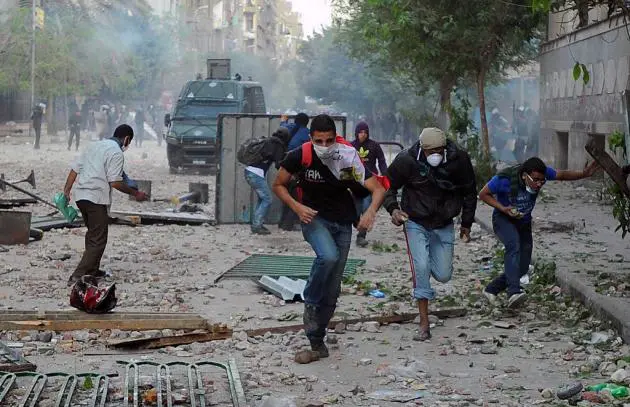
Meanwhile, the hard-earned Egyptian revolution seems to be in a stalemate situation in spite of the November 28 election. The ruling Supreme Council of the Armed Forces (SCAF), beneficiary of massive military aid from the US over decades, has drawn up a long-winded parliamentary election process and is drafting the new constitution, which will end in March 2012. Thus SCAF may remain in power for another year in the name of safeguarding law and order. Meanwhile, the Egyptian economy has been hit hard.
The US is backing the army, with the intention of safeguarding its own interests in the region. Secretary of State Hillary Clinton has described the SCAF election plan as “an appropriate timetable”, while critics are talking about the hijacking of the Egyptian revolution. In spite of this, the moderate Egyptian Islamists are expected to do well in the election, as they did in Tunisia. As religious nationalists, they have a better track record in providing welfare, schooling and economic assistance to those on the bottom social rung during the Sadat and Mubarak eras.
US, European and Chinese interests in the Middle East lie in the region being the source of energy resources, and its strategic location. For them, what matters is “stability” in the region, which may be upset by Iran – the destabiliser – and also the emerging, difficult-to-manage and recalcitrant Turkey, ruled by the Muslim democrat AKP. Thus the spread of democracy has to be deflected for as long as possible, as the rise of popular governments in the Middle East will be strenuous to deal with and will jeopardise outsiders’ interests in the region.
It is time that outsiders and ruling insiders paid heed to the democratic aspirations of the Arab peoples, irrespective of the philosophical format. Be it western, Japanese, Korean, Hindu, Buddhist or Islamic, freedom is the birth right of all nations.
Dr Imtiyaz Yusuf is professor of Islamics and religion at the Graduate School of Philosophy and Religion, Assumption University, Bangkok.
