
The 'Burmese Spring' must be encouraged


Play
This week's visit by US Secretary of State Hillary Clinton was welcome, but is only the start of a difficult and perilous path to reconciliation
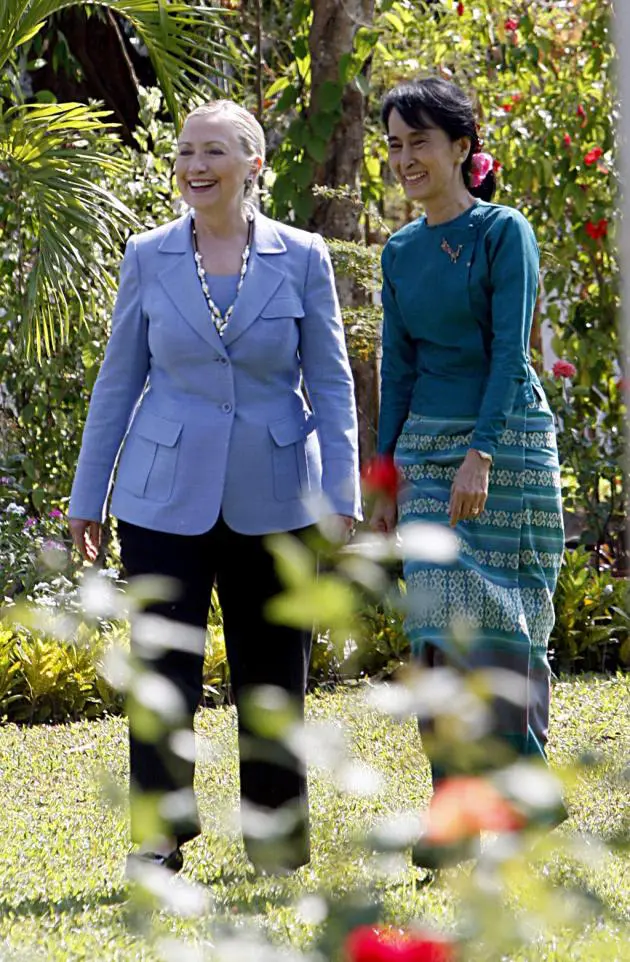
This week’s visit to Burma by US Secretary of State Hillary Clinton is a welcome development for Burma and the region. Clinton appears to have struck a wise balance – by seeking to engage directly with the new leaders in Naypyidaw and not rushing to end sanctions against the controversial regime. The changes that have occurred in Burma in recent months are welcome and long overdue, but as many analysts have noted, they are far from irreversible.
The shadow of October 2004 – when the former military strongman, General Than Shwe, sacked then prime minister and intelligence chief Khin Nyunt – hangs like a grim shadow over recent moves by the Thein Sein regime.
In the past few weeks, all Burmese and Burma watchers have wondered if the junta’s many hardline conservatives will accept the hand of friendship extended to pro-democracy leader Aung San Suu Kyi – and whether these moves are simply part of a well-orchestrated charade designed to invigorate the Burmese economy.
For the US, there are also the North Korea and China factors. We really hope Washington stays the course in its engagement with Burma and is not simply using Burma to contain these two rivals. The Burmese people deserve better than that.
For the moment, most people are happy to take the positive view that the country is slowly liberalising. But, even if Suu Kyi and her party, the National League for Democracy, are allowed into the political arena, via upcoming by-elections, huge hurdles still lie ahead.
The real test is whether Burma can end its ugly, racist treatment of ethnic minorities and guarantee its citizens inalienable rights and liberty.
In the days prior to Clinton’s arrival in Naypyidaw, groups such as Physicians for Human Rights and the Partners NGO revealed details of continuing human rights abuses committed by Burmese troops in conflict-torn Kachin State in the far north.
Journalists who attended a press conference at the Foreign Correspondents’ Club in Bangkok on Monday were shown photos of recent atrocities, including bodies of civilians allegedly killed and tortured. A representative of the Kachin people told of repeated rapes and attacks on unarmed villagers – war crimes, she said, similar to allegations that have plagued most ethnic states in the north and east of Burma for the past two decades.
Peace talks have been held in southern China this week to try to resolve the fighting. But even if that happens, doubts remain as to whether the military dominated government will grant any serious level of autonomy, as sought by most of the ethnic groups – who make up more than a third of the national population – as a lasting solution to their conflicts.
The problems in Burma are so extensive and deep-rooted and the civil war there has dragged on for so long – over 60 years – that many feel that the generals simply don’t understand peace, or how to achieve it.
The main cause for optimism centres on Suu Kyi because she is seen as perhaps the only person with the stature to bring the ethnic groups to the table to negotiate a credible and long-lasting settlement. But will the old men who have run Burma for so long allow this to happen? Can a fresh, younger generation rise up to carve its own path to a happier, more prosperous future? Or will the old guard – Than Shwe and his cronies – re-emerge, and crack down on the liberal seedlings now starting to sprout?
These were the billion-dollar questions hovering, like an elephant in the room, when Hillary Clinton met Thein Sein, and later, dined with Suu Kyi. Let us pray that the “Burmese Spring”, as some have called it, can flourish and yield positive fruit; that Suu Kyi is allowed to work some of her magic.
The tens of millions of poor Burmese have suffered too much for too long. Indeed, the entire region has paid a hefty cost. But Asean, and the world, will have to help Burma along the difficult, twisting path ahead.
Change of this magnitude will require special thinking and well-timed support from a whole range of actors; it could still take a number of years. Peace must be the ultimate goal. Suu Kyi can help mend her divided land, but she will need to move slowly and surely, and extend the hand of friendship to many once regarded as her foes.
Thailand should support her and Thein Sein in their bold initiative. Both countries have much to gain from the laying down of arms and the move to negotiated settlements in the states all along our long mutual border.
