
Round and round we go, amending the constitution


Play
Charter reform has become part of an inevitable cycle after each coup but people continue to try to avoid the law
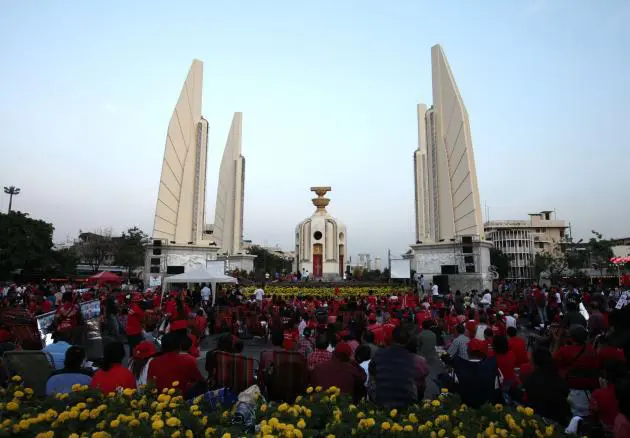
“Charter reform” is one phrase that keeps haunting Thai politics. We heard about it on a daily basis in the wake of the 1992 uprising, then again after Thaksin Shinawatra was ousted as prime minister when coup-makers sought to replace the 1997 “People’s Constitution” that they abolished. Now, the Pheu Thai Party and the red-shirt movement want to kick-start the long-held plan to remove the “coup-makers’ charter”. The circle keeps recycling with no end in sight.
Why is “charter reform” so important? Even those advocating drastic changes to the current charter cannot really explain how a new Constitution could make things better in Thai politics, or how military “opportunists” will be subdued forever. Thailand has had countless charters – good and bad ones – that shared the same destiny. They ended up being victims of bad politics, which never sought to foster strong points of our highest laws of the land.
As far as constitutions are concerned, we end up with only one thing: People always look for their loopholes and try to get around them, so that we can act against their unwritten intent. This was a main reason why the much-loved 1997 “People’s Constitution” was as thick as a student textbook. It was written to prevent nit-picking or hair-splitting interpretations or exploitation that doomed its predecessors. As we all know, even the extreme precaution, designed to protect the 1997 charter from the smart malice of Thai politics, proved totally inadequate.
We can “reform” the Constitution all we want, but we will not get anywhere if we fail to reform ourselves. The fact that the “best” Constitution, the 1997 charter, did not survive only confirms that even the best doctrine is helpless if people choose to ignore it or only have selective faith in its principles. Without reforming ourselves, we will have to continue doing what we always did in order to feel a little better. We will continue to blame “military opportunists” when the next charter is “torn apart” once again.
Clean politics is the best defence against coups. If this sounds like a “military apologist’s statement”, it’s also the truth. Corruption and abuse of power can weaken democracy as well as ambitious, dictatorial military strongmen can. Politicians can’t use a charter as a shield; they must shield a charter by behaving themselves. No constitution can protect a government. Only honesty can.
Will Thai politicians be willing to break out of the cycle of charter reform, bad government, coup, uprising and charter reform again? That’s a big ask. Some academics have even tried to defend corrupt politics as a normal part of growing up democratically. Thais have been told to be “patient” with political crooks and see how democracy will eventually deal with them. Those academics miss the point. Thailand’s problem is not an “impatient” populace wanting a short cut to a squeaky clean political system. The country’s problem is politicians’ inability to restrain themselves from giving “military opportunists” the very pretexts they need to stage a coup every one or two years.
Who were the last politicians in power kicked out of office and punished through legitimate means because of corruption? We can’t remember because that never happened. The best we could hope for is corrupt politicians being punished AFTER they were no longer in office. Some ministers embroiled in graft scandals may have been forced to resign, but how many were legally punished? In most cases, they went scot-free thanks to Cabinet reshuffles, which usually replaced crooks with their equals.
Maybe we don’t deserve a great charter after all. If the 1997 Constitution could talk, it would blame corruption and abuse of power as much as the 2006 coup for its demise. It would also tell the current “charter reform” advocates that constitutional power lies not in what’s written, but in citizens’ true faith in the principles that make up the highest law.
