
A new era and Asian anxieties


Play
History may judge that this was the year when the 21st century really began.
Back in 2000, continuity seemed assured, with the United States consolidating power and primacy. One decade on, changes potentially upend the global balance.
The financial crisis that began in the West in late 2008 is entering a second and more dangerous phase. The euro zone shows up not only sovereign financial problems but also the difficulties in exercising collective leadership. But the US is not in acute crisis and its economy showed better demand in the last quarter of 2011.
Everyone agrees that something needs to be done. Yet Washington is gridlocked: witness the failure to agree on ways to cut the budget deficit. From very different ends of the American spectrum, the “Tea Party” “revolution” and the “Occupy Wall Street” movement are evidence of a welling restiveness on the part of the middle classes.
Across the Middle East, the “Arab Spring” has turned into a longer season of uncertainty. Some celebrate the end of Muammar Gadhafi in Libya and call for resolution in Syria. But beyond old autocracies, the emerging concern is who will next govern in the region, and how? With the landslide win for Islamist parties, Egypt’s December poll brings that question into sharp focus.
How has Asia coped in a year of turmoil?
Growth continued for much of the year, and some commentators have predicted that this is the time when the region will soon catch up with and finally surpass the West. But the reality is more complex.
Asia is not unaffected. Markets are in tumult, and economic growth rates across the region have been shaved. Prospects for 2012 are mixed, even for those like China and India with large domestic markets, let alone the smaller economies.
Politically, there is no “Asian Spring”. But governments across the region are nevertheless dealing with new expectations from citizens. In erstwhile pariah state Burma, the newly installed government has freed some political prisoners and will allow long-detained opposition leader Aung San Suu Kyi to contest elections. Thailand, Malaysia and Singapore too have seen changes that make for greater participation and more complex politics.
For established Asian democracies – Indonesia, the Philippines and India – the challenge goes beyond electoral issues. Demands in this past year have grown for governance that is less corrupt and more effective. Public protests and a number of high-profile prosecutions have resulted.
Outside of some copycat demonstrations, the Occupy Wall Street movement has not shown strength across Asian cities. But the political imperative from Singapore to Bangkok and Beijing is to close the stark gap between the haves and have-nots. Asset bubbles in housing and inflation in the basics of food and energy have been testing governments to make growth more inclusive.
With its economy still running ahead, China has loomed larger this year in the expectations of others. Yet Chinese leaders grapple with many of these same issues, and on a much larger scale. External conditions are becoming more difficult to deal with, as are domestic issues. Measures put in place to keep up growth have distorted the market with too much easy credit. With a dip in growth, social unrest is growing. With its upcoming leadership transition, China’s rulers must do all they can to prevent an economic hard landing and shore up political legitimacy. However, as the Chinese military builds up and a more assertive diplomacy is heard, acceptability is also an issue with near neighbours
Global changes in 2011 have come quick and complex in a political, economic and social vortex. Asian states have not been immediately caught in that swirl, but they feel the pull more than many admit.
This highlights an ongoing problem in the region’s relationship to the global system. Despite economic growth, Asians are currently more influenced by global trends than they are able to influence what happens. As the US and Europe weaken, gaps in global governance show. Witness the G-20’s current lack of coordination, and the lack of success in the Doha trade talks. Even the acclaimed success in the year-end climate change meeting only starts off negotiations towards a later agreement, and we should expect continuing differences.
The world at year-end is no better than it was at the start. Indeed, conditions – especially in the last quarter – have become increasingly difficult. Asians may make a New Year wish for the US and Europe to put their houses in order. But looking ahead, Asians must consider what they can do to secure peace and prosperity for themselves and the wider global system.
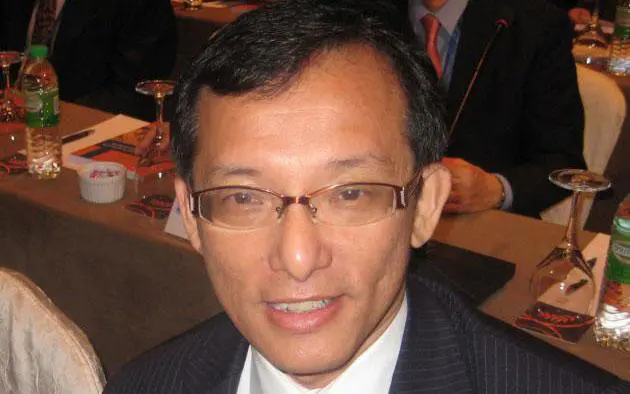
Simon Tay is chairman of the Singapore Institute of International Affairs and author of Asia Alone: The Dangerous Post-Crisis Divide from America.
