
Taiwan votes for stability and prosperity


Play
Ma's victory shows a desire to build on the increased trade, investment and contacts of the past four years
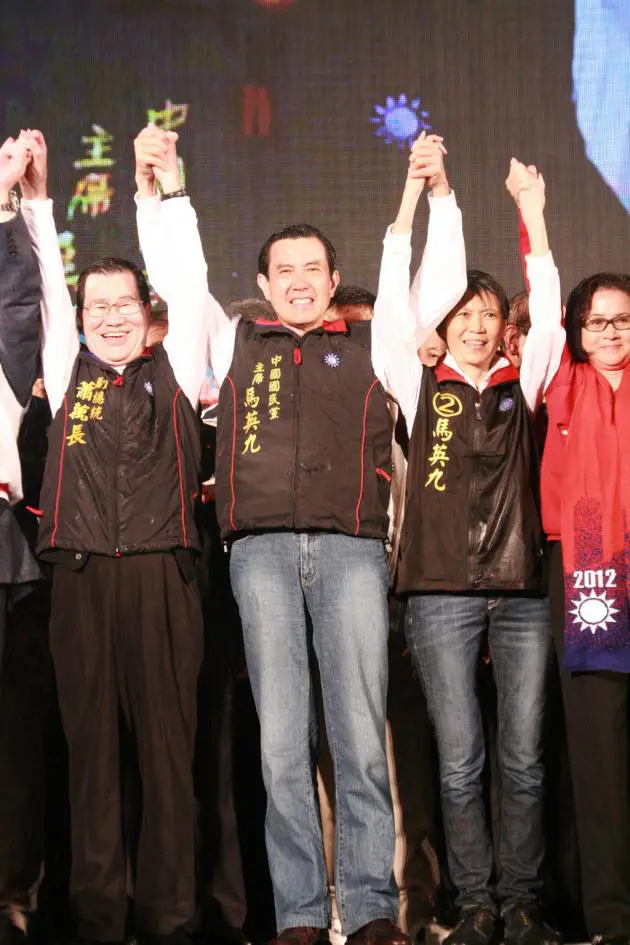
Taiwanese voters have decided to go for stability and prosperity – even though some were not happy with the incumbent President Ma Ying-jeou, who won the election over the weekend. Ma won re-election by more than 6.8 million votes, leading his opponent – Tsai Ing-wen of the Democratic Progressive Party, who garnered more than 6 million votes – by about 800,000 votes. Although Ma won 51.6 per cent of the total votes, the turnout was less than the 2008 figure at 58.84 per cent. This time, Tsai won 45.63 per cent of the total votes. The People First Party’s James Soong took only 2.77 per cent of the total votes cast.
The outcome showed the islanders are resilient and pragmatic. They want to ensure their livelihoods continue in predictable ways and become more prosperous. To change a new administration with new policies could further jeopardise the cross-straits relationship. At this juncture, the best guarantee is to maintain stable and excellent relations with China. During the past four years, their friendship has strengthened with increased trade, investment and people-to-people contact. In the next four years, it will be crucial for Ma to further develop ties with China in ways that further enrich the islanders. Nearly a third of Taiwan’s population think that dividends from increased China contact have not filtered down to the ordinary people. Ma should give this issue top priority.
One has to praise Tsai, as she has performed well, drawing more support this time from the southern part of Taiwan. Her moderate views on ties with China have gained increased support from those who thought the island was becoming too close to the mainland. As such, they feared Taiwan would become too dependent on China and lose its autonomy. This time, Ma must take these concerns seriously and address them with Beijing.
Obviously, China also understands the sensitivities of cross-straits relations; it refrained from commenting on the electoral process, unlike in the past. With the fourth generation of China’s leaders waiting to be confirmed, it would be interesting to watch how future China-Taiwan relations evolve. One of the most popular points of contention is China’s willingness to use force against Taiwan, if the island decides to declare independence. Ma’s detractors believe that Taiwan’s security is fragile because of the missiles pointing at the island. Therefore, as part of confidence building measures, it is to be hoped the new Chinese leaders would denounce the use of force as an option. If China can take up this path, it will win accolades not only across the straits but also around the rest of the world.
China-Taiwan relations will serve as a barometer for Beijing’s future diplomacy. If China is successful in strengthening relations and creating an environment for a peaceful reunification with Taiwan, then its status in the international community will increase further. A China that can make Taiwanese feel calm and settled will win the hearts and minds of the rest of the world.
