
Planning for a brighter future


Play
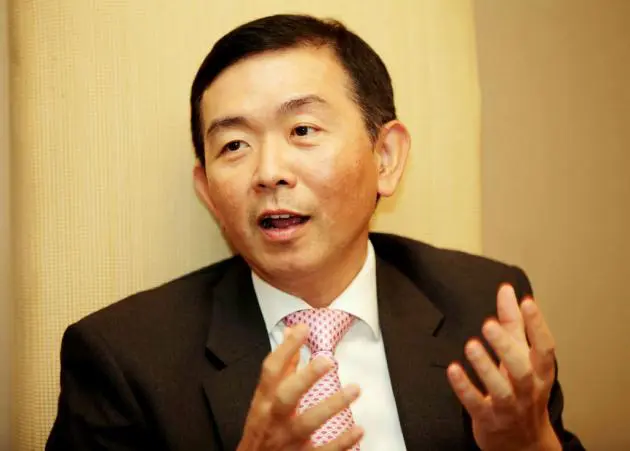
Kovit Kantapasara, CEO of General Electric Thailand, forecasts double-digit growth for the company this year and sees Thailand as a hub for the Asean Economic Community
Kovit Kantapasara, the newly-appointed president and CEO of General Electric (GE) Thailand, will focus on the energy, aviation, healthcare and lighting businesses to achieve growth in 2012.
Kovit declines to be specific on US-based GE’s sales revenues in Thailand, but says the country is one of GE’s top-three markets in Asean, with combined sales revenues of around US$3 billion in 2011. Indonesia and Singapore are the other two major markets for GE in this region.
For Thailand, the energy sector, covering power generation, water resource management, as well as oil and gas, is the top priority.
PTT plc, the Electricity Generating Authority of Thailand (Egat), and other small and independent power producers are among the major clients.
“To meet the country’s energy demand, we offer electricity generation technologies using renewable sources such as water, wind, solar energy, bio-gas and other alternative fuels,” he says.
In aviation, Thai Airways International is a major customer, which last year placed orders for GE engines for its new fleet of eight Boeing 777 jetliners.
In healthcare, GE is a supplier of sophisticated medical imaging and other high-technology equipment for hospitals, as well as portable X-ray and other machines for remote healthcare centres.
In the energy sector, he says, renewable and alternative energies are gaining prominence due to environmental concerns and other factors, even though they still account for a small percentage of total energy consumption.
While solar energy is booming in Thailand, he cautions that the installation of solar panels is quite space consuming, so a lot of farmland is needed to produce sizeable megawatts.
When compared to the latest generation of wind turbines, wind power is another alternative that may be more efficient than some solar energy technology, according to Kovit.
In 2011, GE Thailand recorded a 40 per cent growth in business, thanks to the aircraft engine contracts and other favourable factors.
GE also launched its 50-megawatt gas turbine, called the FlexAero LM6000, last year, which is aimed at small power producers (SPPs) that supply electricity to Egat.
Regarding the lighting sector, which was GE’s original business when the firm was founded by light bulb inventor Thomas Edison over a century ago, Kovit expects the Metropolitan Electricity Authority and Provincial Electricity Authority to switch to GE’s LED lighting products for Bangkok and provincial streets soon.
For 2012, the firm has set a double-digit growth target. The CEO is also upbeat about Thailand’s prospects as a hub for the Asean Economic Community, which will become effective in 2015, creating a single market of 600 million consumers and a single production base which can serve regional and global markets more competitively.
“The country has a lot of room for growth due to its capable human resources and abundant natural resources.
“However, private investment has been slow in the past five years, with the construction of Suvarnabhumi international airport being the last major investment in infrastructure.
“We also expect the State Railway of Thailand to replace its ageing locomotives, which have been in use for the past 20-30 years,” he says.
Globally, GE generated about $100 billion in revenues from its industrial sector and infrastructure businesses, while its financial services business accounted for $47 billion in revenues last year.
