
Latest football controversy a bad prelude to Euro 2012


Play
AC Milan-Juventus fiasco a reminder that things cannot go on as they are
Again, the ball has crossed the line. Again, the referee said it wasn’t a goal. Again, we are approaching a major soccer tournament with lip service from the authorities that they are poised to make use of technology (perhaps rudimentary ones like video replay) to decide crucial moments in a match. Again, great damage has been done and the authorities say they can do nothing about it.
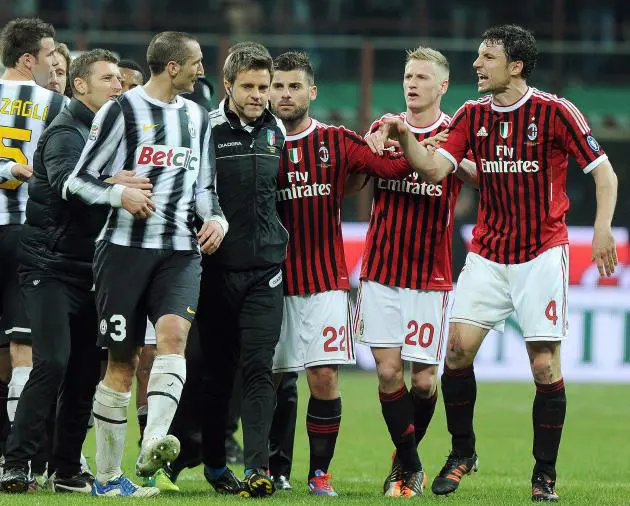
The enthralling Serie A match between AC Milan and Juventus ended in a 1-1 draw, thanks to an inexplicable refereeing decision not to award what the whole world saw as a clear AC Milan goal. Instead of leading 2-0 and playing a comfortable game, AC Milan had to nervously defend a one-goal lead until they cracked after 80 minutes. The result will have great bearing on who wins the Italian league championship this season, as AC Milan lead the table by just one point, while Juventus have a game in hand.
Whether the problem in Italy runs deeper than the soccer authorities’ stubbornness remains to be seen. Video footage and captured still photos of the “ghost” goal that raged on the Internet like wildfire showed the linesman was perfectly positioned to make the right call. Instead, he vetoed the mood of everyone else in the stadium and, as one Guardian online writer put it, “in the solar system”, by telling the main referee that it was “certainly” not a goal.
Repercussions are still raging in Italy. But in the end, the responsibility rests on the shoulders of the soccer authorities whose lame excuse that aiding the referees with technology will take away excitement from the game has created so much injustice. Fan rivalry – which is sometimes a danger in itself, without any controversy – has been aggravated by refereeing errors that could have been easily prevented. The injustice is not one of the game’s “charms”, as the authorities would have us believe. Everyone in the world knows that, except for one group of obviously ignorant people.
With the European championship coming up, the AC Milan-Juventus controversy will likely serve as another wake-up call. But then again, if a vow to change the situation is made, it would not be the first time a promise to utilise technology to decide a goal, a crucial “offside” or a red card has been given. Major controversies were often followed by technology pledges. This pattern has almost become a ritual.
Are the soccer authorities merely ignorant? Or do they also have a dangerous mindset? They always get it wrong when it comes to the use of technology. First, they associate injustice and controversies with the “beauty” of the game. They love post-game quarrels more than fairness and they probably don’t care much about instilling good sportsmanship into younger people. Their pro-controversy mentality has inadvertently encouraged players to cheat or con the referees, knowing that even if they were caught cheating later, the “goal” would still be allowed or disallowed as decided on the spot.
One thing is certain. More balls will cross the line and the referees or linesmen won’t “see” them. More red cards will be wrongly given. More “off-sides” that never were will be flagged, thus disallowing a goal and changing the outcome of a game, a league competition or a tournament. There will be more outrage, which might be commercially good for the soccer authorities because amplified fan rivalry is better than any hype for future matches. More players will be tempted to cheat.
Although nobody sees it yet, the game is being punished by the soccer authorities. Its popularity may be sustained, or grow in proportion to the degree to which opposing teams’ fans “hate” each other, but as with some diseases, the damage may lie quietly, before abruptly dealing a fatal blow.
