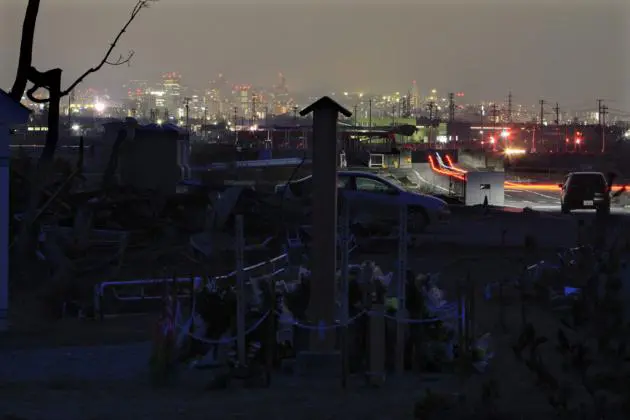
After the defeat during the World War II, Japan was literally left very much alone with the US helping. The rest of Asia was trying to recuperate from the ravage of war. After two decades of continuous of hard works and rapid economic growth, Japan has progressed nonstop and transformed into one of the world’s leading economics. It was only recently that China has exceeded Japan’s economic growth and subsequently replaced it as the second largest economy in the world. The natural disaster in Tohoku this time has not dispirited the Japanese people. Indeed, it has empowered the Japanese, especially at the community level to rise up and join hand to rehabilitate the devastated environment and landscape so that they can return to their homes.
The Japanese people have been humbled by the experience and they want to make sure that the goodwill shown by the international community would be reciprocated. In the past, that kind of policy responses or implementations would be the sole responsibility of the government in power. After all, it used to be the government-run plans and programs that permeated all Japanese strata and lives. Now, it is no longer the trend. Tsunami and earthquakes taught them to forge closer cooperation overcoming the once fragmented communities. Their mutual vulnerability and sense of hopelessness have given them new strength and hopes. Now they often meet and discuss and plan together in ways that were not possible in the past. Victims in affected areas in Iwate, Miyake and Fukushima, for instance, are now challenging the central government with better ideas and plans to reconstruct their communities and make them safer.
Peoples in Tohoku now trust their own neighbors and communities more than they trust their government. They realized that when pushes come to shoves, the government and those politicians it would be stymied by their parties’ and other big-wigs’ vest interests. Although there have been much progress in recovery efforts, thanked partly to the growing voluntary activities among the young peoples who used to shy away from such undertakings, the government and party-interested still did much to hamper recovery efforts and programs. For instance, the government has failed to eradicate huge amount of debris left over from the massive earthquake and tsunami.
In days and months to come, Japan would have to be more flexible with its external relations. Prime Minister Yoshihiko Noda succinctly said that his country will pursue “all-Japan” foreign policy which will mobilize all stakeholders to boost Japan’s international standing and contribution to the world. As such, Japan would have to more flexible, especially with stringent agricultural policies that protected their shrinking farming communities. Japan has announced last November that it would join the US-led Trans-Pacific Partnership free trade agreement. Doubtless, Japan would need to open up its traditional market in the future. At the moment, several ten thousands of younger farmers from abroad are now working in rice fields and orchards around the country to help the country’s aging farmers. This eventually could change the thinking of Japanese agricultural sectors that the time has come to liberalize the highly protective market to allow foreign agricultural products, especially rice, to be imported. Burmese, Vietnamese and Thai rice, for instance, should be allowed in the market. Discussed with Japanese politicians from less established parties such as Mina Party (Yours Party) brought positive responses but bigger market access for sensitive items would only be possible with acquiesces from the established parties such as the Liberal Democrat Party or the current Democratic Party of Japan. More political will is needed, power wielders know.
Indeed, no country in the region understands and appreciates the region’s peace and stability better than Japan. After the atom bombs destroyed Hiroshima and Nagasaki, Japan’s one-track development mind propelled the post war’s continued progress albeit sluggish growth in the past two decades. When the Asian region was hit by the financial crisis, Japan came out to help and tried to build new regionalism on various cooperative schemes including financial assistance. This time it was not war but natural disaster and along with man-made nuclear radiation hazard that caused hiccups in the country’s production chains with horrendous outcomes. Japan understands well its future destiny is linked to the region. As the recent floods in Thailand have shown, any malfunction in Japanese factories could have great economic repercussions throughout the world for an extent period of time. Thailand hosts major automotive electronics and other manufacturing firms which from the extensive supply chain network with the rest of the world. However, a new trend is taking shape quickly due to the fervent desire of the government and Japanese people to see their country moves forward on a new growth model focusing on building a low carbon society
Beyond economic matters, Japan has to be more outward looking also in non-economic areas. In the past Japan has been concentrating on creating multi-layer security frameworks to ensure the longevity of regional stability. The region-wide Asean Regional Forum was one of these strategies, which was first put together by Japan in 1991. However, at this juncture new strategic landscape has emerged along with more assertive US and more powerful China playing out their political and security maneuverings in the Asian region. As a result, Japan can no longer shy away as it used to be. Tokyo is now embarking on new security cooperation with the international community near and far, pushing the post-war constitutional limits.
Closer at home, Japan has pledged to increase maritime security and economic cooperation with the Asean members. These are new commitments which come at the most critical time as Japan and Asean are find new avenues to promote their relations and cooperation. Asean wants to see Japan to play a higher profile in security. The grouping knows it does not have the capacity to address the broader geo-political and geo-economic challenges—therefore, there need Japan’s backing. It is only natural that Japan and Asean need to upgrade their security and defense cooperation. Japan can also increase the grouping’s overall defense capacity—after all most of the US defence cooperative schemes with the region are organized and coordinated by the US forces stationed in Japan.
Japan and the region’s well beings and prosperity are closely interwoven. The establishment of Asean Community in 2015 would serve as a linchpin of Japan’s future engagement. As the first dialogue partner of Asean which began informally in 1973, Japan knows the values of Asean to the core. Judging from the revitalized Japan, this time around policy-makers would not adopt the lackadaisical attitude and inward looking towards the region as before.