
Thailand feeling the squeeze as global oil prices climb


Play
Concern is growing over the rising price of oil and the effect it will have.
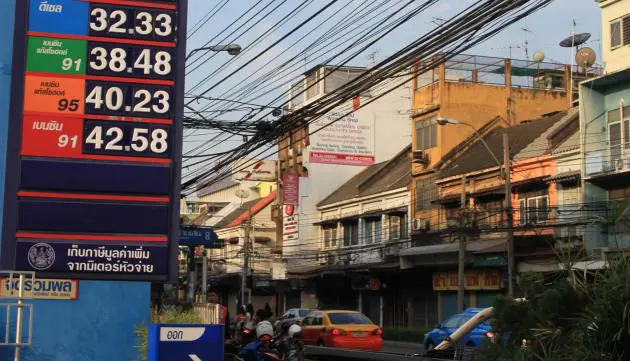
Thailand, as an oil importing country, is vulnerable to any hike in energy prices, which have a knock-on effect on production and transportation costs. Though the government has tried to mitigate the effects by reducing tax and other levies, the energy price is still moving upwards in accordance with the world market. So the question is, how high will the crude oil price go?
The price of oil, like any other product, is determined by the law of demand and supply. In theory, the two factors that drive prices up are higher demand and shortage of supply. But what are the facts in oil’s case? The International Energy Agency (IEA) estimates that the global demand of 90 million barrels per day will increase by only 0.9 per cent in 2012, or around 0.8 million barrels per day. Factors affecting demand for oil this year are the economic slowdown in Europe, the stronger than expected of economic recovery in the US, the shutdown of some nuclear power plants in Japan and the strong demand growth in Asia. On the supply side, total global supply is also 90 million barrels per day, with OPEC output around 30 per cent of the total. Oil supply from the first quarter 2009 to the first quarter of 2012 has increased steadily, from 85 million to 90 million barrels per day, while demand has risen at a slower pace. So, given the figures, why has the oil price increased from its low of US$40 per barrel in early 2009 to $110 in early 2011 and then from a low of $75 in October 2011 to $105 now?
There are several reasons. First, the uprising in the Middle East has brought worries over a possible shortage of supply. Moreover, the recent tension between the US and Iran over the latter’s nuclear programme has heightened concern that oil-transport routes will be blocked. The second reason stems from oil’s status as a trading commodity. At a time when interest rates are low and liquidity is plentiful, it is easy to borrow money to trade in commodities like oil. The tension in the Middle East has encouraged traders to hold long positions in oil by buying oil futures and maintaining cash margins rather than settling in full. These explanations for the oil-price rise suggest it will be short-term, and lead us to expect the price will come down eventually when traders decide to offload their positions. The question is, when will that offloading happen and how high will the oil price go before they decide to sell? Some economists have suggested that governments should impose restrictions on oil trading because it skews the workings of demand-and-supply. Excessive trading lately has increased market volatility and obviously pushed the oil price upward.
Whilst it is difficult to predict the level or force of any eventual oil-price drop, we need to admit that higher prices in the meantime would increase the risk of higher inflation. They would also leave people with less money to spend on other things after settling their higher energy bills.
In its latest meeting, the Monetary Policy Committee left the policy rate unchanged at 3 per cent. But watch this space. We might have seen the interest-rate cycle hit rock-bottom, with only one way to go.
Padej Piroonsit is head of Treasury Sales at CIMB Thai Bank. Views expressed are his own.
