
Asean looks to protect its craft-making traditions


Play
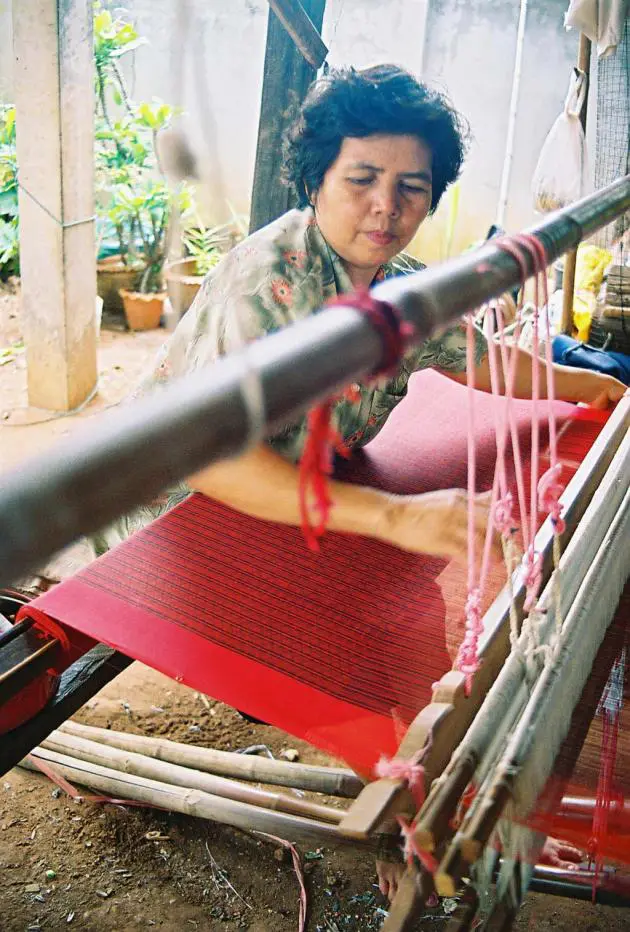
Inabel and binakol, the weaving traditions of the north Philippines, served as take-off points of discussion in a forum tackling the plight of weavers and craftsmen in Southeast Asia and China.
The three-day forum, spearheaded by the National Commission for Culture and the Arts (NCCA), tackled issues about the economic and cultural implications of weaving in the region.
Delegates from Thailand, Indonesia, Malaysia, Philippines, Brunei Darussalam, Vietnam, Laos, Myanmar, Cambodia and China were present to showcase their respective weaving traditions.
Jesus Peralta, anthropologist, former director of the National Museum and Don Carlos Palanca, Literary Awards Hall of Famer, talked about the protection of intellectual property in the case of “intangible” cultural heritage.
In this case, intellectual property refers to the entitlement of an individual and/or a community to its cultural heritage. Intangible cultural heritage is defined by Peralta as “being continuously recreated by a community or an individual.”
“This definition posits the question of the ownership of intellectual rights,” said Peralta.
However, the major issue lies in traditional culture being in the public domain. “Can it be owned? Technically, any entity can claim the culture of any segment,” Peralta said.
To maintain and develop intangible cultural heritage through individuals, Peralta added, a person’s legal status must be clearly defined through legislative action, a relevant law, right of attribution, and an organisation.
Lastly, Peralta reiterated the difference between intangible cultural heritage and intellectual property rights. “Intangible cultural heritage differs from intellectual because it developed throughout generations and continues to be used and evolves within the society it originated from.”
Wanwiwat Ketsawa of the Support Arts and Crafts International Centre of Thailand’s Commerce Ministry, said Thailand held training programmes for weavers: “Aside from the traditional method of weaving, the weavers are taught creating natural dyes, quality control, mixing and matching the colours.”
Ketsawa also took note of the problems of traditional Thai weaving amid global warming and an ageing society. The three-day forum in Ilocos Norte arrived at the decision to establish national-level weavers’ associations in each country; strengthen regional trade networks; and promote intellectual property rights.
