
The stairway to heaven is all booked up


Play
You need not be a strict Buddhist to find the story of Steve Jobs' life after death very bizarre.
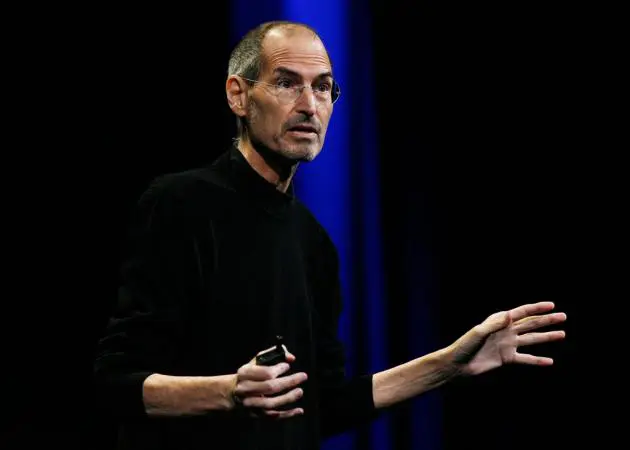
According to the Dhammakaya sect, the late co-founder of Apple has been reincarnated as a mid-level angel and is now living in a six-storey building in a heavenly atmosphere. Such a plot would not stir up controversy had it been published as fiction or made into a Hollywood film, but it sparked a debate when it was aimed at teaching the law of karma.
Who are we to judge Jobs on whether or not he should be in heaven? In Thailand, Apple fans have already named him Sasada (Prophet) Jobs in honour of his contribution to the world. But reincarnation as an angel is another thing. Like other top executives, Jobs was no angel when it came to cutthroat business competition. Even after his death, his company won a case against South Korea’s Samsung and is engaged in a number of other lawsuits. We don’t have to think who is holier than who in this matter as the bottom line is that, in the real world, where Jobs once lived, it was hard to let a day go by without committing a sin.
If you need to put Jobs in any category of heaven, he would conveniently fit into the one illustrated by Dhammakaya. The sect, unlike mainstream Buddhism, teaches a unique path of how to climb the ladder to heaven. Their followers are inspired by a different doctrine. They say that you must donate more to get more, whereas the Lord Buddha described karma as the law of cause and effect. And good karma doesn’t really involve anything commercial. It is clearly put in the Tipitaka, a story about a man called Makamanop who needs not invent anything. He used his feet to clear the ground so that others could stand on it too. He was pushed and then repeated the same act without anger. He was reincarnated as an angel too.
None of us can prove if heaven exists so let’s put good karma into perspective. Good karma, if judged by donations and directly linked to Dhammakaya doctrine, will not be calculated in the equation for someone like Makamanop or the volunteers who helped out during the flood crisis. How about those who make donations to needy children? Will they become angels after death?
What if a person donated millions to Dhammakaya by using money from corruption? Will that person go straight to heaven or hell? If you use the law of karma of cause and effect, corruption means you steal money from taxpayers, and that causes bad karma. The Buddha described karma like a chain of cause and effect, so there is no way of avoiding an end result if there is an action. No one can write off bad karma simply by doing good things.
Likewise, the co-founder of Apple gave us the pleasure of his inventions but along the path he was attacked as a businessman who protected the best interests of his business, leaving the burden on consumers. There were other not-so-good karmic acts along the way, which would not convince the average Buddhist that he could be reincarnated as an angel straight away.
However, we should not be worried that dhamma teaching using Jobs as a model will affect society as a whole; so far it has been heavily criticised, especially as people are able to do so freely on the social media.
Dhammakaya is no stranger to controversy, as it has been subject to criticism all along, especially regarding its donate-more-get-more campaigns, its different teaching and its claims of miracles. Jobs is only a tool to encourage the sect’s followers to pursue success and thus have the ability to give more.
What is scarier than the materialistic and commercial-based teaching inside Dhammakaya is the new trend of trying to write off sin by doing good. Corrupt politicians, criminals on the run and bad wealthy people try to build big temples inside and outside Thailand. Without saying it, they secretly hope it will pave the way to heaven and people will forget about their wrongdoing or criminal acts. If the majority of Buddhists and monks continue their passive role and never put thing rights, we will soon end up with lots of lavish temples built by wealthy Thais, and each temple will be filled with bank notes and distorted teaching.
And if those people with big temples also end up in heaven, its hell for us – all the loyal citizens and taxpayers of the world. Maybe we should just ignore dhamma and start earning a lot of money before heaven is fully booked by those who cheated us.
