
Good neighbours


Play
China's assistant foreign minister, Le Yucheng, believes his country and Asean can solve maritime disputes and strengthen ties for a more prosperous future
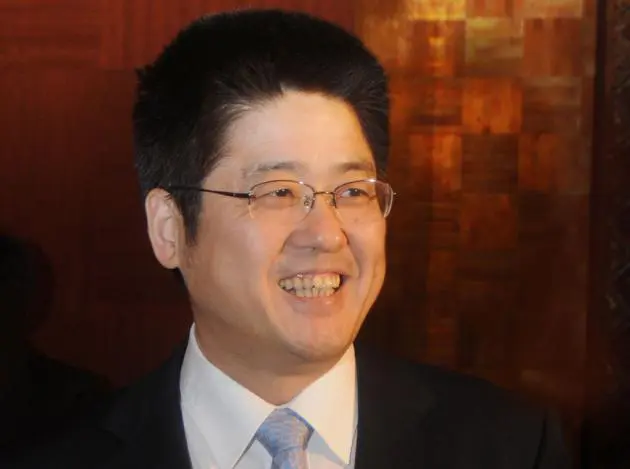
Le Yucheng, assistant foreign minister of China, says the geopolitical situation in East and Southeast Asia has been changing dramatically, marked by the territorial conflicts in the South China Sea involving several Asean countries including the Philippines, Vietnam, Indonesia, Malaysia and Brunei.
“The conflicts have worsened because I believe there are some parties intent on making the situation worse. In fact, these conflicts are not new, as they have existed for the past several decades.
“During previous decades, there was some stability and the region was able to develop peacefully. However, the past several years have seen changes. Some countries apparently want to expand the conflicts, but China’s position is to focus on regional development, not to quarrel with neighboring countries.
“Today, we have seen the South China Sea conflicts [over sovereignty of islands and islets claimed by multiple countries] highlighted at nearly every regional security forum. Even a recent Asean conference on women’s issues has discussed these maritime disputes.
“We insist on conducting foreign policy that will reduce cross-border tension and confrontation. If we cannot agree on some issues, we might put them off and turn to development and related issues instead.
“Since July this year, Thailand has become the coordinator between China and the 10-country Asean grouping, for a period of three years.
“We expect Thailand [which is not a party to the disputes] to help boost cooperation among the countries concerned, to contribute to the resolution of these conflicts. There will also be the Asean Summit in Cambodia in November, which leaders of Asean as well as other East Asian nations and the US will also attend. Chinese premier Wen Jibao has attended every East Asia summit over the past few years, underlining China’s policy supporting this regional security forum.
“In the meantime, there have been weaknesses in the global economy marked by the slow recovery of the US and the euro-zone crisis. In West Asia and North Africa, there are also increased uncertainties. As a result, the East Asia Summit should focus on resolving these issues and rebuild unity among countries in the region so there is a bright future to look forward to.”
“China will hold an election for its new premier in March next year, so Prime Minister Wen will still represent China at the upcoming East Asia Summit.
“After all, our long-term foreign policy will remain unchanged, which is to boost friendship with neighbouring countries and to promote cross-border cooperation. For Asean countries, our policy is to promote good relations among the grouping. Secondly, economic integration, and thirdly, to promote Asean as the key mechanism for overall cooperation in the whole of East Asia.
“China is not aspiring to be the region’s superpower, as we want to work peacefully with our neighbours. Politically, China and its neighbours have been at ease until recently. We did have a certain degree of trust among ourselves.
“During times of hardship, there were mutual efforts to help each other, such as during the recent massive earthquake in Sichun and the tsunami in Thailand. When I met the Thai foreign minister recently, he also donated Bt5 million on behalf of Thailand to help eqarthquake victims in China. That’s a good example of Thai generousity towards the Chinese people.”
