
Why the govt shouldn't celebrate its 'victory'


Play
Whoever thought a political rally against a government voted into power by more than half of the population could create upheaval were badly mistaken. And so were those who thought skirmishes between troops and missile-throwing protesters could snowball i
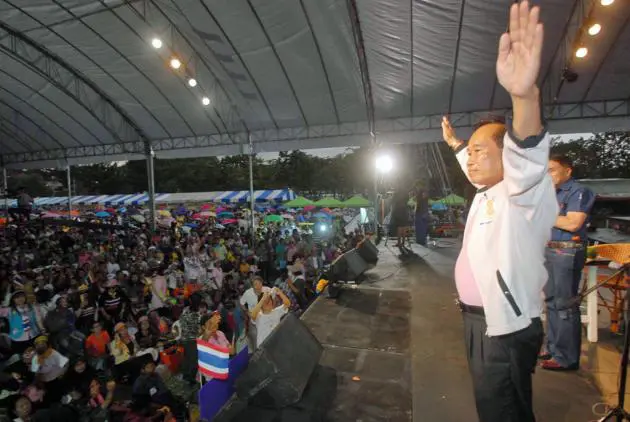
These misconceptions prevailed before and during Saturday’s demonstration by the Pitak Siam movement, but apparently common sense is returning. Democracy is a system that, more than any other, values the benefit of the doubt. The Yingluck administration has been comfortably saved by the democratic principle that dictates that nobody shall be punished based on fears alone.
But whoever thinks Saturday’s “victory” is a green light for “fears” to become reality is also wrong. If tens of thousands of people could join a rally driven by vague accusations – putting the security forces and everybody else on edge – imagine what can happen when ambiguity goes out the window and apprehension becomes justified. Although demonstrators threw bottles, cut barbed wire, remove concrete barriers and scuffled with the police, absent on Saturday were truly angry faces. It was a half-baked rebellion with a cause that is far from ripe. If the government is smart, it must keep things that way.
The Thaksin administration pushed the limits of democracy. The 2006 coup was undemocratic, but that government also crumbled under the weight of its own sins, which were wrongly described as something that should have been cancelled out by the “noble” things it did. The Samak government, likewise, mistook its election mandate and blamed subsequent turmoil on others. The pattern looked set to be followed by the Somchai government, but the regime’s life was cut short, paving the way for the controversial rise of a Democrat-led administration.
As Thaksin Shinawatra’s sister, the prime minister has to navigate a more dangerous minefield. But Yingluck Shinawatra is fortunate that Thai democracy, which reeled from the uncompromising, disastrous confrontation between Thaksin and his rivals, has been evolving. By “evolving”, democracy accepts power play even when its own name is degraded or exploited. As long as the players do not bend the rules to breaking point, that is.
Pitak Siam wanted to “freeze” democracy, or do something along those lines. It was a campaign based on fears, but the Thai political system, shaky as it is, brushed it aside with ease. It would have been breaking the rules if Pitak Siam had won.
We saw two faces of Pitak Siam on Saturday. The first was that of a scary political monster born out of the dangerous mindset that if violence happened, the government would be likelier to crumble. The other was when the movement’s leader accepted defeat, saying he feared for protesters’ safety. Which face is genuine we may still not know, but the real face of Thailand is all but cemented. We are a country held hostage by political animals. We judge a political rally’s worth on whether people are seriously hurt or killed. When protesters peacefully dissemble, they “lose”. Lip service is given to the “right to participate in politics”, whereas the real show is run by provocateurs and agitators.
If Saturday’s action by Pitak Siam was a farce, a smart government would want it to stay that way. The ball is in the government’s court now. The last thing it should do is inject justification into those fears. Democracy can be stretched, but our own history has taught us that if the ideal is spread too thin or twisted too much, it will be unable to protect itself. There are limits to what we can do in the name of democracy. Prime Minister Yingluck has been rightfully able to rely on her mandate, but that’s because she has managed to stay within the limits. The question is, how much longer can she?
Thailand’s reconciliation is not about absolving someone; it’s about stopping doing wrong under the facade of right. It’s also about stopping giving others a taste of their own medicine. What has been happening in Thailand may look complicated to outsiders, but we are two nations in one country simply because rivals are too similar rather than too different. Everyone wants revenge. Everyone loves distortion when it goes his way, and condemns it when it doesn’t. And everyone is hypocritical enough to block roads when it suits them, and clamps down on the right to protest when the status quo is threatened. In the process, democracy has been bruised by both those wanting to “freeze” it and those claiming to protect it.
It’s up to the government to decide if Saturday should remain the pilot of a movie that will never be made, or whether it’s a sure-fire prelude to far worse things to come. There are certain things that the government should not even think about, let alone carry out. Interpreting Saturday the right way, the government should know what to do. Misinterpreting it, and not only will the administration go astray, but also the country and the very political ideal that many people on the government side proclaim themselves to be guardians of.
