
Blindly racing towards the abyss


Play
Will the world end tomorrow? It does not matter, since the US is going to fall off the fiscal cliff anyway. Europe will drown in its sea of debt. Asia will be hit by the tsunami of fiat money from quantative easing (QE) into infinity.
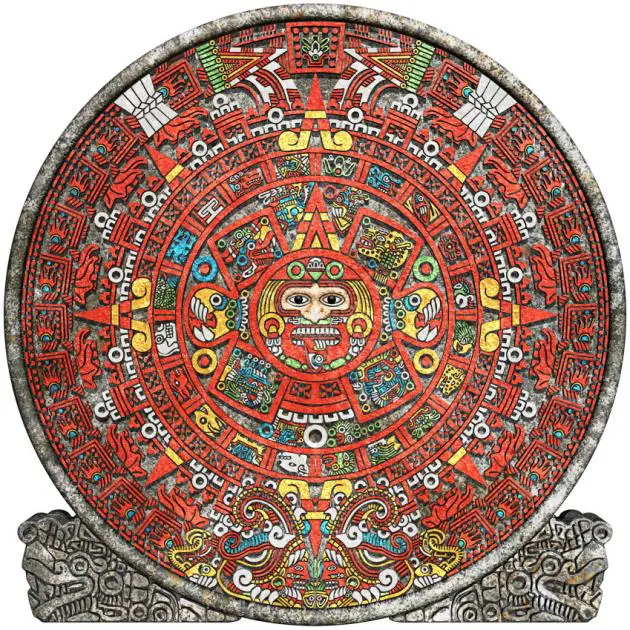
The Mayan calendar is rather correct in predicting the end of the world, as far as the global debt super-cycle is concerned, even assuming that a big comet is not going to hit earth tomorrow. The world’s total credit market is worth US$200 trillion. That’s around 350 per cent of the world’s gross domestic product of $62 trillion.
If we want to increase this world’s GDP, we have to further pump out credit. This can continue until money becomes worthless paper. We are now at the threshold of this debt-super cycle when credit can no longer outrun productivity and debt-based consumption. If printed money drowns us all and hyperinflation strikes, what will be the store value of wealth? And that’s how the world as we know it will end.
Though money does not have any intrinsic value, it has become the new God of mankind. In the old days, wealth was associated with land or material holdings. The moral authority that guided societies was represented by an omnipresent God or gods. The hundreds of marvelous temples in Sukhothai, northern Thailand, showed that local people almost 800 years ago regarded spiritual wealth as more valuable than material wealth. They selflessly gave away their wealth and contributed their labour to build the temples.
Yet, over time, the world’s elites – the bankers and the politicians – colluded to kill the gods and spiritual values, to gain power and collect wealth. Materialism prevailed over idealism. This prompted Friedrich Nietzsche, the German philosopher, to declare in the late 19th century, “God is dead”. The statement signified the end of the ethical and moral structure of the old world. The age of nihilism descended to replace the old world as the people knew it then. Fiat money – initially backed by gold and later on by virtually nothing – as a new God, was created for control of the global system amid economic boom-and-bust cycles, wars and human despair. Fiat money, which came and went throughout the centuries, had to be recreated to occupy the heart of the human consciousness.
The world’s elites conquered the US with their creation of the Federal Reserve in 1913, and the banks operating in and out of the window of its money creation. They emerged to take control of the wealth, as much as they wanted to, by printing money. The printed statement on the US dollar, “In God We Trust”, is ironic, as the US dollar has become God itself. The new God seeks the complete subjugation of the world through the Hegelian dialectic of the interplay between the forces of creation and destruction.
Wealth brings in materials. More wealth brings in even more materials. It follows that the pursuit of happiness is to gain more wealth and more materials. Humanity has become trapped in this mindset.
In the Matrix of Power, Hugo Salinas Price tells us who the world’s elites are: “They are an amorphous number of individuals from around the world. They are the people who have influence and the power to affect the operations of leading institutions. They are the people who are invited to Bilderberg meetings, to World Economic Forum meetings in Davos, Switzerland. They are the people of the Trilateral Commission, the members of the CFR. They compose the Brotherhood of Central Bankers around the world. They head the great world-spanning corporations. Typically, the elite is the world’s top bankers and politicians.
What they have in common is the desire to perpetuate their wealth, influence and power, which means that they quite naturally agree (without even having to acknowledge their agreement) to bar any discussion of questions of the greatest transcendence – because the greater the transcendence, the greater the number of the elite who would be adversely affected by any change.
It would be quite improper, for instance, to bring up the subject of a return to the Gold Standard at any meeting of the elite. This explains why no journalist under the influence of the elite, publishing articles in The Wall Street Journal or the Financial Times, may include in analysis of the present financial breakdown of the world, any mention of the central cause of that breakdown: fiat money.
Thailand is caught in the Hegelian dialectic storm. Most Thais aren’t aware of the existence of the world’s elites, who mean harm rather than good for Thailand. Many Thais are led to believe that our King is the elite in a negative sense, although he is a benevolent monarch. The Thai King is not associated with the world’s elites, who create poverty throughout the world through fiat money. Thais are being intoxicated by hope of more wealth via government debt and fiat money. The culmination of this Hegelian dialectic is the attempt to amend the Constitution to undermine the Thai monarchy.
Thai politics appears to be racing to Hell, proudly hand in hand with the imminent end of the global debt-cycle of fiat money.
