
Toughness and tact needed in dealing with North Korea


Play
China's role important in conveying to Pyongyang that it will have no friends left if it pursues its current path
The United Nations Human Rights Council recently adopted a resolution slamming North Korea, accusing the reclusive country of gross human rights violations.
The council also called for the establishment of a panel to investigate the alleged abuse. The resolution denouncing the “systematic, widespread and grave violation of human rights” was jointly submitted by Japan and the European Union.
It is important that the international community take advantage of this development, small though it may be given the enormous challenges and difficulties when it comes to the issue of North Korea’s international standing. And we are talking about something much more than the use of torture, labour camps, and kidnapping of foreign nationals.
The UN has appointed a special rapporteur to investigate North Korea’s human rights condition but the world body could do more by establishing a panel that could conduct a more exhaustive investigation.
Besides the question of human security, the UN Security Council has also passed tough sanctions over the country’s nuclear and missile programme. Pyongyang has consistently refused to cooperate with UN investigators and there is no reason to believe that the latest pressure will be a game changer.
In this respect, it would not be an exaggeration to say that North Korea is one of the world’s most dangerous nuclear powers.
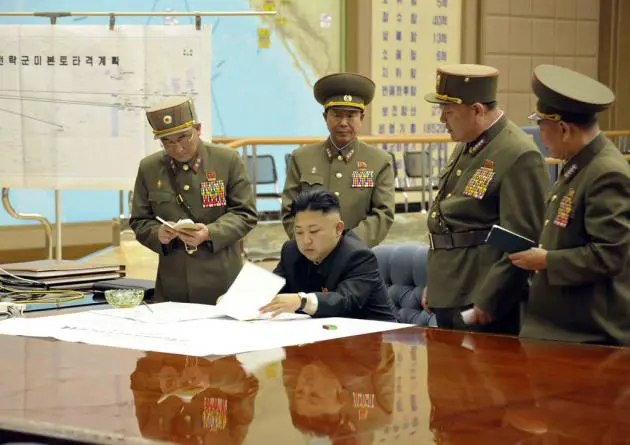
Prior to announcing that it had unilaterally scrapped the 1953 armistice that had put the Korean War in neutral gear all these years, the country’s young new leader, Kim Jong-un has threatened nuclear attacks against South Korea and the United States. A recent editorial from its state-run press warned that Japan is not out of the loop, either.
North Korea’s official newspaper, last Saturday, accused Japan’s Prime Minister Shinzo Abe of trying to bully its country.
The Rodong Sinmun said Abe was a part of an international conspiracy against North Korea and warned Japan of consequences should it pursue this path.
“If there is war, Japan will not remain unscathed,” said the newspaper, the mouthpiece of North Korea’s ruling Workers’ Party.
Similar threats have been made in the past. But in dealing with such an erratic country, no one can afford to take any chances.
Growing international pressure, political and economic, could also push the regime into a predicament wherein it sells nuclear weapons and technology to unfriendly players around the world.
China, which shares a common border with North Korea, needs to step up and do more to pressure the regime to accept international norms and practices. Beijing’s support for the latest UN Security Council resolution is important. Pyongyang has to be told that it will have no friends left in the world should it pursue this dangerous path.
Indeed, Pyongyang’s latest nuclear test has clearly caused a significant change in China’s attitude. But China needs to do more by turning this attitude into a sound policy that spells out in real terms the consequences for North Korea should the country insist on building nuclear weapons.
For the time being, South Korea’s new leader, President Park Geun-hye, has placed her troops on high alert to prepare to respond should the North unleash a similar artillery barrage on a South Korean island as in 2010. That incident left four South Koreans dead.
