
Tensions are reaching boiling point


Play
Pyongyang has issued several threats of nuclear strikes before. And each time, most people treated it as a joke. But this time, it might be different.
Tensions have built up quickly after the communist state “declared war” against South Korea and the United States last Saturday. The audacious declaration came after the US and South Korea had engaged in military exercises. We aren’t sure who is bluffing whom. Pyongyang has made it clear that its nuclear missiles could strike Guam and Hawaii. The atmosphere now is reminiscent of the Cuban missile crisis of 1963, when Soviet leader Nikita Kruschev confronted US President John F Kennedy in a daredevil game. The world was on the brink of nuclear war. But the crisis was averted. Kennedy held his ground and Kruschev backed off by pulling back Soviet nuclear weapons from Cuba in return for the US’s promise never to lay a finger on Cuba.
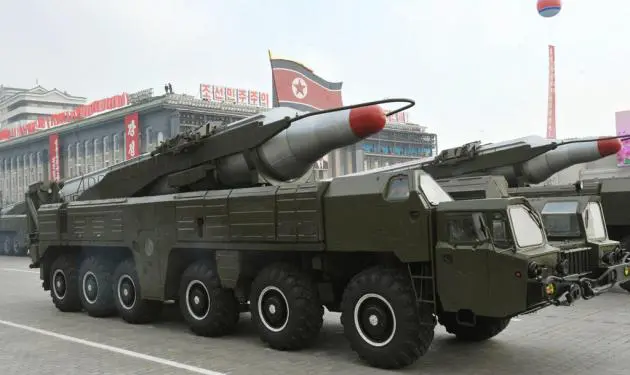
The US is now reinforcing its military presence on the Korean peninsula and also Japan. Stealth bombers, B-52s and F-22s are making their presence felt along with the US carriers in the region. Secretary of State John Kerry stressed that the US will not accept a North Korean nuclear state. North Korea responded by stating that it is reactivating all of its nuclear facilities. It has cut off hotline communications with South Korea, whose civilian government has now delegated authority so that the military can make appropriate decisions in view of the deteriorating situation. Most important, Pyongyang has said that it has approved a nuclear attack on the US. There are reports that North Korea is moving a mid-range missile to its east coast. At the same time, China has also sent troops to its northeastern border with North Korea.
Suddenly, the Korean peninsula has become the world’s most delicate trouble spot, followed by Syria and Cyprus. The situation on the Korean peninsula poses the threat of a thermal nuclear war. Syria is an ongoing crisis revolving around attempted regime change, with foreign-sponsored rebels trying to overcome the Assad government. Syria is one of the domino countries that the Western powers would like to crush before it takes out the last domino – Iran. Cyprus represents an infection point in the euro-zone crisis, which could spin out of control as European banks face a capital flight. All three hot spots could send the global economy into a tailspin.
Apparently, the theatre of war is being moved to Asia. Before the Korean peninsula crisis, we saw an escalation of the simmering dispute between China and its neighbours over territorial claims in the South China Sea. The old issue was resurrected as countries in the region opted for an arms race, with the US casting its long shadow over the regional conflict. This was followed by China’s conflict with Japan over the Senkaku Islands, with political rhetoric and military overtones. North Korea’s nuclear threat finally came along to overshadow it all.
We have to understand that this all has to do with the US-China dispute. It started after the collapse of Wall Street in 2008 and the massive printing of dollars to prop up the American financial system. Since then, the US, the UK, the European Union and Japan have mounted a concerted effort to print money to reflate their financial systems. This should be seen as a declaration of a currency war. You can see the “Western allies” in this enterprise trying to flood the global financial system with cheap or almost worthless money, to keep things going.
Brazil, Russia, India, China and South Africa (BRICS) and other emerging-market countries aren’t happy with this currency war. Their currencies have risen against the major currencies, and this has undermined their exports and competitiveness. China and other BRICS countries have responded by planning to set up a new global financial order, which would break away from the Bretton Woods system dominated by the US and the UK. China, in particular, has been engaging in bilateral currency swap arrangements in preparation for the internationalisation of the yuan.
This is the genesis of the global dispute between the US and Western powers on one side and China and the other BRICS countries on the other. The Korean peninsula crisis and the South China Sea disputes can be traced back to this genesis, to block the rise of China and East Asia as a whole.
Interestingly, we are seeing a re-armed Russia, which is keen to take on Europe. India might emerge as a dominant regional player to be reckoned with, with its growing involvement in the Middle East crisis. China will then have to face off with the US in the Asia-Pacific region. It seems that a military conflict could be on the cards as the West and the emerging powers in the East no longer see eye to eye.
