
The public must focus on reality, not nationalism


Play
Whatever the international court decision on the disputed Preah Vihear Temple, Thailand's good relationship with Cambodia is of paramount importance
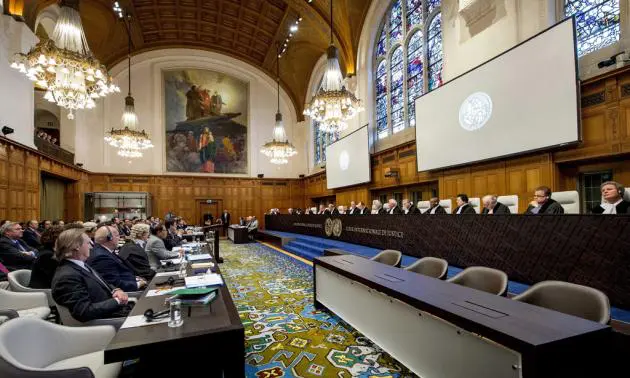
The Thai legal team representing the country at the International Court of Justice (ICJ) in the case of disputed Preah Vihear Temple have returned to Bangkok. Greeting them and even labelling them as heroes is the right way for society to express its gratitude for their great efforts. However, this country must separate sentiment from reality.
The most important thing to bear in mind is that the good performance by our legal team might not lead to victory in the court battle that also involves Cambodia’s claim to the temple. There are many unpredictable factors in any court trial.
The love and support that Thais extended to the team should not be converted into nationalism or anti-Cambodian sentiment. Relations between Thailand and Cambodia, and most importantly with the Cambodian people – who are in fact are our relatives and neighbours – must be paramount.
The Hindu temple of Preah Vihear has been at the centre of the border dispute, and sometimes-sour relations, between the two countries for a long time. Nationalist sentiment has in the past implanted bad feelings and a negative attitude among Thais toward Cambodia and the Cambodian people, and vice versa.
In 1962 the ICJ ruled that the temple is situated in sovereign Cambodian territory and ordered Thailand to withdraw its troops from the temple and its vicinity. The dispute should have come to an end then. Indeed, it was supposed to have been settled in a manner of brotherhood and neighbourliness, but nationalist sentiment has too often dominated Thai politics in the past few years.
This sentiment fuelled the fires of the dispute, which descended into border skirmishes causing casualties on both sides.
Cambodia chose an uncompromising but still peaceful way to bring the case to court again in 2011, seeking an interpretation of the 1962 judgement to make clear the “vicinity” of the temple from which Thailand, by order of the court, is obligated to withdraw its troops.
During testimony last week, the Thai team used strong language in accusing Cambodia of distorting the 1962 judgement to claim a larger slice of territory adjacent to the temple. But the public in both countries, notably in Thailand, who watched the live televised hearing, should realise that such words were used in the court context only.
The land in dispute, the much-discussed “vicinity”, has yet to belong solely to either party. If one listened to the court hearing carefully, both sides defined the vicinity differently, so the court has asked them to explain exactly their interpretations of the area.
The disputed area adjacent to the temple is just 4.6 square kilometres (2,875 rai). It is a tiny portion of the border between the two countries, stretching from Ubon Ratchathani to Trat on the Thai side. In terms of relations between Thailand and Cambodia, it should be even less significant. In the worst-case scenario for Thailand, if the court rules in favour of Cambodia, it is a rather small issue in comparison to the overall border.
Cambodia’s Foreign Minister, Hor Namhong, representing his country in court, put forward a positive outlook, saying that, whatever the court’s decision, it should not affect the good relationship between Thailand and Cambodia. Indeed, we must respect the eventual decision and do all we can to maintain brotherly ties with our neighbour next door.
