
Danger: Politicians try to demolish independent agencies
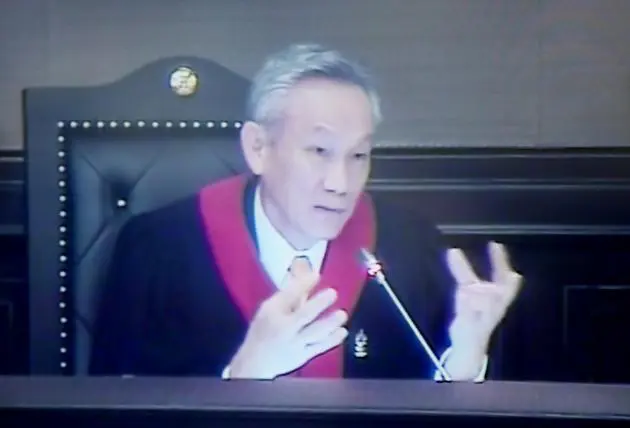


A new war is brewing between the Pheu Thai Party and the Constitutional Court - a new round of confrontation that could decide the fate of independent agencies in the Constitution, which is the subject of a proposed amendment by the ruling party.
There is little doubt that ousted former premier Thaksin Shinawatra is behind the new move. His antagonism toward the Constitutional Court is well known. A last-ditch effort to neutralise the panel of judges empowered by the current charter to rule on constitutional issues is sparking a heated debate on a new question: Can the country afford to let politicians who wield executive power dominate both the legislative and judicial branches?
The first sign of trouble began when the court accepted a petition from a group of senators headed by Somchai Sawaengkan to halt the House’s move to amend the Constitution under Article 68.
In retaliation, 312 pro-government MPs and senators voiced their opposition to the court accepting the case for consideration, arguing that the judicial branch was overstepping the legislative branch, which was exercising its right to make changes to the charter. The court, they insisted, should have referred the issue to the chief public prosecutor before accepting the case directly from the lawmakers.
The pro-government MPs then, in a gesture of “civil disobedience”, declared their intention not to accept the Constitutional Court’s authority. They called for the removal of the three judges who had taken up the petition: Charan Pakdithanakul, Charoon Intacharn and Supot Kaimook.
For Pheu Thai strategists, this represented a “pre-emptive move” to prevent the court from repeating an earlier decision to put the brakes on the third reading of a proposed amendment to Article 291 of the Constitution, which itself governs the process of amending clauses in the charter.
In a parallel move, between 200 and 300 pro-government red shirts began a vigil in front of the court building, calling for the ouster of the judges in question. After the fifth day of a protest filled with heated speeches by red-shirt leaders, the Constitutional Court judges filed charges of contempt of court against them.
The likelihood of a prolonged and heated face-off between the judges and the Pheu Thai Party has suddenly intensified, with no sign of either side letting up. The reason is clear: the stake for Thaksin in pushing through these constitutional changes is so high that he is ready to go for broke this time.
Premier Yingluck Shinawatra might try to distance herself from the controversy. But she won’t be able to stay out of the conflict for long before she has to make her stand clear on the issue, which is related to another, even more controversial move – the proposed amnesty bill for political offences. That, again, is inevitably linked to her elder brother, who has made no secret of his intention to push his MPs to leave no stone unturned and no avenue unexplored, to ram the bill through Parliament and to get him back to Thailand a free man.
Underscoring the uncompromising mood on both sides is the exchange between Judge Charan and Pheu Thai’s Chaturon Chaisaeng. The judge had said the Constitutional Court justices wouldn’t get involved in a verbal exchange with the red-shirt protesters because it would be “like a boxer hitting the referee in the ring”.
Chaturon reacted promptly through Twitter, to the effect that he doesn’t consider the judges neutral referees in this case. “Perhaps it’s more appropriate to say this is a case of the referee hitting the boxer. In fact, it may turn out to be a case of the spectators trying to oust the referee from the ring.”
Whatever the case may be, for the real spectators, it is important that the Constitution continues to attach great importance to the existence and protection of independent agencies that can withstand undue pressure from politicians. In other words, whether this is a case of the boxer trying to knock out the referee or vice versa, the rules of the game must remain sacred and all parties concerned must pay due respect to the fair and impartial best practices upheld by independent agencies.
