
Beyond the limits of decency or just bad taste?


Play
The prime minister is suing a local newspaper cartoonist for defamation, reigniting the debate on free speech
Prime Minister Yingluck Shinawatra has filed a defamation lawsuit against Thai Rath cartoonist Chai Rachawat for comparing her to a prostitute. The Information Technology and Communication Ministry has threatened to exercise its authority to ban all allegedly libellous comment on the Internet.
Yingluck’s lawyers have also filed a complaint against the cartoonist at Dusit Police Station.
The police have charged Chai on three counts – insulting an official during an official event, defaming another person publically and violating the Computer-related Crimes Act, which prohibits posting defamatory comments against others on the Internet.
This is the first time a Thai premier has sued someone for posting comments on the social media. Obviously, she wants to punish what she sees as an inflammatory opinion.
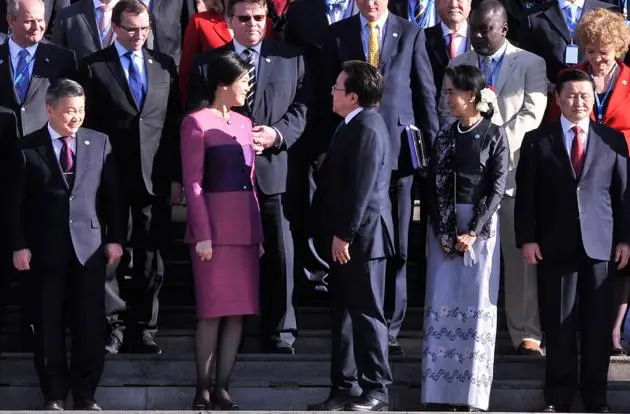
Chai, whose real name is Somchai Katanyutanan, posted on his Facebook page photographs of Yingluck delivering a speech in Mongolia with the caption: “Please understand that prostitutes are not bad women. Prostitutes only sell their body, but a bad woman has been wandering around trying to sell the country.”
The Pheu Thai Party’s big wigs were quick to spin this as an insult to all women and a “distortion of the truth”.
Obviously, the prime minister is experiencing emotional distress as a result of criticism, thus the decision to initiate legal proceedings. But no one in their right mind believes that the country’s prime minister and one of its richest women is a prostitute.
Furthermore, no one with a sense of decency would want the person mandated to govern the country to be compared to a prostitute.
Political cartoonists attack public figures all the time. Some of these attacks are in bad taste, such as the one that has angered Yingluck.
But is bad taste a crime? Taking legal action against such criticism might not achieve anything in this country. The premier and her supporters should use this case to educate critics, to encourage people to criticise in a coherent and constructive way. Laws against defamation have existed for a long time, but people still insult each other every day, and people still take offence, and this will continue until everyone learns how to criticise within certain boundaries and the targets of criticism accept such comment, again up to a certain limit.
We live in a country that values freedom of speech – at least that’s what we tell ourselves. This kind of political comment is an example how we exercise this freedom.
Satirical commentary serves the public good in the sense that it allows people to look at public figure differently.
If Yingluck can take a cartoonist to court because she is distressed emotionally, then so can other public figures.
Obviously, when one person degrades another, the latter is going to experience some distress. It’s easy to claim such distress and impossible to refute, and that is why it is difficult to set standards and limits of free speech.
Not everyone likes cartoonist Chai’s choice of words in making reference to the prime minister, but what we all cherish is the fact that that we live in a country where we can decide for ourselves what constitutes good or bad taste.
