
A post-2015 global agenda that could boost development goals


Play
Last week I participated in the Society for International Development's (SID) annual conference in Washington, DC. The conference took place on the heels of the release of a UN report entitled "A New Global Partnership: Eradicate Poverty and Transform E
The report, co-chaired by British Prime Minister David Cameron, Indonesian President Bambang Yudhoyono and Liberian President Ellen Johnson Sirleaf, is the work of a high-level panel of 27 eminent persons. Appointed by UN Secretary-General Ban Ki-moon in July 2012, the panel was tasked with developing a post-2015 global development agenda. Members of the panel came from different regions of the world and include political leaders, policy-makers, development experts and members of governments, non-governmental organisations, civil society and the business sector.
The report was appropriately used as an organising theme at this year’s SID conference, together with related topics on foreign aid reform and the challenges of achieving the Millennium Development Goals (MDGs) by 2015. The conference’s keynote speaker, John Podester, a member of the high-level panel, representing the US, shared with us the consultative process, internal discussions and insights in the making of the report.
The report is intended for mobilising global action to respond to the development challenges of our time. The US’s active participation in the post-2015 development agenda from the beginning is a welcome change. It is quite a contrast to the absence of political support and American unilateralism at the time when the UN Millennium Declaration was launched in 2000 and a near-complete lack of interest in the decade that followed the adoption of the 2000-2015 MDGs.
While the report builds on the MDGs, it recognises that the world has changed, with new challenges and opportunities arising since the MDGs were adopted in 2000. The post-2015 global development agenda proposes a transition with a new set of 12 illustrative global development goals. Critics of the UN as a multilateral institution, and of the idea of universal goals and targets, were quick to point out the overly ambitious agenda, especially at a time of fiscal austerity in major donor countries and in light of the limited success of the MDGs as measured against their targets.
The vision and the recommended goals for the world’s next development agenda are indeed ambitious. Nonetheless, what is of interest and noteworthy to me is not the number of goals and ambitious targets per se, which are necessary as benchmarks for measuring progress and accountability. Rather, it is the critical analysis and assessment underpinning the goals and targets – the overall framework, or the roadmap, and how it is derived.
As Prime Minister David Cameron put it: “This report sets out a clear roadmap for eradicating extreme poverty by 2030. We need a new global partnership, to finish the job on the current Millennium Development Goals, tackle the underlying causes of poverty, and champion sustainable development.”
The roadmap that Prime Minister Cameron refers to is what the report identifies as five transformative shifts:
1. Leave no one behind – moving from reducing to ending extreme poverty, ensuring that no person is denied basic economic opportunities and human rights.
2. Put sustainable development at the core – integrating the social, economic and environmental dimensions of sustainability.
3. Transform economies for jobs and inclusive growth – ending extreme poverty and improving livelihoods by harnessing innovation, technology and the potential of business, with equal opportunities for all, especially young people.
4. Build peace and effective, open and accountable institutions for all – recognising freedom from conflict and good governance as a core element of wellbeing, not an option.
5. Forge a new global partnership – underpinning the post-2015 agenda by cooperation and mutual accountability, including local and national governments, multilateral institutions, civil society organisations, businesses, scientific and academic institutions, and private philanthropy.
These transformative shifts reflect the development challenges we face today and lessons learned since the current MDGs agenda was adopted in 2000. The world has learned that extreme poverty has been reduced but not yet ended, thanks to China’s phenomenal, sustained growth since 1980. We also learned that it is no longer sufficient for economies simply to grow. How the benefit of growth is distributed is just as important. Globalisation, especially financial globalisation, has its downside risks and negative spillovers.
Effective, open and accountable institutions are critical for social inclusion and peace. The report integrates four key aspects of sustainable development: economic growth and ending poverty, social inclusion, a healthy and sustainable environment, and good governance.
There will no doubt be considerable debate with respect to the scope of the agenda, criteria for selecting the right goals and their priority, achievability of these goals, appropriate benchmarks and indicators to be used, and how to measure and monitor progress. The report creates a frame for discussion and collaboration as the development community tackles these challenges.
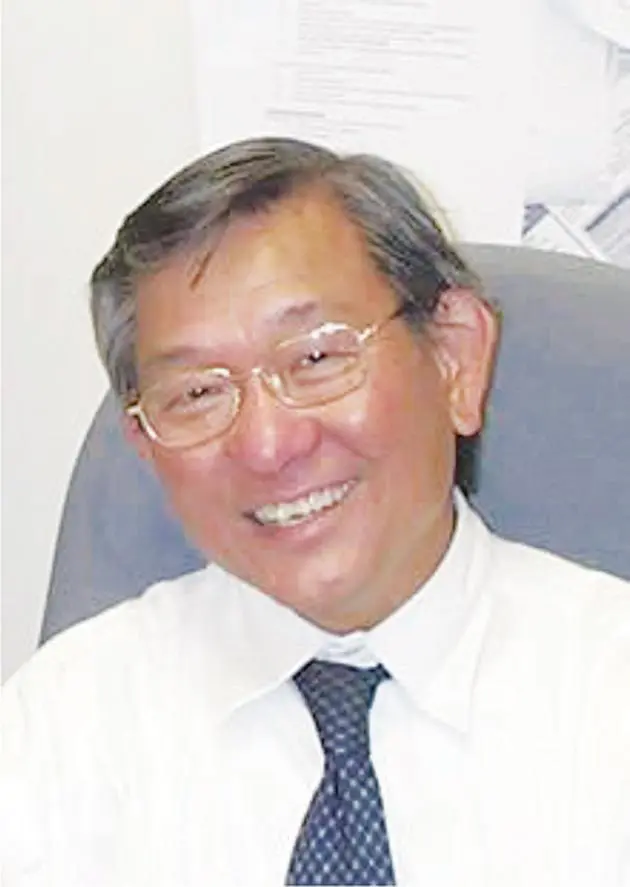
Dr Kiertisak Toh is a former senior Foreign Service officer with the US Agency for International Development. He is currently a member of the economics faculty at Radford University, Virginia, and a senior fellow at Duke Centre for International Development, Sanford School of Public Policy, Duke University, North Carolina.
