
Sitting on a revolution


Play
Bindeshwar Pathak explains why he believes the toilet is 'a tool of social change'
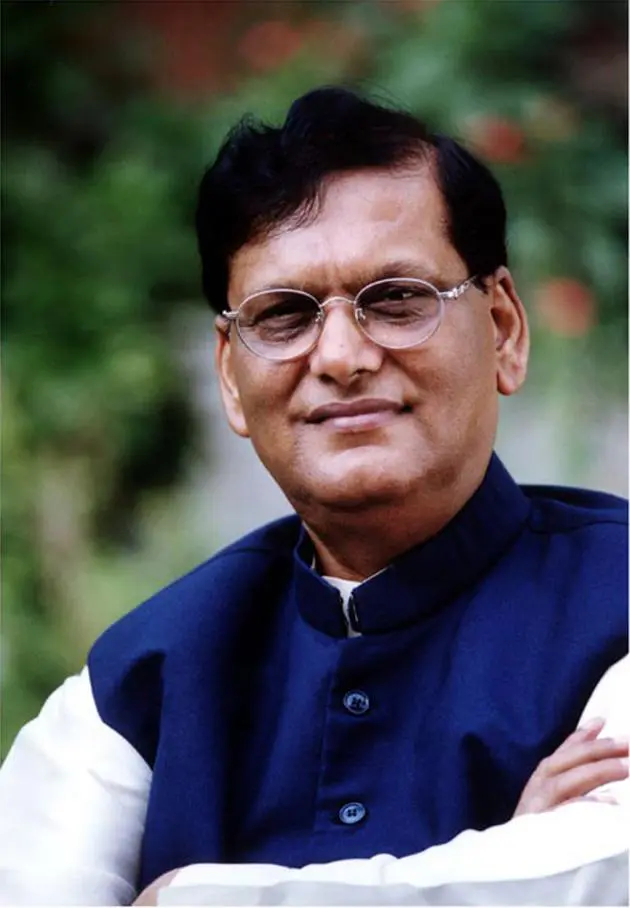
While the world revels in high-tech gadgets and superfluous devices, Bindeshwar Pathak, a softly spoken 70-year-old Indian sociologist. is steadily changing the world with something far more fundamental – low-cost toilets. More than four decades of work has made him a force for social change, affecting the lives and attitudes of millions in society.
“The toilet is a tool of social change,” Pathak insists.
The United Nations estimates that 6 billion of the world’s 7 billion people have mobile phones, but 2.5 billion people are still without sanitation, and around 1.1 billion are forced to answer the call of nature outdoors. More than half of the 2.5 billion people without sanitation live in India or China.
In India, where less than 31 per cent of the population has access to sanitation facilities, Sulabh International Social Service Organisation, a non-profit body founded in 1970 by Pathak, has so far constructed 1.2 million household toilets and 8,000 public toilets. It maintains the public toilets, with the help of 60,000 associate members, on a pay-and-use basis, without putting a burden on public funds.
Globally, diarrhoea is the leading cause of death, and 88 per cent of diarrhoeal deaths are due to a lack of access to sanitation facilities, together with inadequate availability of water for hygiene and unsafe drinking water.
“We are also providing basic healthcare facilities for the poor at these public toilets,” he says.
Sulabh, literally meaning easy, a US$4.8-billion (Bt148.6 billion) social enterprise, has expanded its network internationally. It has branches operating in Bhutan and Afghanistan. Besides, many countries like Nepal, Indonesia, Mozambique, Kenya, South Africa, Ethiopia, Uganda and Burkina Faso have sought guidance, consultancy and services from the organisation.
“We are planning to adopt five villages in China where we can demonstrate the eco-friendly and cheaper toilet technology developed by us,” says Pathak.
“China, which is also facing problems similar to those of India, could adopt the eco-friendly twin-pit composting toilet with onsite human waste disposal system developed by us.”
This maintenance-free low-cost toilet is simple to construct. And the Sulabh effluent treatment (SET) system, perfected by Pathak, has the added advantage of being a source of renewable energy.
“In China, biogas development is a national priority, so our effluent treatment system is a perfect low-cost solution for the country,” he says.
China aims to make its economic development model greener, an important part of its 12th Five-Year Plan (2011-2015).
Born in 1943 into an upper-caste family in Bihar, one of the less developed provinces of northern India, Pathak’s life so far has been an interesting story of chances and coincidences. Pathak never planned to become a social entrepreneur, he just wanted to lead a decent life, and tried his hand at everything that came his way.
“I just respond to a situation,” he says. “Rather intelligently and scientifically.”
At the age of 23, he missed attaining a first class bachelor’s degree by a whisker, which could have landed him a job as a lecturer in a college. He later worked as a temporary clerk and even tried his luck as a street salesman, selling his father’s traditional medicines. But after months of toil, Pathak realised the profession lacked prestige and respect. “So, I decided to pursue a master’s degree,” he recounts.
In fact, it was a midway-abandoned train journey in the late 1960s to the University of Sagar in Madhya Pradesh, the central province of India, to begin a master’s in criminology that completely changed his life.
He dropped his higher education plans due to a chance meeting with a relative at a railway station, who promised him a job that never existed at the Bihar Gandhi Centenary Celebrations Committee. For months, he worked as unpaid translator there. But later, lady luck smiled on him as he was inducted into the committee to help design the celebration for the centenary of the birth of the legendary leader Mahatma Gandhi, which was due in 1969.
This proved to be a turning point in young Pathak’s life. The committee was formed with the objective of restoring human dignity among the lowest class of people, the “Bhangis”, or “untouchables” who collected night soil. His job was to explore alternative scavenging systems and, more daunting, to find a way to bring these scavengers into mainstream society.
“Strangely, when I was just six years old I was punished by my grandmother for touching a scavenger woman,” Pathak recalls. “The upper classes considered it a sin then to touch the lower-class people.”
The decisive shift in his life came in 1967 when a committee member, Rajendra Lal Das, convinced him to fulfil one of Mahatma Gandhi’s concerns and look for ways to deliver the liberation of scavengers.
He went to live in a slum of scavengers for three months, as he wanted to experience their lives closely. At that time, it was an unthinkable move for an upper-class person. Those three months, however, changed Pathak’s life and the lives of millions of others in subsequent years.
In those days the Western-style flush toilet and centralised water-borne sewage system were not affordable for everyone. Pathak therefore developed a new twin-pit toilet. But he had to wait a long time for the first opportunity to prove his simple solution for sanitation. In fact, no government organisation was willing to try out his plan.
It was only after a chance meeting with a municipal officer who offered him Rs500 (the equivalent today of about Bt330) to build two public toilets that Pathak, finally, built his maintenance-free toilets for the public.
The success of this model created a huge behavioural change when people began to pay for the use of public toilets. It brought in a cultural shift, too, when people started socially accepting those who once were destined just for cleaning toilets.
His success also helped him eliminate the practice of manual scavenging. The noted Anglo-Indian writer Mulk Raj Anand once said: “What Abraham Lincoln did for blacks in America, Pathak has done for scavengers in India. Both are great redeemers.”
Pathak has not patented his two-pit toilet technology, which has been adopted across the country and in many parts of the Southeast Asia by various local bodies.
“Let the world use my technology,” he says. Sulabh is envisioned as an agent of social and cultural change. Inspired by the Gandhian philosophy of truthfulness, non-violence, and altruism, he believes in the principle of trusteeship.
“Money alone cannot give satisfaction,” he affirms.
Sulabh has also launched rehabilitation programmes for out-of-work scavengers, teaching them the skills they need to find new jobs. There are vocational centres where women are trained in tailoring, embroidery and beauty treatments. Even a school was set up in Delhi for the children of this community.
“This will also enable them to be self-employed or get jobs,” Pathak explains. “It is not about just toilets; I am trying to build a different society.”
Pathak has also established an academy, the Sulabh International Academy of Environmental Sanitation.
Meanwhile, his International Museum of Toilets in New Delhi, the first of its kind in the world, tells the story of the development of toilets through the ages.
A recipient of global acclaim and numerous awards, Pathak remains unmoved by popularity and is a hardworking humanist to the core.
“I had never thought that toilets would make me so world-famous,” he smiles. “I have only one life, so I have only one mission,” he sums up.
