
The search of an alternative party
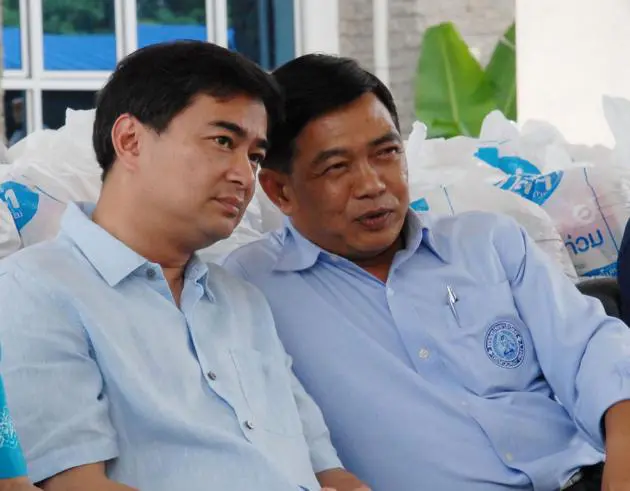


If you start hearing stories about efforts being made to set up a "third" party - an alternative party of sorts - be very sceptical about the possibility of Thailand finally finding a way out of its malaise.
Ongoing rumours about defections and manipulations to form new “third parties” might have nothing to do with the genuine desire to provide the country with a real alternative political grouping that could get us out of this mess.
The political impasse has forced a lot of people to consider the possibility of finding a “third way out” of the current deadlock – a new choice that is neither the ruling Pheu Thai nor the opposition Democrat Party.
But ongoing rumbling about “third parties” is a façade, either for consolidation of the ruling party or the possible split of the opposition. Nothing more, nothing less. The public isn’t going to benefit in any significant way from this exercise.
As the speculation goes on, several small political groupings are preparing to form a temporary “new front” so they can eventually merge with Pheu Thai to ensure that, when the next election comes, the ruling party will continue to control the majority of votes in the legislative body.
This same exercise is also a pre-emptive move in case Pheu Thai stumbles into a “political accident” as a result of a verdict by one of the independent agencies (the Counter-Corruption Commission or the Constitutional Court). Should Pheu Thai be dissolved for any reason, the so-called “third party” could then be an instant substitute to continue the political game.
The Democrats again find themselves involved in internal struggles, with a group headed by deputy leader Alongkorn Polabutr calling for major reform within the party, failing which a breakaway might be contemplated. Publicly, Alongkorn has denied that such a move is being mooted. He insists that his group of “dissidents” (not his own term) will continue as party members and their very public call for a major shake-up of the party is aimed only at improving the Democrats’ chances of winning the next election. Nothing more, nothing less.
Democrat leader Abhisit Vejjajiva has refrained from dressing down Alongkorn for making the internal debate a public issue, thereby opening wounds for the ruling party to rub salt into. But it is obvious that senior party members including Chuan Leekpai are uncomfortable with Alongkorn’s washing of dirty linen in public.
Will Alongkorn lead a breakaway faction? For now, that seems a remote possibility. But it all depends on how the party leadership handles the rallying cry not only from Alongkorn’s faction but also from other groups within the party for a real overhaul. After all, the country’s oldest political party is under great pressure to rise from its current low point in popularity and become a beacon of hope for those longing for real change in the current depressing political scenario.
There are also those who have given up on both the ruling and opposition parties, and are genuinely hoping for an “alternative party” that will offer new hope of putting the country back on track. These critics don’t see Pheu Thai as a real political party, but only a tool by which former premier Thaksin Shinawatra wins elections to keep his circle in power for as long as possible. There is no real debate on policies within the party. It doesn’t encourage discussion on how to end the country’s prolonged conflicts. In fact, because Thaksin – who is practically the “owner” of the party – is part of the national problem, it is hard to see how Pheu Thai can unite the country to embark on a new era of development.
The Democrats don’t offer any way out of the dilemma either. Its leadership has failed to inspire people to embrace their vision, which has become blurred by the lack of a practical alternative platform that could replace or improve upon that of the ruling party.
The search for a “third way out” isn’t just empty talk. In fact, it is crucial that some new avenue is vigorously pursued to get the nation out of the cesspool. But the call to “reset” Thailand via a “real alternative” has not gained the necessary momentum because it has been overshadowed and diluted by scepticism as the two major parties try to outmanoeuvre each other.
It is increasingly clear, however, that Thailand cannot continue on this conflict-ridden, corrupt road where everything is up for sale. To paraphrase well-known Harvard political philosophy professor Michael Sandel, how do we prevent the erosion from market economy to market society?
What’s worse, Thailand’s system has deteriorated from a “market society” into “market politics”, where everything can be bought and sold, at the right price, at the expense of morals, ethics and self-respect
