
Chinese premier offers class in Likenomics 101


Play
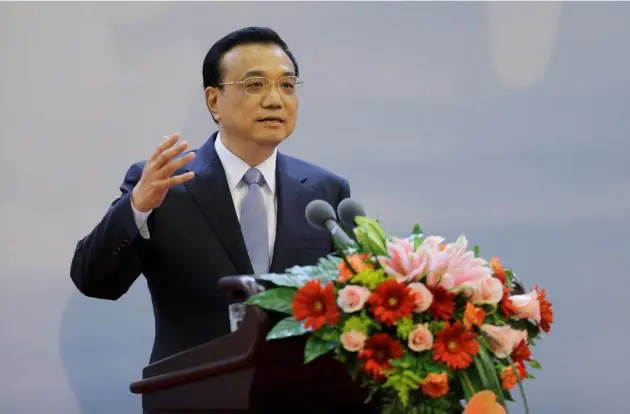
In the run up to the third plenary session of the Chinese Communist Party, which runs from today until Monday, Premier Li Keqiang gave an overview of his reform priorities at a lecture on October 21 in Beijing. It was a lesson in Likenomics 101.
The lecture showed the premier’s grasp of the technical complexities of economic reforms and the daunting tasks of pushing them through at a time of profound transformation domestically and internationally.
First, he put jobs at the core of his thinking, recognising that every one percentage point GDP growth can create 1.3 to 1.5 million jobs. To generate enough jobs for 10 million new workforce entrants and keep urban unemployment around 4 per cent, China needs growth of around 7.2 per cent per annum. This year alone, 7 million graduates are coming into the job market. In the first three quarters of this year, 10 million jobs were created, keeping the unemployment level on target.
Second, he laid out his choices to maintain growth – either use monetary and fiscal policies, or go for structural reforms. He was pretty pragmatic. With M2 money supply already at twice GDP and keeping the fiscal deficit below 3 per cent of GDP, his choice is to stick to current monetary policy of appropriate tightness and a fiscal deficit of around 2.1 per cent of GDP.
This meant that he is opting for the third arrow of structural reforms. With classic Chinese directness, he went straight to the core issue of the relationship between state and market, but illustrated this with an example of how a Beijing student returning to his county had to get dozens of approvals and wait months before he could open a bookshop. In the last half year, his government has reduced 221 administrative approval procedures and, in the Shanghai Free Trade Zone area, has introduced for the first time a negative list. Historically, Chinese officialdom has required approval for everything.
In Li’s words, the government should let go what the market can do, and regulate what should be regulated.
To get the market going, especially SMEs, tax exemption has been given on VAT and income tax on SMEs earning under 20,000 yuan (Bt103,150) per year.
To demonstrate that the government is serious about moving towards the market, the decision has been taken to corporatise the huge Railways Department, which employs over 2 million workers and runs only 100,000 kilometres of rail, compared with 250,000km of rail in the US.
Deregulation is a necessary but not sufficient condition for growth. The premier laid out what he saw as breakthrough areas. China will soon grant 4G mobile licences. Last year, Chinese online e-commerce reached 1.3 trillion yuan, a level already reached in the first three quarters of this year. It may overtake US e-commerce in size by next year. Li identified retirement and healthcare as key drivers of the service economy, noting that the Chinese service sector is at least 10 per cent of GDP smaller than other comparable economies’.
In order to address housing needs of the poor, China will renovate its low-income housing, which currently houses 40 million people, of which 70 per cent are retirees. The country will build 36 million public housing units.
Another breakthrough is the so-called opening up strategy. Li laid out the opening up strategy within the context of building up domestic consumption. Noting that the export sector creates jobs for 30 million people directly and 100 million workers indirectly, he said it would not be realistic to switch completely out of exports into domestic consumption. Thus, China has become strongly pro-multilaterism and against protectionism. In other words, China will welcome inward foreign direct investment in its home market but will continue to promote outward trade and investments.
Li has also incorporated “forward guidance” in his economic management toolbox. He will maintain growth expectations at around 7.5 per cent per year, and the consumer price index at around 3.5 per cent. He felt that this target was realistic because during the first three quarters of this year, industrial use of electricity rose 9.8 per cent and railway cargo grew 7.3 per cent year-on-year. Moreover, he is confident that these GDP growth numbers can be achieved, because there is a huge gap in growth rates between the coastal areas – which are moving into higher middle-income brackets – and the central and western regions of China, where the per capita income level is half the national average.
Top among his concerns is the social security safety net. There are 20 million urban poor and another 5 million rural poor who have to be looked after. Currently 300 million urban workers are members of social security schemes, but this year, there were 38 million who stopped their social security contributions. Every year, 3 million workers suffer from serious illness. Hence, social security, pension and healthcare reform will receive top priority.
Finally, the premier addressed the question of wages. He reiterated that wage increases must move in step with labour productivity. The 12th Five Year Plan had recommended the doubling of nominal wages in five years. This year, the minimum wage increase for 24 top provinces/cities was 18 per cent. This is putting pressure on China’s export competitiveness. At the same time, Li also recognised that the 260-million-strong rural/agricultural labour force also has a productivity and wage level problem. Overall, he understood that continuous education and skills-training lie at the heart of changing labour productivity.
In sum, Likenomics comprised a healthy dose of prudent monetary and fiscal policy, with a clear eye on pragmatic structural reforms, which will require cutting back government over-regulation and allowing market forces to work.
Keynesian economics assume the markets will work as long as the macro is right, while neoclassical economics assume the macro will work as long as the micro is right. Likenomics tackles micro, macro and structural problems simultaneously. That is no easy feat.
Somehow, I think Keynes and Schumpeter would have approved of these reform objectives.
Andrew Sheng is president of the Fung Global Institute.
