
Twin evils are battling to bring down Thailand


Play
The "tyranny" of a parliamentary majority is being used to defend a culture of corruption and political impunity
The terms “corruption”, “tyranny of the majority” and “parliamentary dictatorship” are being heard with increasing frequency. But unlike elsewhere, the so-called tyranny of the majority in Thailand is not being used to persecute ethnic, racial or religious minorities. Instead it supports corrupt politicians.
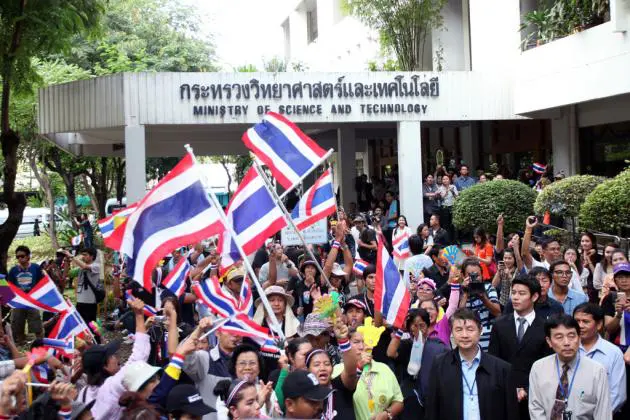
Corruption and arrogant majority rule have pushed the Kingdom into a new round of political conflict. Widespread public outrage at a government-backed bill for a blanket amnesty for political crimes caused the Senate to unanimously reject it and forced the ruling coalition to publicly promise not to seek its reaffirmation. Anti-government protesters and the opposition blamed a “tyranny of the majority” in the House of Representatives for passing a bill they say is aimed at absolving exiled former prime minister Thaksin Shinawatra of corruption.
Concerns are now being raised among social critics of all political hues that the twin evils of corruption and tyranny of the majority could lead to chaos and disaster for Thailand. Former prime minister Anand Panyarachun has spoken on the growing problem of corruption. The issue is no longer about occasional bribes or “tea money”, but large-scale conspiracies involving networks of people that include politicians, bureaucrats, businesspeople, the mass media and other organisations.
Anand warned that if the culture of corruption is allowed to continue unchecked, the country could be heading for disaster.
Veteran journalist Somkiat Onwimon laments on Facebook that the problem of corruption has grown steadily worse since Thaksin came to power more than a decade ago.
Former Senate speaker and legal expert Meechai Ruchuphan, on his website, said corruption is rife because of widespread indifference to the problem and the many beneficiaries who are reluctant to tackle it.
He said any government that relied only on majority rule was bound to fail eventually, since it would lose the trust of the people and be voted out.
Announcing the Constitutional Court’s ruling last week against the government-backed bill for an all-elected Senate, Judge Supot Kaimook said the rights of the minority were being trampled. “Thailand’s democratic system allows the majority to set the standard. But once it uses its power arbitrarily and suppresses the minority without listening to reason, the majority lose its legitimacy,” he said.
The system could no longer be called “democratic” when the majority acted this way, added Supot. “It results in the tyranny of the majority.” The judge’s rebuke echoed widespread frustration at the government’s seeming disregard for the democratic process.
A majority in Parliament should not be wielded to defend a corrupt administration or a wider culture of graft, or to ensure political impunity. No nation can ever completely stamp out corruption, but Thailand could at least prevent large-scale conspiracies that drain the public purse and do serious damage to the country.
The existing check-and-balance system – though it is not among the most stringent in the world – should be allowed to function normally. Agencies that are part of that system, such as the Constitutional Court, the National Anti-Corruption Commission and the Supreme Court’s Criminal Division for Political Office Holders, should be able to do their work without pressure or threats. Any attempt to weaken the mechanism of scrutiny must be condemned.
