
Children of a revolution?


Play
Students are once again leading the protests for democracy in China
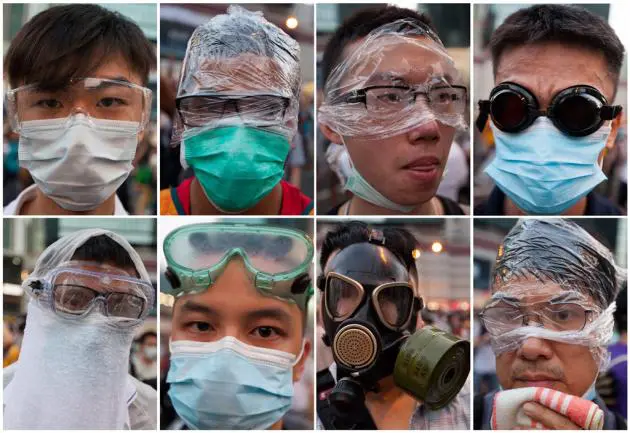
Hong Kong’s college and school students began a boycott of classes last week in protest against Beijing’s position on electoral reforms. The boycott gained the support of over 400 academic and non-academic staff, with college staff promising leniency for students who skip classes and Hong Kong’s largest teachers’ union circulating a petition calling for strong support for the classroom boycott.
More significant were the youths behind the mobilisation and organisation of the boycott. This latest public protest is just one instance in a series of civil disobedience movements initiated by the youths of Hong Kong – many whom are not even old enough to drive or drink.
Seeds of fire
In an interview with CNN, Chinese dissident, Hu Jian, (himself a student activist during the 1989 Tiananmen protests) noted that “Mainland China is a tinderbox that’s been physically suppressed by the authorities, and Hong Kong is a seed of fire”. That fire has been sparked by the comparatively more liberal press, academe and political field in Hong Kong, with the emergence of highly motivated and zealous youths.
One prominent example is student activist leader Joshua Wong, who was just 15 in 2011 when he started a movement called Scholarism, opposing a bid to introduce pro-China and pro-communist education materials in Hong Kong’s public schools. In 2012, Scholarism rallied an estimated 120,000 people to occupy Hong Kong government headquarters and generated enough pressure for the proposal to be withdrawn.
Wong is at the forefront of the classroom boycott movement. At a time when the Occupy Central movement seems to have waned in support and come under fire for failing to act after Beijing refused to grant Hong Kong universal suffrage in August this year, the students have stepped up and taken over the mantle.
One of the co-founders of the Occupy Central campaign, Chan Kinman, lauded the student activists, saying he believed the classroom strike would be successful because young people were particularly annoyed by Beijing’s flagrant move.
There are several implications of the savvy student-led civil disobedience movements in Hong Kong. First, Beijing will find it increasingly difficult to use strong-arm tactics against a pro-democracy movement that is evolving into a student-led and student-centred movement. Global Times, a nationalist Chinese newspaper, referred to the students as a radical pan-democratic group that “wants to take advantage of society’s tolerance of students, making use of them to illegally confront the central government”.
While the government in China will try to target individual leaders (Joshua Wong was identified in China’s Blue Paper on National Security), it does not have the unfettered autonomy to manoeuvre as it does in the mainland.
Second, just as students in Hong Kong draw inspiration from the student protests in Tiananmen Square, there is a fear among the Chinese leadership that youths in Macau and the mainland will draw inspiration from their activist-counterparts in Hong Kong.
Third, the endurance and success of student-led civil disobedience will lead to growing disenchantment in Hong Kong towards Beijing and vice versa. In fact, the students have already achieved one of their targets – global media coverage sympathetic to their cause. These student protest leaders (and their campaign) have been given extensive coverage by CNN, Forbes, Bloomberg and the Guardian. This has, in turn, raised the image of the youths as the vanguard of the pro-democracy movement in Hong Kong.
Ball in Beijing’s court
Finally, the political savviness and ability to mobilise displayed by the protesters will prove extremely problematic for Beijing. The students have already proven their mettle by successfully staging several civil disobedience events. Even more worrying for Beijing is the active diffusion of protest politics to other locales.
For instance, Scholarism founder Wong travelled to Taiwan to meet student leaders earlier this year as part of an effort to oppose a trade deal with China. The same group also hosted young activists from Macau in a proactive exchange of ideas and strategies.
Beijing has already made its stance very clearly: that it has “comprehensive jurisdiction” over Hong Kong and it will not make concessions over universal suffrage. How Beijing deals with Hong Kong’s student activism, and more crucially, how successful China is in controlling and managing political consciousness among youths on the mainland will be a major factor in determining its own domestic stability.
Dylan Loh Ming Hui is a research analyst with the S Rajaratnam School of International Studies (RSIS), Nanyang Technological University, Singapore.
