
UNAIDS chief lauds Thailand, voices hope


Play
Thailand's efforts to contain HIV have been praised but the head of UNAIDS also warned about "complacency" and repressive laws
With tens of millions of people living with HIV – including an estimated 22 million unable to get the powerful drugs needed to treat their disease, the world’s leader in the fight against Aids is unlikely to proclaim himself content in his job.
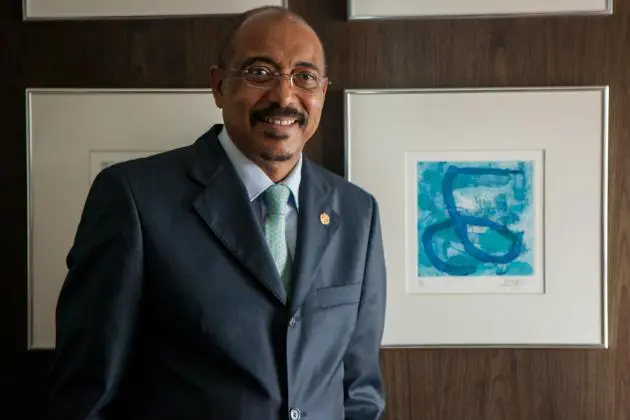
But UNAIDS chief Michel Sidibe, in a short visit to Thailand last week, was able to convey positive things about the capacity of humans to counter a deadly threat to their well-being and progress that has been made over the years.
Sidibe, here for a meeting of the UN agency’s regional representatives, flew out of Bangkok satisfied that governments in Thailand and other key countries in the region – such as China and Vietnam – are pulling their weight and taking the responsibility to care for their people seriously.
The African, executive director of UNAIDS and an under-secretary general of the UN since 2009, also met with Prime Minister Prayut Chan-o-cha for an hour at Government House.
In an interview with The Nation last week, he praised Thailand’s success in containing an epidemic that was once raged out of control – in the early ’90s – but also voiced concern about “complacency” right across Asia, amid indications of that a significant proportion of youths are not using condoms during sex.
“This country is one of the best countries for us as a model, not just showing what to do in terms of having HIV, but also a model in terms of financing the national response – it’s 90 per cent financed by the Thai government,” Sidibe said.
The current government announced a month ago that all Thais living with HIV would be able to anti-retroviral medicine for free. Previously, only those with a low CD4 (white blood-cell) count – were able to do this.
Government figures show a significant improvement: Thailand had about 460,000 people living with HIV last year – a 33 per cent drop from 2000. The number of new infections was estimated at 8,256 (mainly adults plus over 100 children), 71 per cent down from 2000, while AIDS-related deaths were put at just under 21,000 – 62 per cent down from 2000.
For Sidibe, HIV is like boxing – “you never lower your guard, or it can knock you out”.
“All the concern now is that, in the whole region we’re still seeing complacency in terms of use of condoms, which is stagnating, not only in Thailand but in the whole region.
“We’re seeing men-having-sex-with-men [HIV] infection [rates] above 20 per cent. So I think it is very important for us to be continuing to push also this prevention agenda, to not drop the ball with prevention.”
Asia was transforming with economic development and growing cities vibrant with diversity, he said. But repressive and “outdated” laws in countries through the region that punish injecting drug users, sex workers and gay men were hurting the fight against HIV, he said, by hindering access to government services. Heroin users needed methadone treatment and support to recover their human dignity.
“The lesson I learnt from HIV is anytime you are excluding [people from services], you are losing.
“Like I said to the prime minister of Thailand, there is a difference between defence and security. Defence is a product of warring nations, but security is our challenge of today and there can be no security without human security.”
A few years ago Myanmar was a critical concern. Advocates from non-government groups flew to Bangkok to complain about a badly underfunded health system and so little money spent on anti-retroviral drugs that thousands of Burmese were dying of HIV every year.
But the advent of the Thein Sein regime – and increased government spending on health, plus access to international aid and assistance – has spurred a turnaround. The UNAIDS chief said: “I went to Myanmar, I travelled everywhere. I met all the leadership also. Aung San Suu Kyi agreed to become our global advocate for zero discrimination… I’m convinced they will seize any window of opportunity to build progressively. It’s just a matter of time.”
But the fact that an estimated 22 million people with HIV around the world cannot access treatment worries him. “It is not acceptable that we [only] have 35 per cent of people [with HIV] on treatment, when [Asia] is the hub for producing medicine,” he said.
“Secondly, we need necessarily to accelerate more tailored approach going to local levels. We look at the surveys in this region – national surveys with national data; but we don’t know exactly what is happening at the local level. It’s very important that we help the countries to start thinking about that. And what worries me more than every single other thing is that, except Thailand and a few privileged countries, we have still a high dependency on the Global Fund, to external donors. That’s not sustainable. It could lead us to a treatment crisis.”
Sidibe is from Mali, which is adjacent to countries in west Africa now traumatised by the spread of Ebola. I asked him if the focus on Ebola – the scare it has created in the global media – had hurt the fight against HIV. No, he said, noting deeper issues in the latest crisis.
“We need to stop thinking about disease. We need to start really thinking about health of people, because people who are dying today, unfortunately they should not die – the causes are known. It means that our health governance system needs to be revisited. It’s not acceptable that after 50 years we still have one doctor for 90,000 people in Liberia. You have major problems in healthcare balance.. that’s we’re seeing today. It’s inequity, because at the same time we have one doctor for every 400 people in the US. So, unless we start to free up this inequity, we’ll always have one part of the world that has a problem and one part that has a solution. We need a new order to really build a framework that will give more capacity to the people to deal with those issues. And I don’t think the world is so against that. But we need to get that framework emerging and functioning.
“Ebola is showing clearly a failure in our delivery system. It’s showing also that most of these countries [hit by Ebola] face a war, so the underlying issues of lack of proper health and order is, you need stability. And finally, it’s urgent for African governments and leaders to consider health as an investment not a cost or expenditure – they’re planning [on] building buildings but if you don’t have healthy people it will not be sustainable. So health is not a cost – the health of your people is an investment.”
Sidibe said the Aids crisis had gone from dark days without hope to a social movement to break a “conspiracy of silence” about the disease, then a medical challenge not only to find drugs to counter HIV but produce them cheaply. Meeting HIV-positive mothers who had had children free of the disease clearly inspired him.
“It’s fascinating just to see from where we came. And now we can say to the world no babies will be born with HIV, that we’ll have a new generation free of Aids and then we can say, soon probably, that we’ll control this epidemic.”
