
We've gone too long without a people's constitution
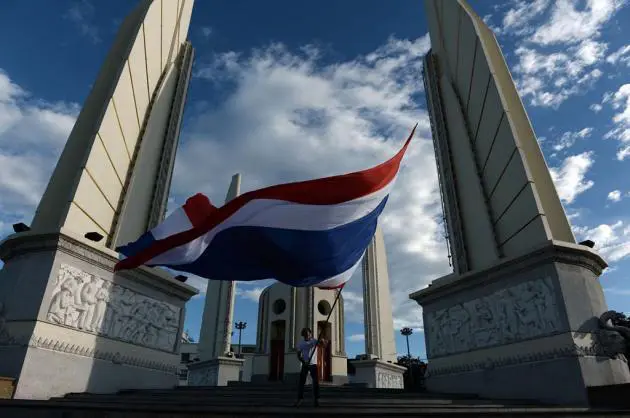


On this anniversary of Thailand's first charter, the public's voice remains constrained - and so too is progress
Eighty-three years ago today Thailand was bestowed with its first constitution. King Prajadhipok (Rama VII) signed the document and issued a brief statement. “I am willing to surrender the powers I formerly exercised to the people as a whole,” he said, “but I am not willing to turn them over to any individual or any group to use in an autocratic manner without heeding the voice of the people.”
Thailand’s economic and social conditions have changed tremendously in the ensuing eight decades, but critics have consistently complained about the slow evolution of politics.
There are those who focus on the frequent changes of government over the years, the result of four-year mandates being aborted by crises and especially coups – 12 successful military coups and seven attempts since 1932.
After each successful coup, the military regime has ripped apart the existing constitution and promulgated a new set of rules. Thus we have had no fewer than 20 constitutions in those 83 years, an average of one every 4.15 years. To foreign observers, this is the surest sign of political instability, and it continues to hinder Thailand from achieving its proper potential and becoming a regional leader.
In Southeast Asia, Singapore has always stood out in terms of political stability. It has had just one constitution since gaining independence from Britain in 1965. It is today the most advanced country in the region, the only one where average private income is judged to be high. Thailand still struggles to climb out of the middle-income trap. In 2013 Singapore’s per-capita income topped US$55,000 (Bt1.98 million) – 10 times higher than Thailand’s.
With a decided geographical advantage, Thailand has long dreamed of becoming the region’s transportation hub. But the lack of continuity in government policy has derailed a succession of major infrastructure developments, along with investment crucially needed in other economic and social areas. We have the glory of being a world-famous tourist destination, and yet we lag far behind in global rankings of education and social wellbeing.
How long are we to remain in the low rankings as a result of political instability? How long will our goals go unachieved? How long will our potential remain unrealised? Political instability, it must be more broadly realised, is the result of the common man failing to have a voice in the drafting of constitutions.
Throughout these 83 years, it was the people in power who authored all but two of Thailand’s charters, those promulgated in 1974 and 1997. The rest stemmed from the top-down approach favoured by autocrats. And that’s what happening again now, a major reason why social divisions continue to widen along with disparities in income and education and other key indicators or democratic progress.
In the wake of last year’s military coup, Thailand is drafting another constitution. The first draft was rejected over conflicting opinions on several key issues. The current drafting committee is hard at work but, like the first team, it consists mainly of legal and political experts handpicked by the military. Some appear to know or understand little about society’s most pressing needs, whereas organisations that truly represent the people have been given little if any say in the process.
This is not to say that all hope for advancement is lost. The drafting committee, despite its makeup, might well find a way to represent the needs and desires of the common people. They should embrace suggestions and recommendations offered by the public and seriously take into consideration the troubled state of our society.
Only if this is done might our 21st charter enjoy a longer life than many of its predecessors. It is well past time for the country to find lasting stability and move forward again towards prosperity.
