
Will Obama blink in Vietnam?


Play
US president must not go ‘wobbly’ and bravely push agenda of human rights and religious freedoms
As economic and geo-political interests draw the United States and Vietnam together, much unfinished business remains that must be addressed, including Vietnam’s failing human rights record and incomplete transition to a true market economy.
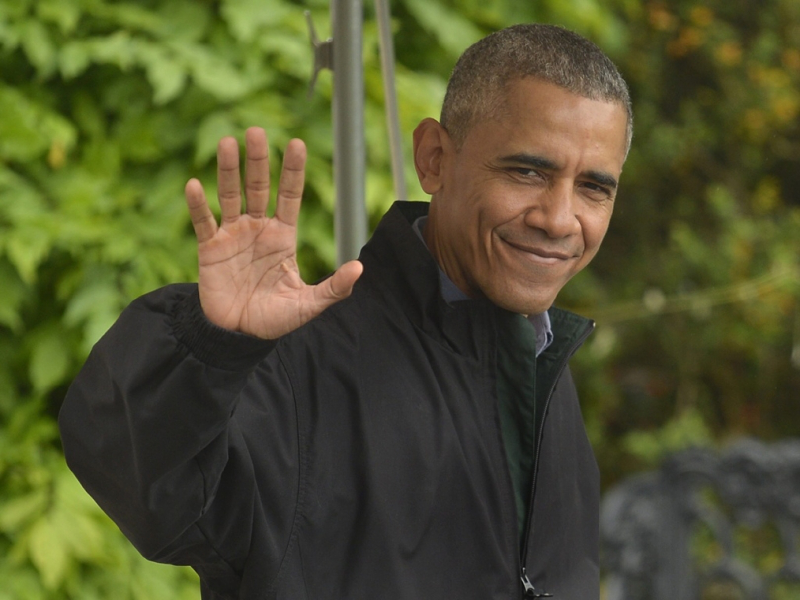
US President Barack Obama could well be a force for change in Vietnam during his first visit to this one-time US adversary, scheduled from today until Wednesday, prior to his onward journey to Japan for a meeting of the Group of 7 nations.
But if the US president’s track record in Cuba and Iran is any guide, Vietnam’s 90 million citizens may well be left wanting more. This includes some of Vietnam’s most vulnerable and persecuted, left languishing in prisons for daring to protest, to report freely, or to pray as they choose. That would be a tragedy and a betrayal of the values upon which the United States was founded.
Geopolitical and economic exigencies – as in Cuba and Iran – may well take precedence over a frank exchange on Vietnam’s human rights during Obama’s visit. The Economist Intelligence Unit’s Democracy Index, which measures a nation’s political culture, categorises Vietnam as an authoritarian regime, along with Iran and Cuba.
Obama may well once again be tempted to give away more than he should. One change the US president may well offer up is the lifting of a US arms embargo against Vietnam, in place since 1984.
But his Asia rebalance or “pivot” need not, and should not, follow his approach towards Cuba and Iran, letting Hanoi’s leaders off the hook.
With Cuba, Obama moved to normalise relations after more than five decades without achieving longstanding human rights goals advocated by both Democrats and Republicans alike for the people of that beleaguered nation. Today, though business and tourists may well be pleased by the opportunity to make money in and travel to Havana, not much has changed in Cuba. Peaceful protests continue to be violently suppressed and pro-democracy activists are routinely jailed.
As for Obama’s nuclear deal with Iran, the story behind the deal is still being unveiled following a controversial report revealing the administration’s intent to cut a deal with Iran to lift sanctions, regardless of who was in power there, hard-line or moderate.
Deputy National Security Adviser Ben Rhodes has gone on record, in essence taking pride in his ability to dupe gullible journalists with a misleading “narrative” to advance the Obama administration’s goals.
Now comes Vietnam. Will geopolitics and the search for a foreign policy legacy once again trump human rights?
The US-Vietnam relationship has steadily gathered steam since the normalisation of diplomatic relations in 1995. That has been for the better as both nations have moved to address the lingering aftermath of their long conflict, from questions over Americans killed or missing in action to the consequences of Agent Orange use.
Trade already has grown significantly between the two nations.
And, both the United States and Vietnam have joined 10 other Asia-Pacific nations in pursuing a Trans-Pacific Partnership (TPP) trade deal that, if approved by all signatories, would account for 40 per cent of global gross domestic product.
Appropriately, to get Vietnam to sign on, US negotiators achieved labour and other concessions from Hanoi. Without some serious heavy lifting from Obama on Capitol Hill, however, the TPP may well fail to pass the US Congress in its present form given rising anti-trade sentiment, and opposition by all leading US presidential candidates.
A quickened pace of progress in US-Vietnam ties now comes amidst an increasingly assertive China on Vietnam’s borders and off its coasts. Vietnam understandably seeks strengthened US engagement in Asia to counter the rise of China.
Yet, China may well view the United States as a “paper tiger” in the South China Sea. The administration stepping back from its “red line” ultimatum in Syria has undercut perceptions of the steadfastness of US commitment. One result: Chinese fishing boats and island building now, military boats later.
In that context, Obama could well use some advice from former British prime minister Margaret Thatcher. “This was no time to go wobbly,” the then Iron Lady of Great Britain was said to have said to US President George HW Bush on the need to stand strong in enforcing an embargo against Iraq in the lead-up to the first Gulf War.
Today, America’s president must also not “go wobbly” in pressing for continued change in Vietnam in two critical areas.
First, human rights, and religious and press freedoms must be high on the list. Advocating them is also in Vietnam’s long-term interests. US President Ronald Reagan once famously said from a walled Berlin, before the Brandenburg Gate, “Mr Gorbachev, tear down this wall.” Obama, once known for his rhetoric, has a chance to underscore America’s commitment to speaking up for those in Vietnam under increased or long-time threat in their own quest to be free.
This includes Thich Quang Do, leader of the Unified Buddhist Church of Vietnam. The 87-year-old religious leader has been under some type of state confinement for the last three decades due to his actions seeking greater democracy and freer expression.
In March, a Hanoi court sentenced blogger Nguyen Huu Vinh to five years in prison for “abusing democratic freedoms to harm the interests of the state”.
His assistant Nguyen Thi Minh Thuy received a prison sentence of three years.
And just in the last weeks, the persistent lack of civil liberties in Vietnam was on full display when protests by residents concerned about the possible links between industrial waste and large-scale fish deaths near their home were suppressed.
These and other voices should not be ignored in Obama’s pursuit of a deal and a legacy.
Second, Obama must continue to press Vietnam to move forward on its journey to a more market-oriented economy – one that keeps the faith in the ability of Vietnamese businesses and business leaders to compete freely and fairly. Ranked only 90th out of some 189 economies in the World Bank’s Doing Business report, Vietnam remains a story of two steps forward and one-and-one-half steps back.
Improving upon this ranking will require Vietnam to up its game and recommit to the battle of the “little bric” – addressing the stifling bureaucracy and regulations, and clamping down on state interventionism and corruption that hinders stronger business growth and strengthened US-Vietnam commercial ties.
While a few landmark anti-corruption cases have captured headlines – a 2013 scandal that rocked state-owned Vietnam National Shipping Lines, or Vinalines, is a case in point – corruption has endured.
Transparency International’s Corruption Perception Index, which measures perceived levels of public sector corruption worldwide, ranks Vietnam 112 out of 168
In a few months, the United States will elect a new president. That US president would be well-served by making clear that America’s enduring commitment to Asia includes not just defence ties but also support for human rights and commercial engagement.
Such an effort would be to the benefit of both the peoples of the United States and of Asia and the Pacific.
When it comes to Vietnam, it is not too late for the US president to hold Vietnam accountable for all the unfinished business that remains toward building a freer and more prosperous nation.
Curtis S Chin, a former US ambassador to the Development Bank, is managing director of advisory firm RiverPeak Group, LLC. Jose B Collazo, a Southeast Asia analyst, is an associate at RiverPeak Group.
