
How Thai silk meets sustainable style fashion globally
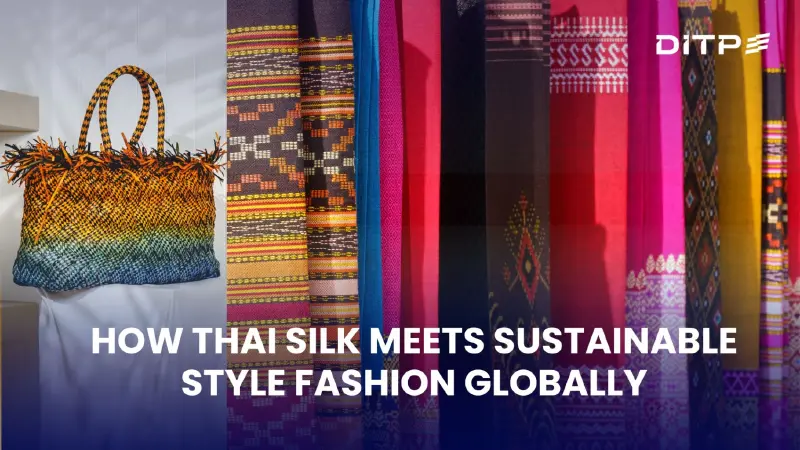


Apart from its uniqueness in culture, design, and innovation, Thai silk has now gained global recognition for its significant role in promoting sustainability across environmental, economic, and social dimensions.
Thailand's Thai silk gained international acclaim thanks to Her Majesty Queen Sirikit The Queen Mother's transformative impact on Thai culture, particularly through her promotion of Thai silk.
Previously, Thai silk wasn’t seen as fashionable. It was often regarded as outdated or traditional. However, Her Majesty Queen Sirikit The Queen Mother transformed it into a symbol of modern elegance.
By partnering with French designer Pierre Balmain, she created sophisticated, royal-inspired dresses made from Thai silk, blending classic French styles with local craftsmanship.
The result was a fashion revolution, with Thai silk evolving from a traditional fabric into a high-fashion statement.
Sustainable fashion
Silk is a sustainable and environmentally friendly fabric. As a natural fibre derived from silkworm cocoons, it can be repeatedly harvested through cultivation.
Additionally, silk is biodegradable, meaning it breaks down naturally without harming the environment.
Silkworms primarily feed on mulberry leaves, which require minimal water. The harvesting of mulberry leaves does not negatively affect the growth of the trees, promoting sustainable cultivation.
Compared to synthetic resources, silk uses relatively low energy, making it environmentally beneficial.
The silk production process generally avoids the use of excessive chemicals, except during the dyeing stage. As a result, silk is an eco-conscious choice.
Today, there is an alternative known as 'peace silk,' an ethical option that respects the natural lifecycle of the silkworm, using materials harvested after the silkworms naturally leave their cocoons.

Elevating Thai local products to global markets
The Department of International Trade Promotion's OTOP Premium Go Inter project, currently in its 10th year, aims to promote Thai local products (OTOP) in the international market.
The initiative focuses on enhancing the capabilities of OTOP entrepreneurs to meet the needs of global consumers. By combining traditional local wisdom with modern design and innovation, the project helps create products that are both beautiful and globally relevant.
Additionally, it also provides entrepreneurs with in-depth marketing skills to engage in international trade. This encompasses product trends/consumer lifestyles, how to prepare for trade negotiations, marketing, pricing, and the usage of AI tools for basic marketing communications, among other topics.
Over 3,880 entrepreneurs attended the seminar, with over 370 progressing to the in-depth development stage and producing over 1,700 prototype goods. Some of the project's entrepreneurs are now successful handcraft exporters with national and international design honors, including DEmark and G-mark award. These include (1) Varni sedge bags from Phatthalung Province, (2) Boonyarat Thai Craft’s Yan Lipao bags from Nakhon Si Thammarat Province, and (3) Jutathip hand-woven naturally dyed cotton items from Khon Kaen Province.
The project is divided into three phases:
Phase 1: Accepting applications from all regions throughout Thailand
Accepting applications from at least 100 OTOP entrepreneurs from all regions to participate in the project. The project selected 45 entrepreneurs with outstanding potential for in-depth development.
Phase 2: Workshops and in-depth coaching
The selected entrepreneurs participate in a specialised design and marketing workshop. Led by experts, the workshop focused on enhancing the creativity and commercial viability of OTOP products.
Entrepreneurs received an in-depth coaching by professional designers to help them develop product collections that would meet international standards.
Phase 3: Market testing
Market testing activities, including the presentation of new project collections at a mini trade exhibition and business negotiations that connect firms with possible partners such as department store, trade representatives, and other organizations. This event allowed entrepreneurs to showcase their newly developed products to a wider audience.

Achievements and market interest
The products featured in the OTOP Premium Go Inter project gained significant attention both domestically and internationally. The blend of local materials and modern designs resonated with global trends, particularly the growing demand for green products.
The initiative successfully developed a full-cycle process, from product ideation and creation to market entry, enabling entrepreneurs to think, create, and sell internationally.
The project also contributed to Thailand's Soft Power strategy by showcasing the country’s rich cultural heritage and craftsmanship. In March 2024, selected OTOP products were featured at the STYLE Bangkok exhibition, offering further opportunities for international buyers and expanding the project's global reach.
Looking forward
Building on the success of Year 10, Office of Lifestyle Trade Promotion plans to continue its efforts with OTOP Premium Go Inter Year 11.
This initiative will promote products with distinct Thai identities and local wisdom to international markets, in line with the government’s policies on enhancing soft power and generating income for local communities.
