
Thailand Demonstrates How National Leadership Can Turn Climate Finance into Tangible Climate Action



Led by Thailand’s Royal Irrigation Department, a climate-financed initiative is showing how strong national ownership can deliver lasting adaptation at scale.
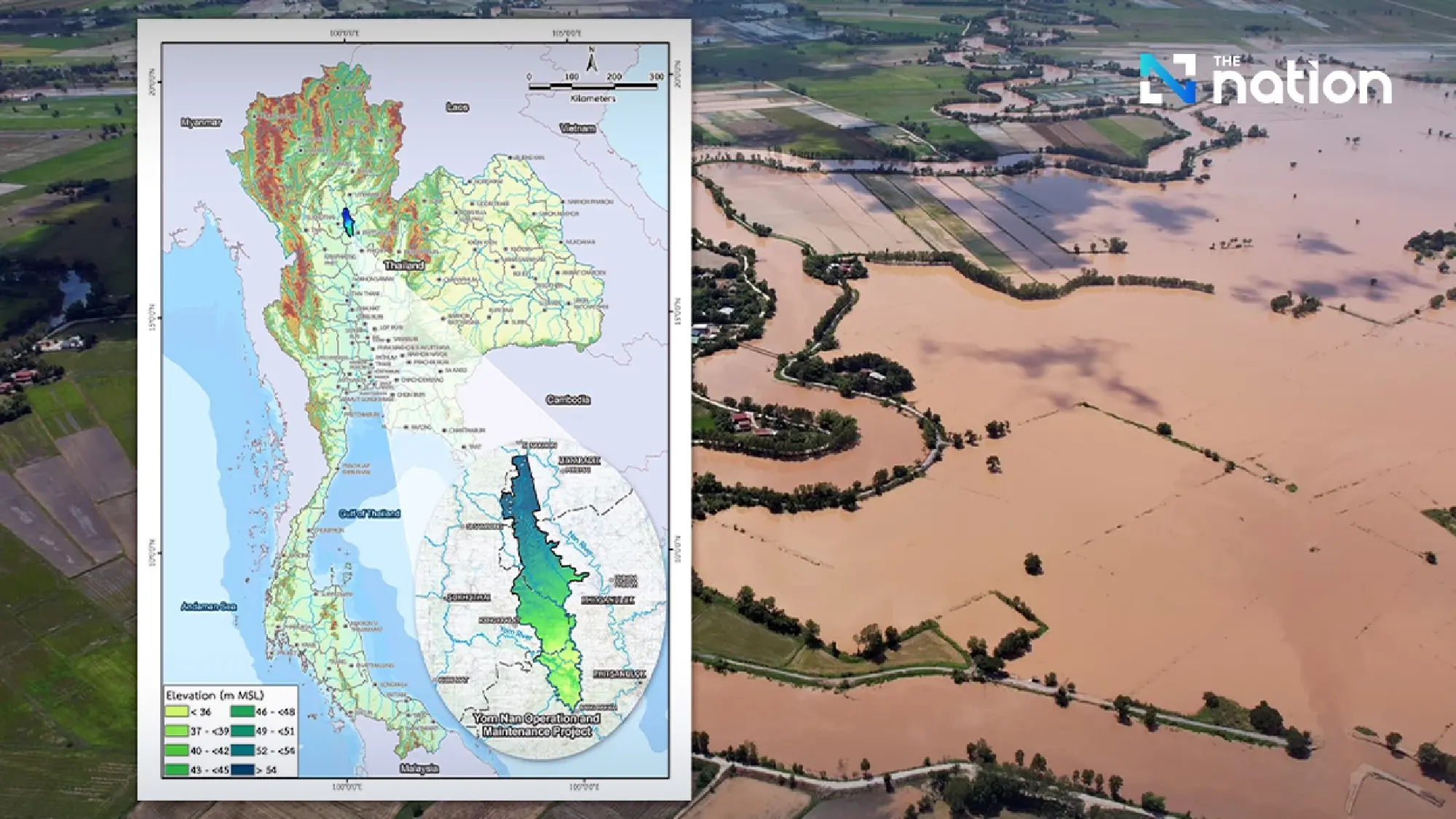
As climate impacts intensify across Southeast Asia, Thailand is offering a compelling example of how climate finance can translate into effective climate action when driven by national institutions. Under the leadership of the Royal Irrigation Department (RID), and with technical and financial support from the Green Climate Fund (GCF) and UNDP, Thailand is implementing an integrated adaptation approach that strengthens climate information for water management, ecosystems, and rural livelihoods in flood- and drought-prone areas of the Yom–Nan River Basin.
From the outset, RID has played a central role in steering project design, coordinating across sectors, and aligning climate investments with national water management priorities. This strong government leadership has enabled the project to move beyond pilots toward solutions that are scalable, institutionalized, and embedded within Thailand’s development systems.
These climate-financed initiatives are currently under development by the Royal Irrigation Department and will be fully operational in the future."

Turning Climate Data into Action
A cornerstone of the project is the expansion of Thailand’s climate and hydrological monitoring capacity under RID’s operational framework. By 2025, RID—working with national technical partners—oversaw the installation of a comprehensive hydro-meteorological network, including weather stations, water-level sensors, soil-moisture monitoring, and flow radar systems.
These systems directly support RID’s mandate to manage water resources under increasing climate uncertainty. Clear operational procedures and inter-agency coordination mechanisms have been developed to support the use of climate information in irrigation planning, flood management, and agricultural decision-making. These arrangements are currently being adapted and refined during early implementation, as agencies and local users integrate climate information into routine operational practices. Farmers and local officials have been engaged throughout this process, helping to build trust in climate information and encourage practical uptake at the local level.
Infrastructure and Nature Working Together
RID’s leadership has also been central to demonstrating how traditional water infrastructure can be strengthened through nature-based solutions. Drawing on its long-standing experience in irrigation and flood management, RID led the planning and implementation of climate-resilient infrastructure upgrades, including canal head regulators and drainage systems, improving water management for more than 20,000 hectares.
At the same time, the project has benefited from complementary international expertise. The Deutsche Gesellschaft für Internationale Zusammenarbeit (GIZ) provided specialized technical support on Ecosystem-based Adaptation (EbA), contributing international best practices, ecological assessment methodologies, and design expertise. This collaboration enabled the integration of wetland restoration, river reach rehabilitation, and natural water storage solutions alongside conventional infrastructure. All EbA investments were developed based on rigorous climate risk and ecological assessments and approved under GCF environmental and social safeguards.
Together, this blended approach positions ecosystems not as add-ons, but as essential components of climate-resilient water management.
Strengthening Livelihoods and Access to Finance

Under RID’s coordination, the project has extended climate resilience beyond infrastructure to rural livelihoods. Farmer Field Schools, climate-informed extension services, and digital innovations—such as smart farming applications and drone-based crop monitoring—are enabling farmers to respond more effectively to climate variability.
Access to finance and financial capability have been strengthened through partnerships with national financial institutions. In 2025, the Bank for Agriculture and Agricultural Cooperatives (BAAC) committed approximately USD 16 million in credit for farmers participating in project-supported training, supporting investment in climate-resilient agricultural practices.
In parallel, Krungsri Ayudhya Bank has contributed to farmer resilience by providing financial literacy training, helping farmers strengthen household financial management, savings, and investment planning under increasing climate uncertainty. Emphasizing financial literacy enhances access to credit, ensuring that climate finance translates into sustainable and inclusive livelihood outcomes.
The project has also supported farmers in diversifying income sources as part of climate adaptation strategies. Farmers received assistance to develop online marketing channels, strengthen product branding, and improve retail outlets and storefronts, enabling them to reach wider markets. These efforts promote secondary occupations and value-added activities, reducing livelihood vulnerability to climate shocks and enhancing long-term adaptive capacity.
Challenges and Lessons from Implementation
While progress has been substantial, RID’s leadership has also involved navigating several key challenges. Integrating new climate information systems into long-established operational procedures has required adjustments in institutional workflows, staff capacity, and coordination across multiple agencies. Building confidence among local users—particularly farmers—in the reliability and practical value of climate data has taken time and sustained engagement.
Introducing ecosystem-based adaptation alongside conventional infrastructure has likewise required careful balancing of engineering, ecological, and social considerations, together with strict adherence to international environmental and social safeguards. In addition, aligning project timelines has necessitated adaptive management in response to site-specific constraints, climatic conditions, and differences between national and international technical requirements and design standards.
Addressing these challenges has strengthened institutional learning within RID and its partner agencies, reinforcing the importance of adaptive governance, capacity development, and continuous stakeholder engagement in climate-financed programmes.
Lessons for COP and Climate Finance

Together, these measures demonstrate how climate adaptation can strengthen not only production systems, but also financial resilience and market access for rural communities.
Thailand’s experience offers several relevant insights for Conference of the Parties (COP) discussions and climate finance practitioners:
National ownership matters: Climate finance is more likely to translate into tangible outcomes when led by capable government institutions with clear mandates and decision-making authority.
Institutions enable scale: Embedding climate information systems and adaptation approaches within agencies such as the Royal Irrigation Department (RID) supports continuity, learning, and the potential for scaling beyond the project lifecycle.
Nature-based solutions can be piloted alongside infrastructure: With robust technical analysis and environmental and social safeguards, ecosystem-based adaptation can complement core water infrastructure. This project serves as a pilot area to test integration approaches before wider replication.
Finance follows capacity: Strong public leadership and institutional readiness help crowd in domestic and sectoral finance, linking climate finance with longer-term investment in adaptation.
With major preparatory, safeguard, and design milestones now completed, RID is well positioned to accelerate implementation and scale climate-resilient water management across Thailand. As countries look to COP for models that convert climate finance into tangible outcomes, Thailand’s RID-led approach delivers a clear message: when national institutions lead, climate finance delivers results.
