
Resort Casa De La Flora cashes in on rising popularity of Khao Lak


Play
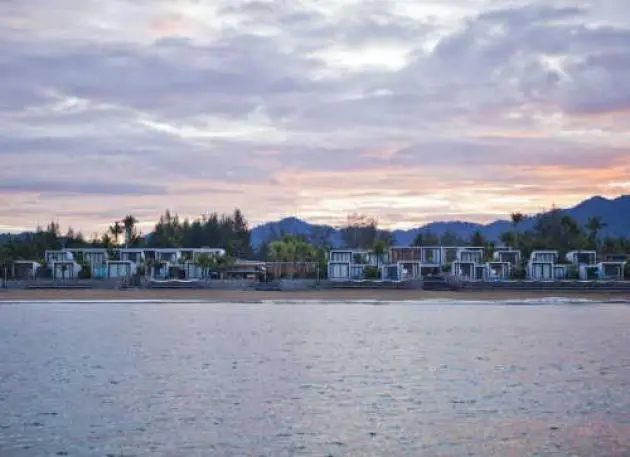
Casa de la Flora, a luxury resort in Khao Lak, is raising its profile in both the international and domestic markets after its doors were opened almost two years ago.
The resort is cashing in on the growing tourism industry in Khao Lak, Phang Nga province, which has rebounded completely after being hit by the deadly tsunami in December 2004.
Bheerapong Dowpiset, assistant chairman of Star Home Beach Resort Co, operator of the property, told The Nation he was very confident that the occupancy rate of his 36-villa resort would average 75 per cent over the next two years.
After its opening, the occupancy rate stood as high as more than 90 per cent during high season, he said. Its rate for the whole year averages almost 60 per cent, similar to the rest of the area.
The tourism scene in Khao Lak is becoming more dynamic, with growing arrivals of foreign tourists, especially from Europe. Currently, more than 2 million come each year to enjoy the unspoiled natural beauty of the Southern region, from white-sand beaches to sprawling islands, offering tranquillity and outdoor activities.
“Tourism in Khao Lak started rebounding three years after the tsunami hit. Today, it is moving even faster as a niche market to welcome foreign upper-income-earning tourists,” Bheerapong said.
Most of his guests come from Europe, especially German-speaking nations, followed by Britain and Australia, as well as from Asian centres such as Singapore, Hong Kong and South Korea. Many are honeymooners.
The room rate of Casa de la Flora ranges from Bt8,000 to Bt100,000, depending on type and season. It is a member of the Design Hotels group, which has about 250 member properties worldwide.
Bheerapong works hard to promote his resort in both the international and domestic arenas, aiming not to rely too heavily on any single market, as a way to minimise business risk. Abroad, he attends travel marts such as those in Berlin and London. Today (Monday) he is flying to Hong Kong to talk to travel agents there, and next goes to South Korea.
Economic troubles in Europe and the baht’s appreciation have not affected bookings at Casa de la Flora. Khao Lak is still considered a place offering value for money. Foreign travellers choosing to come here believe their money will go further than in Hong Kong or Singapore.
“Unfortunately, the number of Thai tourists staying in the hotel is still tiny. Possibly the picture of the tsunami that hit the area has not been removed from their memories,” he said.
This year the resort will focus more on increasing the number of Thai guests via marketing blitzes and campaigns to help change their perception towards the area. Thais now have more spending power and many of them are looking for private resorts to stay at.
The Dowpiset family is not new to the hotel business: it has two decades of experience in this field. Bheerapong, 28, is a son of Sompong Dowpiset, co-founder of Boontavorn, a major distributor of sanitary-ware. Sompong assigned Bheerapong to look after the hotel business, while the elder Dowpiset acts as a consultant.
The company also operates two other hotels, one in Khao Lak and one in Patong, Phuket, under the La Flora brand with business partners. The firm also operates a luxury hotel, The Naka, which opened unofficially recently in Phuket. The Naka is the second hotel wholly owned by the Dowpiset family, after Casa de la Flora.
The first La Flora in Khao Lak was built eight years ago, costing Bt180 million excluding the price of 6 rai (1 hectare) of land. After the 138-room four-star hotel had been open for three months, it was hit by the tsunami. It was closed for a year for renovation, while the marketing team worked tirelessly to restore confidence |of the public towards the hotel. So far, La Flora’s business performance has been upbeat, |and the company expects to |see a return on its investment this year.
Meanwhile, Casa de la Flora cost between Bt300 million and Bt400 million to construct, and a return on that investment is expected after six years of operation.
Bheerapong hopes Casa de la Flora will play a rising role in Khao Lak, matching the rising popularity of the area itself.
