
Residential firms turn to mall, other projects to boost sales


Play
Intense competition forces developers to adopt new business model in order to hit their targets
Amid an intensely competitive property market, leading developers have had to create a new business model in order to boost demand for their residential projects by building community malls and other facilities close to their projects.
This new type of approach has been adopted by companies aiming to sell out their residential projects and meet their targets, according to property experts.
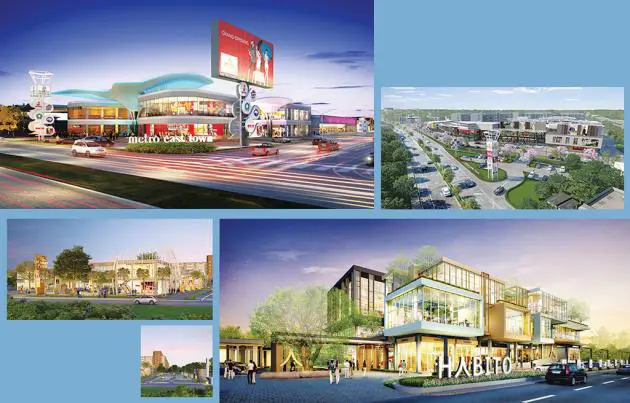
For example, Sansiri has introduced a community retail project, Habito, at Sukhumvit 77, located close to several of its residential projects worth Bt8.7 billion in total.
The nearby projects are Blocs Sukhumvit 77, The Base Sukhumvit 77, The Base Park East Sukhumvit 77, The Base Park West Sukhumvit 77, Garden Square Sukhumvit 77 – an upscale townhouse development with prices starting at Bt10 million – and its latest condominium project, Hasu Haus.
These projects comprise more than 1,000 units in Sansiri’s portfolio.
We Retail, the retail arm of Property Perfect, is investing Bt20 billion to develop four new community malls from last year through to the end of 2015. They are also located close to the developer’s residential projects.
Two of the mall projects, worth Bt1.5 billion, commenced construction last year, with operations scheduled to begin in the final quarter of this year. They are Metro West Town, located at Kalapapruk, and Metro East Town, located at Sukhumvit 77-Lat Krabang.
One of the other projects will be situated on Ram-Indra, with retail space of 150,000 square metres and an investment cost of Bt6 billion, and the fourth on Ratchadaphisek, with retail space of 300,000 square metres at a cost of Bt12 billion.
Construction of these two projects is scheduled to commence next year.
Besides its community-mall development programme, Property Perfect has also sold land on Bang Na-Trat road to The Mall group for the development of a shopping mall, which will be located close to its Sky Sukhumvit condominium project.
Sammakorn, meanwhile, is another major developer that has successfully developed community malls close to its residential projects.
At present, the company has three Pure Place mall branches – at Khlong 2 Rangsit, Ramkhamhaeng and Ratchapreuk.
Sansiri chief executive offer Apichart Chutrakul said his company had allocated an investment budget of Bt320 million to establish its retail business. It targets generating about Bt40 million in revenue per year from the rental of commercial space at the Habito community retail project, at rates of Bt750-Bt1,500 per square metre.
“Income from retail business generates only 0.15 per cent of our total revenue, but the true merits of this business lie in something more important – it allows us to offer ‘from morning until night a feel-good lifestyle’ to our Sansiri Family members in the burgeoning prime residential area of Sukhumvit 77. It will also contribute greatly to increasing the value of our future developments, as well as the value of the land nearby,” he explained.
LPN Development has tied up with Siam Future Development to develop a community mall at the former’s Bt10-billion condominium project, Lumpini Township Rangsit-Khlong 1.
The collaboration forms part of LPN’s efforts to persuade home-buyers to purchase units at the project, and also to create project value at a time of intense competition in the area, which has seen new condominium launches comprising more than 20,000 units.
“When we develop the largest condominium, with over 5,000 units, we have to have a facility to serve our customers’ needs, and a community mall will do this,” LPN managing director Opas Sripayak said after launching Lumpini Township Rangsit-Khlong 1 last year.
Property Perfect CEO Chainid Adhyanasakul said the company had decided to expand its business from developing residential projects to retail development after seeing growing demand for retail space following a continued rise in the population of greater Bangkok, especially when the Asean Economic Community comes into effect next year.
Moreover, community malls can support customer demand when located close to its residential projects, where more than 2,000 units have already been transferred to buyers, he said.
Capital-raising potential
Having a retail business portfolio will also help raise capital from the market when rental income is stable enough to launch a real estate investment trust in the future, Chainid said.
“We plan to issue a REIT when our retail business is fully operational,” he added.
He said it was now a growing trend among major property firms to create a new business model to support their customers, beyond solely developing residential projects.
Meanwhile, the sale of land for a university campus close to a residential project is another way to create added value for the project.
One such example is Property Perfect’s sale of land on Chaeng Wattana Road to the University of the Thai Chamber of Commerce in 2012, which will create demand for its residential projects located close to the campus, said the chief executive.
Sansiri has also followed the community path, with the construction of a secondary school in the Ram-Indra area located close to its Habitia Ramindra residential project in 2012.
During a period of intense competition, top property developers have had to create new business models to boost their sales, with community malls, universities and schools all now part of their marketing tools.
