
Climate action cannot wait: UNDP urges Thailand to press ahead
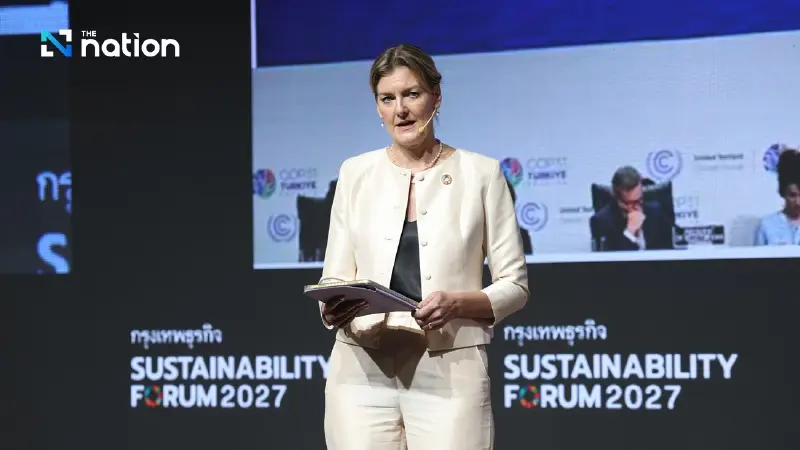


UNDP urges Thailand to scale up climate action, highlighting the economic cost of inaction, clean energy growth and the benefits of climate adaptation.
- The United Nations Development Programme (UNDP) is urging Thailand to accelerate its climate action and not wait for a global consensus, following the failure of recent international climate talks to reach an agreement.
- A senior UN official warned that delays in tackling global warming put more lives, livelihoods, and development progress at risk, highlighting that the cost of inaction is estimated to be six times greater than preventative measures.
- Despite diplomatic setbacks, the UNDP notes encouraging trends that support Thailand's green transition, including rising investment in clean energy and falling costs for technologies like solar power and electric vehicles.
- The UNDP is supporting practical climate solutions in Thailand, such as helping local communities develop adaptation investments and assisting farmers with solar-powered irrigation, to turn national commitments into tangible action.
Thailand must accelerate climate action, mobilise green investment and strengthen resilience despite the failure of international negotiators to reach consensus at the recent United Nations climate talks in Türkiye, according to a senior UN official.
Niamh Collier-Smith, Resident Representative of the United Nations Development Programme (UNDP) in Thailand, stressed that delays in addressing global warming would put more lives, livelihoods and development gains at risk.
Speaking at the “Sustainability Forum 2027 – The Race Against Global Warming”, hosted by Bangkokbiznews on Wednesday (November 25), she highlighted the economic benefits of climate action, growing momentum behind the green transition and the need to redefine development.
“What's extremely important to remember is that climate change will not wait for consensus. Thailand is not waiting for consensus. And therefore, neither can we,” she remarked.
COP setback underscores urgency of climate action
Collier-Smith noted that while previous Conferences of the Parties (COPs) had focused on setting global climate ambitions, the latest negotiations in Türkiye were intended to translate commitments into tangible action.
Key priorities included delivering on the global climate finance goal of US$300 billion annually by 2035, advancing the second global stocktake under the Paris Agreement, strengthening climate adaptation, scaling up the Loss and Damage Fund and ensuring a just transition.
Although progress was made in supporting workers through the transition and setting climate finance reporting deadlines, negotiators failed to reach an overarching agreement.
The setback was particularly concerning for countries already experiencing severe climate impacts, with the world on course to exceed 1.5°C of warming.
“Every fraction of a degree puts more lives and livelihoods and development gains at risk. Major emitters need to cut emissions faster,” she warned.
Developed countries must also fulfil their climate finance commitments and ensure that support reaches communities facing droughts, floods and extreme heat.

Ten numbers that define the climate challenge
Collier-Smith outlined ten figures illustrating the urgency of climate action, the consequences of inaction and the opportunities available to governments, businesses and communities:
- One planet: Economic activity depends on healthy soil, reliable water supplies and marine ecosystems that sustain coastal livelihoods.
- Well below 2°C: The Paris Agreement seeks to limit global warming to well below 2°C while pursuing efforts to limit it to 1.5°C. In Bangkok, extreme heat can cost street vendors and motorcycle taxi drivers hours or days of income.
- More than three billion people: More than three billion people live in areas highly vulnerable to climate change, where adaptation depends on access to information, infrastructure and resources.
- Less than 4%: Africa contributes less than 4% of global greenhouse gas emissions yet faces some of the most severe climate impacts, underscoring the importance of equitable climate finance.
- Five-year cycles: Countries submit national climate action plans every five years. Thailand's latest plan targets a 47% reduction in net greenhouse gas emissions by 2035 from 2019 levels, conditional on international support.
- The sixfold cost of inaction: The cost of climate-related damage is six times that of meeting the Paris Agreement goals, according to estimates cited by Collier-Smith. Thailand's 2011 floods caused an estimated 1.43 trillion baht in damage and losses.
- Seven times as many heatwaves: Children born in 2020 could experience up to seven times as many heatwaves over their lifetimes as people born in 1960.
- Eight in ten people: UNDP's Peoples’ Climate Vote found that around 80% of people globally want their governments to take stronger climate action.
- Nearly 9%: The green economy accounted for nearly 9% of the global stock market by early 2025, up from 5% a decade earlier.
- A tenfold return: Every US$1 invested in climate adaptation and resilience can generate US$10 in benefits over ten years.
“So when we weigh the cost of preparing for a disaster, we also have to factor in the cost of what it takes to recover from one,” she explained.
Green investment and clean technology gather pace
Despite setbacks in international negotiations, Collier-Smith identified three encouraging trends: rising clean energy investment, falling technology costs and growing consumer demand.
According to International Energy Agency projections cited in her speech, nearly US$2 is expected to flow into clean energy and related infrastructure in 2026 for every US$1 invested in fossil fuels.
Meanwhile, the cost of generating electricity from solar power has fallen by around 90% since 2010, making renewable energy increasingly accessible to businesses and utilities.
Electric vehicle (EV) adoption has also accelerated. Around one in every 25 new cars sold globally was electric in 2020, rising to one in four by 2025.
“Investment expands supply. Producing at scale can bring down cost. Lower costs put clean technologies within the reach of more people and businesses.
“And growing demand gives manufacturers and investors a reason to reinvest again,” she explained.
Thailand's sustainability-linked bond reflects this momentum, with the number of EVs serving as one of its two performance indicators. UNDP independently verifies progress on the EV indicator to help investors assess whether Thailand is meeting its commitments in line with international standards.
Scaling up climate solutions in Thailand and beyond
Collier-Smith highlighted several UNDP-supported initiatives demonstrating how climate commitments can be translated into practical solutions:
- Pattani, Thailand: Local communities developed a climate charter identifying potential adaptation investments worth 82 million baht, providing a basis for negotiating funding priorities with local authorities.
- Phetchabun, Thailand: UNDP and the European Union worked with maize farmers to introduce solar-powered drip irrigation, helping them adapt to changing climatic conditions.
- Uruguay: A sustainability-linked bond ties borrowing terms to progress on emissions reduction and the protection of native forests, with UNDP independently verifying progress.
- Uzbekistan: UNDP supported the introduction of 500 electric vehicles in Tashkent and the training of women as bus drivers, creating greener employment opportunities.
- Comoros: Farmers are cultivating climate-resilient banana varieties and improving soil and water management to protect harvests and livelihoods.
“The task is taking all of these great examples and bringing them to scale. Because again, climate change is not going to wait for global consensus,” she emphasised.
UNDP to rethink how development is measured
Collier-Smith also questioned whether conventional economic indicators, including gross domestic product (GDP) and gross national income (GNI), adequately capture development amid escalating environmental pressures.
UNDP introduced its Human Development Index (HDI) in 1990, measuring progress through life expectancy, education and income.
Its Planetary Pressures-Adjusted Human Development Index goes further by accounting for carbon emissions and material footprints. Thailand's HDI falls by 9% when these environmental pressures are factored in.
“How do we continue to improve people's lives while putting less pressure on the planet? And how do we define that as a measure of progress?” she asked.
UNDP will launch its Nature Relationship Index on December 1, seeking to advance public discussion on the relationship between human development and nature.

Turning climate pledges into measurable action
Collier-Smith urged businesses to reduce emissions through decisions on procurement, equipment and energy use, while encouraging financial institutions to support climate projects and help small businesses recover from disasters.
Governments must translate climate priorities into funded, actionable plans that reach vulnerable communities, while the media should hold stakeholders accountable for delivering on their commitments.
She concluded by calling for stronger international alliances while emphasising that everyone has a role to play in addressing global warming.
“We can invest in protecting people from the risks they already face. And we can measure progress by what makes it possible for people and nature to thrive together.”
