
Popularity has its price


Play
Myanmar tourism is on the rise and so are the prices
Pity the budget traveller in Myanmar, Asia's hottest destination for tourists in search of something new. Even the Mahabandoola Guest House, a humble rooftop abode on the top floors of a decaying shop house near the Sule Pagoda in the centre ofYangon, is getting dearer.
“During the rainy season we are asking US$5 (Bt155) for a single, but we will go up to $6 in October, when peak season starts,” says Tin Soe, Mahabondoola's manager. With 16 rooms sharing two communal bathrooms, the Mahabandoola has been full for weeks with French, German, Scandinavian and US backpackers.
“The guest houses here are more expensive than in Cambodia,” says Elisabeth Nell, a German tourist staying at the Mahabandoola.
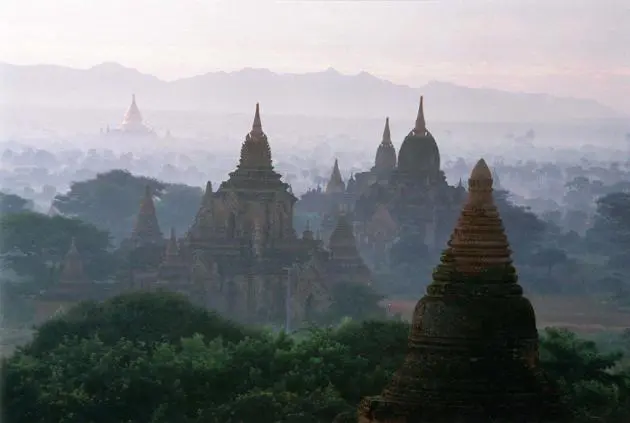
Although wary of rising costs and worried about being able to find cheap accommodation in Pagan, Myanmar’s pagoda-studded ancientcapital, Nell is still excited about her trip.
“This is the right time to be here. Everything is opening up and soon there will be too many tourists, so better to come now,” she says.
For Myanmar, which boasts about 26,000 hotel rooms nationwide (compared with the 50,000 offered in Bangkok alone), there already are too many tourists for the local industry to handle.
Last year, an estimated 365,000 foreigners arrived in Yangon, the country’s main gateway, up 22 per cent year-on-year. Between January and April of this year, the number already hit 175,000 arrivals, up 35 per cent.
Yangon offers about 8,000 hotel rooms, and hoteliers are making up for the years of low occupancy rates they suffered when Myanmar was under punitive sanctions imposed on the former junta by western democracies. The sanctions were eased earlier this year.
The four-star Traders Hotel has hiked its prices from $80 a room early last year to $320 this August.
“Hotels have been hiking their prices too quickly and they don’t honour all the contracts they make with travel agents, which is a bit harsh,” says William Myatwunna, manager of the Good News travel agency.
The government has tried to set a cap on the city’s hotel prices, but this has just encouraged hoteliers to avoid contracts with agencies and reservations and concentrate on “walk in” business instead, he says.
The price gouging may have long-term repercussions on Myanmar’s tourism sector.
“If you are paying $300 for a room that you’re paying $40 for in Bangkok, people are going to get angry,” says Frank Janmaat, general manager of the KMA Hotel Group, with seven properties nationwide. “This isn’t good for the future of Myanmar.” Meanwhile, his hotel group is doing just fine. “Our Pagan property is fully booked until February,” Janmaat says.
A handful of new hotels are under construction in Yangon, mostly four-five star properties, but they are not expected to be finished in time to ease the looming shortage this coming peak season, October to May.
“I think the room shortage will continue to the end of next year’s high season,” Myatwunna says.
Room shortages will be made worse when Myanmar hosts numerous international events next year, such as the Southeast Asia Games and two summits of the Associations of Southeast Asian Nations (Asean).
Another problem the tourism industry faces is a shortage of trained hotel staff, although this could be easily solved by diverting some of the hotels' swelling earnings toward better pay packages for workers.
“Working at a hotel in Myanmar you might get $30 to $40 a month, whereas you’re going to get 300 to 400 dollars or more overseas,” says Aung Mye Soe, vice-principle of the Star Resources Tourism and Hospitality Management Academy. Nearly 70 per cent of the academy's graduates have migrated overseas, he adds.
The room shortages and high prices are not expected to discourage everyone though.
“The higher costs put off a lot of customers, but many tourists are thinking they should come now before it’s really booming,” Wyatwunna says.
