
Scents and the city


Play
Exploring the Muslim labyrinth in the heart of Xi'an
In the decade I have spent on the road, I have developed an unofficial ritual: wherever my journey takes me, be it Sao Paulo, Kazan or Islamabad, I visit the local marketplace and connect with the place and its people. I always try to talk to the locals, usually through that most basic mode of conversation – body language. Braving a bad stomach later, I eat their food, laugh with them and listen to the sound of the town.
Here in Xi’an, I make my way to the ancient Muslim Quarter right in the heart of town.
The ancient Muslim Quarter will have amateur anthropologists asking where these people came from originally and why they ended up here. The Hui, as the Chinese Muslim are called in Xi’an, have been here since the seventh century when the Tang dynasty was in power though history indicates they didn’t take root in the community until the Ming dynasty.
But hungry travellers tend to forget about origins when they arrive in ancient Muslim Square. Tummies rumble and mouths water as aromas reveal that it’s a street food heaven.
The labyrinth of back streets start from a narrow path leading north from the Drum Tower. By day the narrow lanes are full of butcher shops and sesame-oil factories. At sundown, the Muslim Square reveals its colour with streets packed with food and random products. The neighbourhood has an incredibly strong scent, the result of so many kitchens and street food vendors mixed in so closely together. Step in, follow your nose and tongue, and get lost in the aromas of sesame oil, burning barbecue and steamy hot air from rice cake stands.
Some like it hot, others prefer it cold. No problem – you can find them all in Muslim Square. The common dishes are cold noodle in sesame sauce, fried mutton, stuffed flatbread topped with chopped mutton or, sometimes, green pepper and, of course, kebabs.
Sweet treats include dried persimmon, peanut cake, persimmon pancake, and sticky rice cake. Try Jujube Cake, a kind of Chinese moon cake, that’s sweet and nutty.
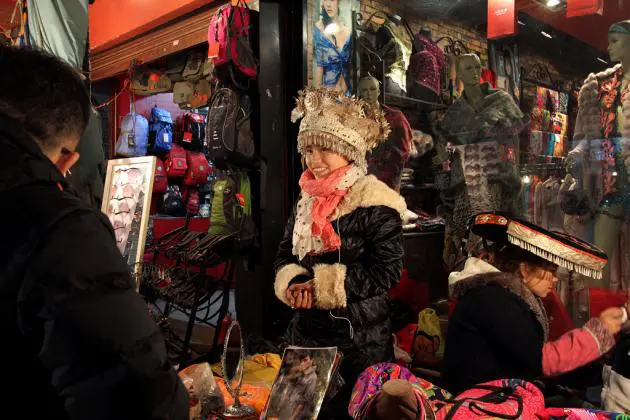
The ancient Muslim Square is also good for souvenirs. Folk arts, Tang tri-coloured pottery block prints, metal crafts and different sets of Terracotta Warriors are all over the place. Prices start high but bargaining is expected. You keep quiet until it goes down below 50 per cent.
Is it real? That’s the million-dollar question.
You cannot tell a real from a fake copy or vice-versa. This, after all, is China.
