
Treasures from the past


Play
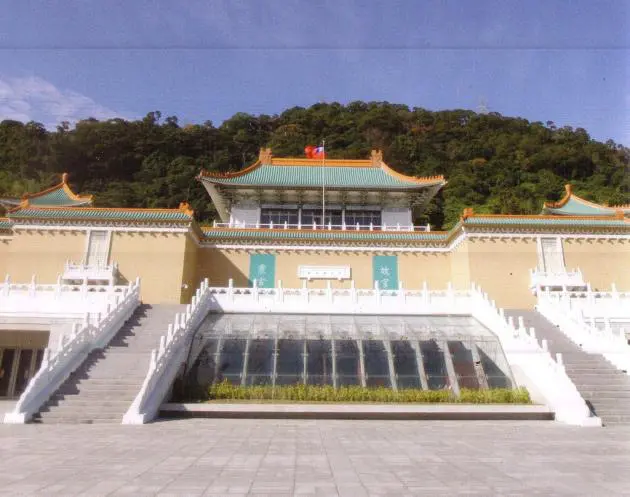
Taipei's National Palace Museum is home to artefacts dating back five millennia. Sadly, some of its visitors exhibit very modern behaviour
Visitors pour into Beijing’s Forbidden City to admire the preserved ancient wooden structures and stare in wonder at the extensive collection of artefacts in its museum. But to really appreciate the magnificence of Chinese treasures, it’s necessary to travel to Taiwan and Taipei’s National Palace Museum. The best buildings may in Beijing but the furniture is in Taipei.
The National Palace Museum is home to nearly 700,000 artefacts. They are all part of the Qing imperial collection originally stored in the Forbidden City. Its own museum opened in 1925 following the eviction of the Puyi, the last Emperor of China.
A museum guidebook states that it took nine months of organisation and effort to classify and record all the precious possessions of the Qing dynasty. The civil war in 1933, between the Nationalists and the Communists, which was interrupted by the Japanese invasion and the eventual defeat of the nationalists, saw the best parts of the collections transported across the Taiwan Straits in 1948, just before Mao Tse Tung declared victory at the Forbidden City.
Temporarily housed in a safe haven in Taichung County, the Kuomintang (KMT) government in Taiwan eventually constructed a more permanent “temporary” home for these treasures and the National Palace Museum was completed in 1965.
Not all imperial treasures made it to Taipei though. Although he officially abdicated in 1912, Puyi had been permitted to remain in the Forbidden City’s Inner Court and later admitted to selling some pieces of calligraphy from the collection after he had been deposed to maintain his lifestyle.
But there is still plenty to admire and a tour of the museum led by a knowledgeable and multi-lingual guide should the highlight of any visit to Taipei.
Unlike the world’s top museums, the National Palace Museum contains only artefacts that are related to Chinese history. That history goes back 5,000 years however, and the huge number of items in the prized collections means only some 15,000 artefacts are displayed at any given time.
These range from stone objects and pottery from the Neolithic Period to jade carvings, bronze ritual vessels, Buddhist statues from various periods, miniature wood carvings, Sung Dynasty paintings, calligraphy, poems and books.
The highlight in the jade collection is the famed “Jadeite cabbage”, a slightly less than life-size but exquisitely carved white and emerald green jade piece that resembles a Chinese cabbage with a locust that is rich in Chinese symbolism. The artefact, which is one of the best-known pieces in the museum, is thought to have been part of the dowry of the Qing Empire's Guangxu Emperor's consort.
The white portion symbolises the purity of the emperor’s new bride while the addition of katydid and locust (known for their propensity to multiply in great numbers) on the leaves at the top represents auspicious overtones to beget many children.
Another piece, a mineral stone carving which is partly dyed, is more intriguing and equally well-known. Simply called the “meat-shaped stone”, it resemblance to a small piece of three-layered stewed pork is remarkable.
But while it looks extremely realistic, and reflects the Qing Dynasty’s penchant for showing off contemplative objects, it is also likely to remind the modern visitor of the imitation food displayed in the windows of Japanese restaurants in Tokyo, Bangkok and Taipei.
The desks of ancient Chinese scholars often boasted small ceramic objects such as greenish white Qingbai ware from Song Dynasty, and the meat-shaped stone was no doubt considered an “interesting” object d’ art fit for the emperor.
Other star artefacts include a round three-legged ceremonial bronze vessel from Western Chou Dynasty containing what is arguably the first example of proto Chinese characters, inside a metal vessel.
Chinese tourists from the mainland are increasingly coming to Taipei to see these treasures but unfortunately these groups are often rowdy and troublesome,
During my visit last month, a scuffle broke out between two women from two different tour groups while we were observing some of the ivory carvings. They were loud and impossible to ignore. The guide told us the fight broke out when one woman cut the queue to take a closer look at one of the artefacts.
He then ushered our small group out of the room, explaining that the physical confrontation might escalate further. Had such an incident occurred at say, the British Museum in London, the two protagonists would likely be escorted out of the museum.
In Taipei, it appears to be the other way round.
_ The writer was in Taipei as the invitation of the Foreign Ministry of Taiwan.
