
A window into Italy's soul


Play
With its fantastic scenery and historical sights, Sicily is the perfect place to spend some quality time
Italy without Sicily does not leave an impression on your soul: here lies the key to everything.”
German author Johann Wolfgang von Goethe made this observation during his voyage through Italy in 1787, but the sentence still holds true today, especially in springtime when the island’s countless almond trees turn the island into a sea of blossom.
In fact, Sicily is a breathtaking sight all year round, with its imposing Mount Etna volcano, ancient historical sites, picturesque mountain towns, pristine beaches and azure waters.
Much of the baroque architecture in Sicily’s south-east is a result of the devastating earthquake of 1693 which destroyed at least 70 towns and cities and caused the death of about 60,000 people.
The cities of Ragusa, Noto and Modica were reduced to rubble but reconstruction work began almost immediately. The result was a high level of architectural and artistic achievement, keeping within the late baroque style of the day.
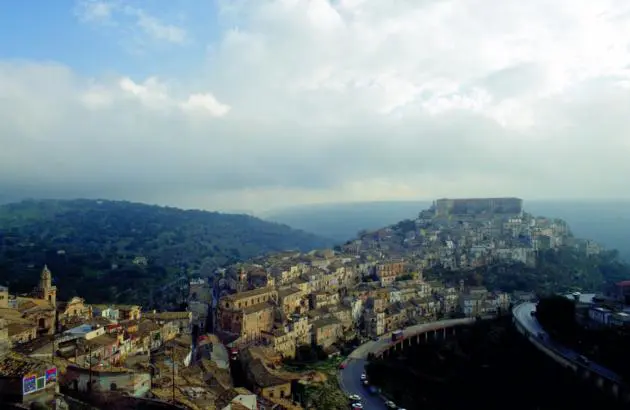
“The established noble wanted to retain the old town, which was surrounded by the river on three sides, because he had always resided there,” explains the tour guide in Ragusa.
“Others wanted a completely new town built at a higher level and because both sides were not able to reach an agreement, the town was officially divided.”
Ragusa Ibla, the section of the city rebuilt on the original location and divided from the checkboard-patterned new part by a deep valley, is considered the prettier section of the now re-united city for many visitors.
The area offers a fascinatingly harmonious cityscape marked by several baroque churches and palaces, the most stunning of which is the Cathedral of San Giorgio, designed by architect Rosario Gagliardi.
Just a few kilometres away lies Noto, which like the other seven baroque towns in the region is a Unesco World Heritage site. The town was also rebuilt in the wake of a 17th-century earthquake and described by locals as “a garden of stone.”
The city’s “flowers” are the approximately 50 churches and 15 richly decorated palaces.
The starting point for any visitor to Noto is the monumental Porta Reale. Noto’s cathedral rises impressively above Corso Vittorio Emmanuele and can be reached by a flight of steps.
Visitors should on no account miss the Via Nicolaci, which is especially beautiful in the early evening when the setting sun bathes the buildings in a honey-coloured glow.
Along one side of Via Nicolaci stands the Palazzo Villadorata with its balconies decorated by horses, griffons and cherubs.
Also nearby is the city of Modica which nestles at the bottom of a gorge and like the other towns in the Val di Noto, was badly damaged in the 1693 earthquake and largely rebuilt in Sicilian baroque style.
The town is famous for its chocolate but Modica’s architectural centrepiece is the beautiful Church of San Giorgio. Donnafaguta castle with its Venetian-style facade and public museum is also worth a look before heading for the island’s coast.
Set in rolling countryside among rocks and giant carob trees, the castle is one of Sicily’s largest and dates back to the mid-17th century.
Visitors require at least two days to truly appreciate all Syracuse has to offer. There are still numerous traces to show that this ancient city was once home to 500,000 people and the most powerful city in Sicily.
Today Syracuse is significantly smaller than in ancient times.
Oddly, major mid-city buildings such as the Greek and Roman theatres and the Altar of Hieron II are located on the current town’s outskirts, an indication of how much it has shrunk in area.
The city’s main attractions and landmarks are to be found in Ortygia, a peninsula that is home to the ancient centre of Syracuse.
If you go
<< Sicily is at Italy’s southern tip of Italy and separated from the mainland region of Calabria by the 5km Straits of Messina. The best time to visit is during spring and autumn, while it still quite pleasant. Summer can get very hot.
<< Thai Airways International flies between Bangkok and Rome, from where many domestic flights operate to Sicily. Sicily is also connected to other parts of Europe via a rail link and low-cost carriers.
<< Find out more about Sicily at www.SicilyTourism.com.
