
Prayers for the dead


Play
The Mon in Sangkhla Buri honour their departed through a spiritual journey
“The ritual is known to the Mon as Pohamod, which roughly translates as the Boat of Offerings,” says Arunya Chareonhongsa, a Mon woman resident in Kanchanburi’s Sangkhla Buri district, as she recounts the origins and purpose of the Mon Floating Boat Festival.
The annual event on Thailand’s western frontier, which is held towards the end of August or early September, sees Mon communities towing a full-sized, hand-crafted boat laden with food to the river. The food is left out to sate the appetites of the departed. Once a private and deeply religious ritual, today the festival brings in much-needed tourist revenue to this quiet area.
Thousands of visitors turned out to the district last weekend to witness the boat being built, decorated then towed to the water.
The Floating Boat Festival not only commemorates departed Mon pilgrims but also banishes evil and brings luck to those still living. It’s a ritual that dates back to the Mon Hanthawaddy Kingdom (1369–1539) and marks the journey of a high-ranking monk and several Buddhist pilgrims across the Bay of Bengal to fetch a set of Buddhist scriptures in Sri Lanka. On their return trip, one boat was lost at sea and the pilgrims inside it drowned.
Every year since, the Mon have built a large boat and piled it high with offerings before sending it out to sail on the river or the sea to feed those departed pilgrims.
The festival always takes place on the 14th day of the tenth month in the lunar calendar, and lasts for three days.
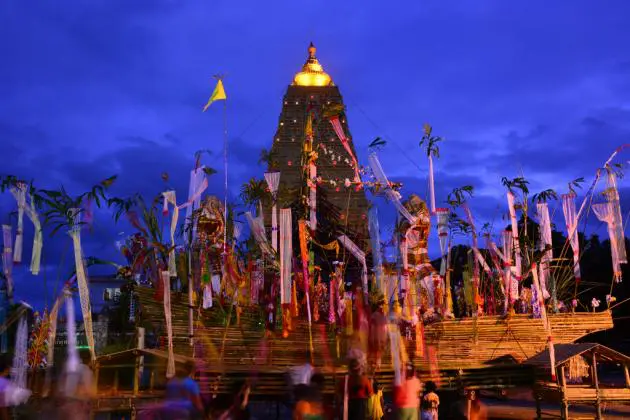
On the first day locals and visitors surround the Chedi Phutthakhaya at Wat Wang Wiwekaram to watch as the men shape long bamboo poles into a boat, a process that usually takes a full day.
While the men are boat building, the women busy themselves cooking and preparing the offerings, which mostly consist of popcorn, ripe bananas, boiled rice in banana leaves, candles, honey, water and sticks of sugarcane.
When the boat is ready and decorated with colourful paper flags, it is moved to the front of the huge pagoda where it serves as the centrepiece for the celebrations that follow of the next two nights.
One of the main highlights is a series of cultural shows that praise the distinctive ways of the Mon. Whether old or young, they dress in beautiful traditional attire – red sarongs and white shirts – and move towards the boat holding trays. These they raise above their foreheads as they pray for the departed pilgrims and themselves before leaving the food on the boat.
“In the olden days, we also made a lantern and would load it with yellow string and the necessities for entering the monkhood before releasing it into the sky,” Arunya explains. “Whoever got the monk set would be ordained.
“If a woman found it, she would make a great contribution to the Buddhist temple.”
The ceremony culminates in the boat being towed to the riverbank and pushed out to the water where it begins its slow journey to the spiritual world.
More than just a boat
While the boat festival is well worth seeing, Sangkhla Buri is also a great place to spend a weekend any time of year.
Sitting on the large reservoir created by the Khao Laem Dam, it’s home to one of Thailand’s largest Mon communities. Kareni and Bangladeshi also contribute to the ethnical diversity of the small town. It draws visitors for its Mon Wood Bridge, Mon temple with a bronze pyramid-shaped chedi and a day trip to Three Pagoda Check Point – where visitors, provided they bring a passport and photo – can get a day pass to Payathonzu inside Myanmar.
Mini-buses depart from Kanchanaburi’s bus terminal at regular intervals.
