
Memories of another day


Play
Mozambique's remote Quirimbas islands offer pristine waters and colonial-era ruins
A white motorboat ties up at the quay on Ibo and an immaculately dressed South African family disembark to wander through the ruins of this former trading entrepot off the northern Mozambique coast.
The glamorous new arrivals seem out of place amid the crumbling walls of the Portuguese colonial era with the spreading roots of fig trees protruding through their windows. The contrast under the tropical sun between luxury and decay, future and past is stark.
Ibo is one of the Quirimbas islands – Mozambique’s answer to the Maldives. Most of the 36 islands, which lie close to the northern Mozambican coast, are overgrown with mangrove and uninhabited.
On others international investors have opened luxury resorts over the past 10 years – Quilalea, Matemo, Medjumbe, Vamizi – flying their guests in aboard twin-engine light aircraft.
Few travel to Ibo. There are no inviting beaches and no tourist hotels, but the island does have its ruins, a rich history and a certain bittersweet charm.
For the past five years Raul Pereira, 50, has conducted tours through the ruins, taking visitors to the three forts, where today goats graze and the island’s silversmiths ply their trade. His route also leads to the Praca de Republica (Republic Square), surrounded by the crumbling villas inhabited by the Portuguese colonial masters until their sudden departure in 1975.
Vasco da Gama anchored off Ibo in 1498, encountering Arab slave and ivory traders who also traded in maluane cloth, a fabric dyed with local indigo for which the archipelago was famous. Three decades later the Portuguese were back, this time to destroy the Arab homes and warehouses and to take over their businesses.
Ibo then became a multicultural entrepot, with European, Arab, Indian and Chinese merchants living here. They prospered and built large houses from blocks of coral, importing their roof tiles from Marseille in France.
In 1761 the Portuguese made Ibo the capital of Cabo Delgado Province. But there was one serious disadvantage – the shallow harbour did not provide a safe anchorage for larger vessels. Goods had to be transferred to smaller boats to be rowed from ship to shore and back.
At the beginning of the 20th century, the colonial authorities shifted first the port and then the provincial capital to Porto Amelia – Pemba today – on the mainland, and Ibo declined into tropical torpor.
“After the last Portuguese left following independence, people stole the roofing tiles,” Pereira says. The rain came in, the salt air eroded the walls and trees began growing through.
At the end of the road stands a hotel set between two old mango trees. Joerg Salzer, a 39-year-old German, was passing through on an extended African trip in 2005 and decided to stay.
In 2008 he and a friend opened their Miti Miwiri hotel with just four rooms. It has now expanded to nine. Two years ago, the authorities laid on electric power, obviating the need for a generator to power the hotel.
Pereira is happy too. “At last I can listen to music and drink cold beer,” he says.
The locals live largely off what the soil and the sea have to offer. The men fish with lines and nets from their canoes and dhows, while the women spear octopus from the rocks.
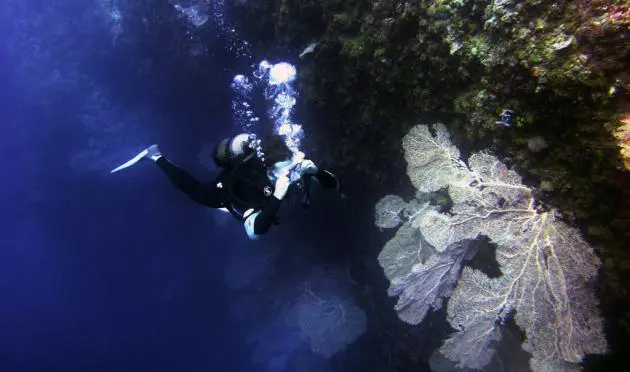
The area is part of a large national park that since 2002 has covered 11 islands and 110 kilometres of coastline. But it has yet to catch on as a major destination for divers and snorkellers, given its remote location and the costs in getting there.
Handy info
_ Mozambique is a located on the Indian Ocean coast of Southern Africa. Most international flights arrive from South Africa. Mozambique’s eastern coastline along the Indian Ocean is more than 1,000 km long, a fantastic draw for scuba divers, fishermen, sailors and beach lovers.
