
Memories of another day


Play
The ghosts of Tangiers are alive and well J
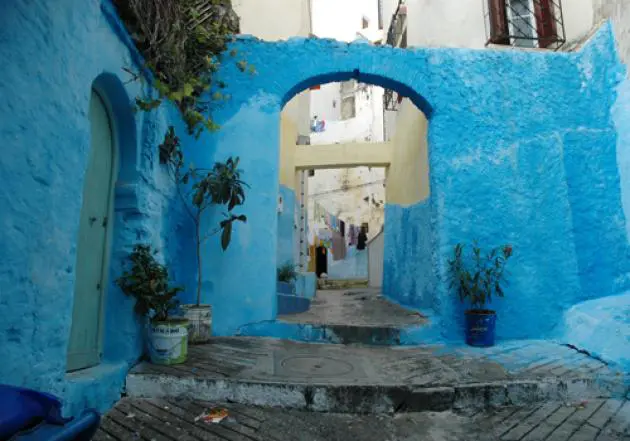
TURQUOISE and navy ocean waters mingle off the port of Tangiers, a physical embodiment of the way time coalesces as one strolls through the snaking alleys of the city.
Erstwhile writerly haunts can be found amid the labyrinth of an ancient medina, along with those of disavowed royalty and spies from Europe and beyond who flocked to the torrid city to scheme against each other.
Indeed, one of Tangiers’ most famous scribes-cum-residents, Paul Bowles (author of “The Sheltering Sky”), wrote of it, “I am now convinced that Tangier is a place where the past and present exist simultaneously in proportionate degree, where a very much alive today is given an added depth of reality by the presence of an equally alive yesterday.”
Tangiers, Africa’s most north-westerly city, has always been a strategic prize because of its situation on the Strait of Gibraltar.
The Medina is a dizzying jumble of buildings seemingly piled on top of each other and draped in a gleaming white mass over a hill overlooking the port. At the summit of the promontory, a plaza called the Kasbah provides a spacious counterpoint to the chaotic ramblings of its walkways.
A gap in the plaza’s ancient Roman wall leads to a small bluff with views out to roiling ocean waters and, in the distance, the hazy coast of Spain. It can be reached with some luck and a sharp memory, following flights of stairs ever upward.
Contested since the Roman Empire, and bouncing between European colonial powers for decades, Tangiers became an international zone jointly administered by France, Spain and Britain from 1923 to 1956.
It was especially during this time that a parade of artists and diplomats coming through the city left their mark: Jack Kerouac, Truman Capote, William Burroughs, Susan Sontag and Mohamed Choukri are just a few to have found inspiration in what Burroughs called the interzone.
“Through open doors, tables and booths and bars and kitchens and baths, copulating couples on rows of brass beds, crisscross of a thousand hammocks, junkies tying up for a shot, opium smokers, hashish smokers, people eating talking bathing, back into a haze of smoke and steam,” wrote Burroughs in “Naked Lunch”, the book that shocked US obscenity law enforcers when it was published in 1959.
Burroughs’ dream-like world is harder to find now, though. One Tangiers tour guide, Abdullah, can recall the days when wandering hippies slept in the doorways of the Medina, but many of today’s expatriates are more drawn by the aesthetic wonder of the city’s pastiche of colours and the fierce pink sunsets.
Nevertheless, a diligent eye finds traces of what drew a generation of adventure-seekers and misfits.
It is quiet on the streets after dusk, but in the plazas, young boys still flirt with each other. And looking up, the visitor will see aged men in dark djellabas, silently smoking kief into the still night.
IF YOU GO
Located in northern Morocco, Tangier is separated from Spain only by the 32 kilometres of the Strait of Gibraltar. It’s an interesting mix of north Africa, Spain, Portugal and France. You can take a FRS ferry from Tarifa port in Spain to Tangier.
Visit www.VisitMorocco.com.
