
Hitting the road


Play
Why the thrill of a free ride still fascinates German hitchhikers
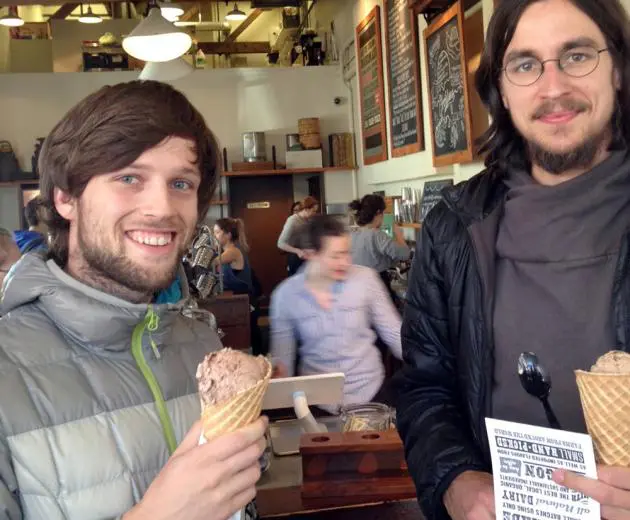
For students Craig Antweiler and Robert Friedrich, both 24, the next journey usually starts on the forecourt of a filling station, where they hop into a car with a complete stranger.
A superhighway service area will also do the trick.
The two Germans are keen hitchhikers in the Uber era, when riding the highways for nothing has become much rarer than it was in the 1960s and ‘70s. Back then, it was one of the cheapest and most entertaining ways of getting around.
In countries where car ownership is the preserve of the middle and upper class, hitching is still an accepted and unremarkable form of transport. But in Europe and North America, fears that hitchhikers might get picked up by criminals or escaped convicts deter most people from even trying it. People prefer paid transport.
The two, who hail from the German city of Leipzig, say they have therefore modified their behaviour to suit the times. Stopping is illegal on most superhighways and on-ramps.
“The classic way of just sticking out your thumb to get a ride no longer works as well in Europe,” says Antweiler, during a stopover Portland, Oregon.
It’s better to ask drivers for a lift while they are stopped, says the young man, who has hitched his way around 40 countries.
Antweiler should know: for a wager in 2011, he managed to hitchhike all the way to Shah Alam in Malaysia from Istanbul.
“I wanted to visit some friends and the idea just gelled,” he says.
Four weeks later he reached his chosen destination. He chronicled the exhilarating trip in a blog called “Thumbing Asia from West to East”.
Some experts detect a reversal of the decline in hitchhiking that began 30 years ago.
“We get the feeling that their numbers have been going up in recent years, but no exact figures are available,” says Jona Redslob, chairman of the German hitchhiking club Abgefahren. The club’s name is a German word and means “departed” and “wacky” at the same time.
Amid rising transport costs, hitchhiking could be viewed as an ecologically and economically sound way of getting around, Redslob adds.
Antweiler points out that although hitchhikers do not pay any money for travelling from A to B, “they enrich those who give them a lift with lively conversation and a willingness to listen.”
Giving someone a free lift is a tradition that goes back to the beginning of travel itself, although modern digital channels of communication and online connections have made it easier for hitchhikers to get around.
A collaborative website, Hitchwiki.org, allows hitchhikers to compare notes about how to best hitch out of big cities or cover large distances. It also offers useful maps.
Hard-core hitchhikers – like the students from Leipzig – are more interested in enjoying the freedom of simply being on the road.
“When you are out hitchhiking, you think about things which have never occurred to you before,” says Antweiler.
“You experience a cross-section of society that’s unfiltered, since you have no influence over who decides to pick you up,” adds Friedrich who has hitchhiked around 25 countries.
Both agree that around the world there is no typical driver willing to pick up a would-be hitcher.
“I’ve even seen figures which claim to determine this, but no common picture emerged for me,” Friedrich says.
The two aficionados would like to see hitchhiking rehabilitated.
“It’s a really green way of travelling and one that can help you make new friends,” says Antweiler, who is a member of Abgefahren.
The club has set itself the task of fostering a European hitchhiking culture and establishing an international support network.
Since 2008 the club has organised German hitchhiking championships, which take place every May. Teams of two hikers thumb their way around the country, with the final destination announced just before the contestants set off. This is a fun event and the rulebook is thin. The idea is to promote hitchhiking as an activity.
Individual hitchhikers still like to test their endurance and compete with each other to see who can ride the furthest. Friedrich’s longest stretch took him 12,000 kilometres across Canada and parts of the United States.
“They have a different feel for long distances,” he says of North American drivers.
Modern hitchhikers are not blind to the risks involved in hitting the road alone or in pairs and police warn young people to stay alert. There are no official figures on hitchhikers who end up being crime victims.
Hitchhiker lore tends to concentrate on unusual rides or the elaborate excuses sometimes used by drivers to avoid giving someone a ride.
“The best excuse I heard was in Portland,” says Antweiler. “The man pointed to the back seat and said his wife had just gone into labour.”
The young German never found out whether the motorist was telling the truth and in the end it didn’t matter. Another driver was sure to come along the highway soon.
FOLLOW THEM ONLINE
< Antweiler’s Asian Hitchhike Blog is at http://thumbingasia.blogspot.ca.
< For Abgefahren, visit http://Abgefahren-ev.de.
