
How does Thailand’s tourism lead to a hidden crisis of homeless foreigners
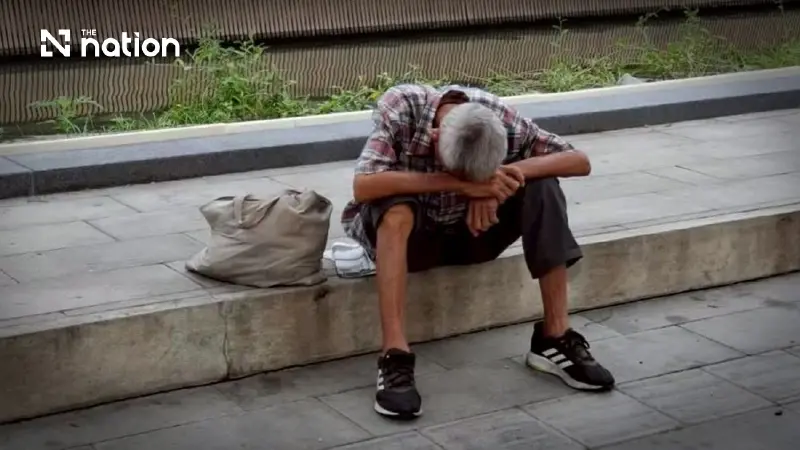


With a visa-free policy and an affordable lifestyle, Thailand’s tourism policies are drawing millions of visitors worldwide. However, a humanitarian issue is quietly growing beneath the surface of this vacation paradise.
An investigation by “The Disclosed” reveals that an increasing number of foreign travellers are ending up homeless on the streets of Bangkok.
This crisis is driven by a dangerous combination of factors: scams, sudden job losses, and a lack of preparation, according to Issarachon Foundation.
Once these tourists run out of money, they fall into a legal trap. Without funds, they cannot afford a flight home, which causes them to overstay their visas. This status makes them undocumented, rendering them unable to legally work, rent housing, or access healthcare.
As Thailand continues to promote global tourism, citizens from developed countries are finding themselves completely stranded, trapped in a country they no longer have the means to leave.
The illusion of the cheap paradise
The path to homeless status often begins with a fundamental miscalculation fueled by social media. With immigration protocols requiring fewer financial safeguards upon entry, many travellers arrive with razor-thin margins.
“I definitely believe it has to do with that,” says Friso Poldervaart, co-founder of the Bangkok Community Help Foundation, reflecting on Thailand’s relaxed border rules.

“The entry restrictions in Thailand are a little bit too lax at the moment. It’s very easy to enter for a long time. They’re not asking for a return ticket, and insurance usually doesn't ask whether you have enough funds. A lot of people come completely unprepared,” said Poldervaart.
When reality diverges from the curated online fantasy, the decline is rapid. Over an eight-month window, the Bangkok Community Help Foundation alone intercepted and assisted roughly 45 homeless foreign nationals.
These figures only account for individuals who proactively sought help or were directly referred by foreign embassies, and advocates warn that the true scale of the crisis remains heavily underreported.

The financial deadlock
The path to foreign homelessness in Bangkok rarely fits the stereotype of tourists partying too hard or simply refusing to go home. Instead, many people are caught in a harsh, inescapable loop caused by modern crime.
A large number of stranded travellers are actually victims of romance scams or cryptocurrency fraud that completely wiped out their life savings. When international banks notice this fraudulent activity, they often freeze the accounts for security. To unblock the money, banking protocols usually require the person to show up physically at a branch in their home country.
This creates an impossible situation because a stranded tourist needs money to buy an international plane ticket to leave Thailand.
However, because their bank accounts are frozen, they cannot afford that ticket, which forces them to stay past their allowed time. The moment their visa expires, the situation becomes a severe legal trap, transforming them from victims of a crime into lawbreakers under Thai immigration rules.

Adchara points out that another group of vulnerable foreigners includes retirees who sold all their assets back home to live their dream in Thailand. If their investments fail or their personal plans fall apart, they are left with absolutely no backup safety net.
Once a person becomes undocumented, they essentially become invisible to society. They are legally banned from working, cannot rent a room, and are cut off from the public healthcare system.
Inside the “Centre of Dreams”
On the outskirts of this crisis sits the Centre of Dreams, a shelter run by the Bangkok Community Help Foundation. Originally built to provide a safe space for unhoused Thai citizens, the facility has unexpectedly turned into an international support hub. Today, it houses stranded and distressed individuals from Germany, the United States, Japan, and many other nations.


"Right before I found Centre of Dreams, I wasn't really thinking I was going to make it," Jane recalls.
"I was thinking I'm probably going to die here in Thailand because I could feel my heart strain when I was walking to the temple to get a meal. I started to realise my body is completely depleted. I was likely suffering from malnutrition and dehydration."
Jane’s journey to the streets of Bangkok was swift and unexpected. Before moving to Thailand, she was comfortably employed on Wall Street. She eventually transitioned to working remotely as an online counsellor, a position she successfully held for five years. With the freedom of remote work, she decided to move to Thailand.
However, just three to four weeks after arriving, she was unexpectedly fired from her job. Her financial situation collapsed rapidly because she had already spent her savings on a non-refundable travel itinerary through the Philippines and Kuala Lumpur. With her bank account completely emptied, she found herself entirely unable to pay for housing or cover her growing visa overstay fines.
"Most people had told me to go to a Buddhist temple and stay. But it looked like you're staying here forever. That's not my purpose. I want to go back home and get a job. Being unemployed and being homeless is not how this was planned," Jane said.

For her, discovering how many other foreigners were facing the exact same situation was a profound shock. She notes that other homeless expatriates eventually approached her on the streets, offering advice on where to find a safe corner or a couch to sleep on. It was a harsh awakening to the reality that she was far from alone in her desperation.
A structural void
The systemic issue underpinning this crisis is an absolute lack of a formal social safety net for non-citizens within Thailand. While grassroots NGOs work continuously to serve as operational bridges, spending months coordinating complex repatriations with families, international airlines, and foreign consulates, they are operating inside a regulatory vacuum.
Foreign embassies operate under rigid, highly bureaucratic mandates; they rarely possess the budget or authority to issue free commercial plane tickets to stranded citizens. During the extensive waiting periods required to verify identities and arrange family interventions, non-governmental organisations remain the sole mechanism keeping these individuals alive and off the pavement.

As Thailand intensifies its global marketing pushes to drive higher tourism traffic, the systemic questions grow louder. When an international traveller falls through the cracks, where does the responsibility ultimately land? Does it lie with the home embassy, the individual who failed to prepare a contingency plan, or the host nation reaping the economic rewards of open borders?
Until a collaborative, structural framework is established between the international diplomatic corps and Thai state departments like the Ministry of Social Development and Human Security, the streets of paradise will continue to collect those who lose their way.
